- Home
- Electric Vehicles
- Compare Electric Cars
- Volkswagen ID.3 Neo vs Tesla Model 3 2025
Volkswagen ID.3 Neo vs Tesla Model 3 2025
The Volkswagen ID.3 Neo and Tesla Model 3 2025 target two different EV segments. The ID.3 Neo is a compact hatchback from Volkswagen built for urban drivers who want efficiency and easy parking. The Model 3 is a midsize sedan from Tesla aimed at tech-focused buyers who value performance and software. This comparison matters now as more African buyers explore used imports and global EV price cuts.
The ID.3 Neo offers up to about 450 km WLTP range depending on battery size. Real-world use often lands near 350–400 km. The Model 3 2025 delivers about 513 km WLTP for the RWD version, with real-world figures around 420–460 km. AC charging on the ID.3 tops at 11 kW, while DC fast charging reaches about 120 kW. The Model 3 supports 11 kW AC and up to 170–250 kW DC depending on variant. A 10–80% charge takes around 30–35 minutes in the ID.3 and about 25–30 minutes in the Model 3 on fast chargers.
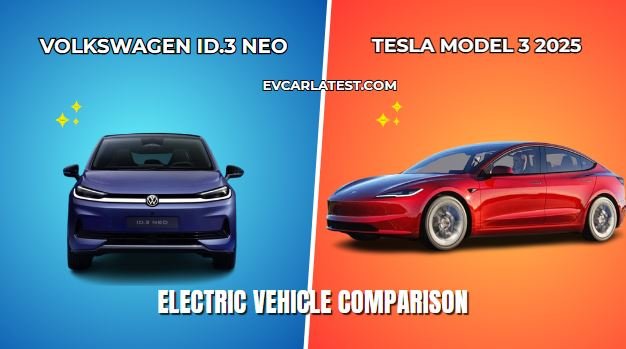
The ID.3 Neo starts around $35,000 globally, which converts to roughly ₦50–55 million for imported units in Nigeria depending on duties. The Model 3 2025 starts near $39,000, with landed prices closer to ₦60–70 million. The ID.3 comes in trims like Pure, Pro, and Pro S with different battery sizes. The Model 3 lineup includes RWD, Long Range, and Performance. Both cars are not officially sold in most African markets, but they are available through imports in Nigeria, Kenya, and South Africa. This comparison helps you decide between a lower-cost compact EV and a longer-range sedan with stronger charging support.
Within Volkswagen’s lineup, buyers might also consider the Volkswagen ID.4 for more space. Tesla buyers could look at the Tesla Model Y for SUV practicality. Outside both brands, the BYD Dolphin and Hyundai Ioniq 6 offer strong alternatives in similar price ranges. This comparison still stands out because it balances price, range, and charging speed in one view.
The ID.3 Neo offers a compact size that makes city driving easier, which matters if you deal with tight roads and parking. It has a lower entry price, helping buyers step into EV ownership with less upfront cost. Its hatchback design adds cargo flexibility for daily use. On the downside, its charging speed is lower, which increases wait time on long trips. Its software and infotainment system feel less refined, which affects daily usability.
The Model 3 2025 delivers longer range, which reduces charging stops on highways. Its fast charging speed saves time during travel. Tesla’s software and updates improve features over time, which keeps the car current. On the downside, the higher price raises the barrier to entry. Its sedan shape limits cargo flexibility compared to a hatchback.
QUICK VERDICT
Choose the Volkswagen ID.3 Neo if you prioritize lower cost and city-friendly size. Choose the Tesla Model 3 2025 if longer range and faster charging matter more to you. The trade-off comes down to budget versus range and charging speed.
FAQ
Is Volkswagen ID.3 Neo better than Tesla Model 3 for long trips?
The Model 3 is better for long trips due to longer range and faster charging. It reduces both charging frequency and downtime. The ID.3 suits shorter daily driving.
Which is cheaper to maintain, ID.3 Neo or Model 3?
Both have low maintenance compared to petrol cars. The ID.3 may cost less overall due to simpler hardware and lower purchase price. Tesla parts and repairs can be higher in some regions.
Is Tesla Model 3 available in Nigeria?
It is not officially sold, but many units are imported through dealers. Buyers rely on third-party servicing and charging networks.
Related EV Comparisons
- Volkswagen ID.3 Neo vs Cupra Born
- Zeekr 007 GT (7 GT) 2026 vs Tesla Model 3 2025
- Hongqi Tiangong 05 (EH5) vs Tesla Model 3 2025
- Hongqi Tiangong 06 vs Tesla Model Y 2025
- BYD Sealion 05 EV vs Tesla Model Y 2025
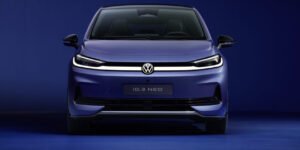
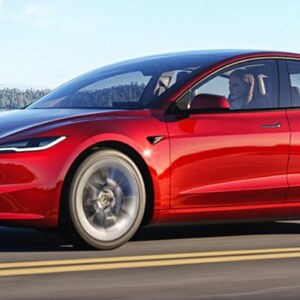
| |
| Price | $39,000.00 $37,000.00 |
| Our Rating | |
| Brand | VOLKSWAGEN TESLA |
| Category | Electric Cars Electric Cars |
MODEL
| Available Trims / Variants |
Volkswagen ID.3 Neo 50 kWh Volkswagen ID.3 Neo 58 kWh Volkswagen ID.3 Neo 79 kWh Tesla Model 3 Standard |
PRICE & AVAILABILITY
| Base Price (USD) | $ 37,000 |
| Availability Status | Coming soon. Expected release 2026, Q3 Available to order. Released 2025, October |
BATTERY & CHARGING
| Battery Capacity |
50 kWh usable - Volkswagen ID.3 Neo 50 kWh 58 kWh usable, 62 kWh total - Volkswagen ID.3 Neo 58 kWh 79 kWh usable, 82 kWh total - Volkswagen ID.3 Neo 79 kWh 69 kWh total |
| Range (WLTP/CLTC/EPA) |
259 mi WLTP - Volkswagen ID.3 Neo 50 kWh 307 mi WLTP - Volkswagen ID.3 Neo 58 kWh 391 mi WLTP - Volkswagen ID.3 Neo 79 kWh 321 mi EPA |
| DC Charging (Max kW) |
CCS 105 kW, 10-80% in 29 min - Volkswagen ID.3 Neo 50 kWh CCS 105 kW, 10-80% in 29 min - Volkswagen ID.3 Neo 58 kWh CCS 183 kW, 10-80% in 26 min - Volkswagen ID.3 Neo 79 kWh Supercharger 225 kW max |
| AC Charging (Max kW) |
Type 2 7.2 kW Type 2 11 kW Type 2 11 kW |
| Energy Consumption | 240 Wh/mi WLTP |
PERFORMANCE
| Power Output (kW / hp) |
RWD 170 hp (125 kW) - Volkswagen ID.3 Neo 50 kWh RWD 190 hp (140 kW) - Volkswagen ID.3 Neo 58 kWh RWD 231 hp (170 kW) - Volkswagen ID.3 Neo 79 kWh RWD |
| 0–100 km/h / 0-60 mph (seconds) The acceleration numbers are an easy way to compare car performance. We list either time from 0 to 100 km/h or time from 0 to 60mph, depending on which number(s) the manufacturers provide. The lower the acceleration time, the higher performance the car is. | 7.3 sec 0-62 mph 5.8 sec 0-60 mph |
| Top Speed (km/h / mph) | 99 mph (160 km/h) 125 mph (201 km/h) |
BODY & DIMENSIONS
| Dimensions (L×W×H mm) | 4265 x 1809 x 1554 mm (167.9 x 71.2 x 61.2 in) 4720 x 1933 x 1441 mm (185.8 x 76.1 x 56.7 in) |
| Trunk/Boot Capacity (L) | EU: 385 l, 1267 l max US: 680 l |
| Body Style | 5 door hatchback, 4/5 seats 4 door sedan, 5 seats |
| Kerb Weight (kg) | US: 1705 kg curb |
| Ground Clearance (mm) | 165 mm (6.5 in) |
| Frunk/Bonnet Capacity (L) | No 88 l |
SAFETY & DRIVER ASSISTANCE
| Autonomous Driving Level | Autopilot with full Self-Driving capability |
COMFORT & SEATING
| Seating Capacity | Heated front seats, massage Heated and ventilated/cooled front seats, heated rear seats |
DISPLAYS & CONNECTIVITY
| Centre Screen (inches) | 12.9" touchscreen 15.4" touchscreen |
| Driver's Display (inches) | 10.25" No |
| Head-Up Display (HUD) | Yes, with augmented reality No |
TECHNOLOGY
ADDITIONAL SPECS
Note
| Additional Notes |
01 September 2023: Initial release price 42,990 EUR 10 January 2024: Initial release price 38,990 USD - Tesla Model 3 Standard Range 01 September 2023: Initial release price 51,990 EUR 10 January 2024: Initial release price 45,990 USD - Tesla Model 3 Long Range 11 July 2024: Initial release price 42,490 USD |

|
Disclaimer Note
Specifications sourced from manufacturer data and may reflect WLTP, CLTC, or EPA test conditions. Import prices in your local are estimates based on grey-market landing costs and exclude duties, clearing fees, and local taxes. Figures are subject to change without notice. Always verify with your local importer before purchase. We can not guarantee that the information on this page is 100% correct