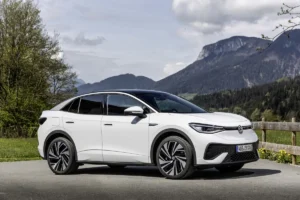
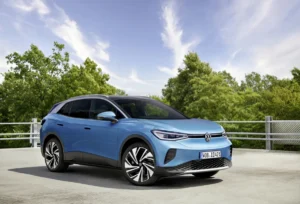
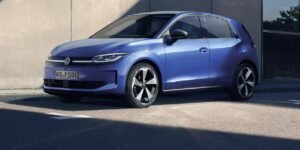
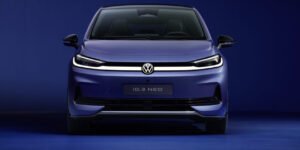
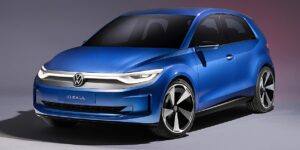
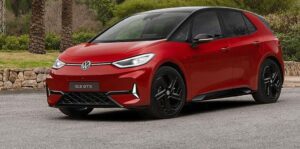
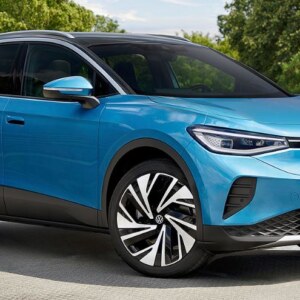
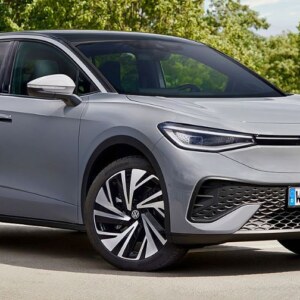
You could say this is the small electric car fight everyone secretly wanted — two heavyweights from Europe’s past, reimagined for a much quieter future. The Volkswagen ID.Polo and Renault 5 E-Tech are both pint-sized electric hatchbacks, but they take very different paths back to people’s driveways. The ID.Polo (arriving in 2026) is for the practical-minded buyer who just wants a normal, fuss-free Polo that happens to be electric. The Renault 5 is for the person who smiles every time they walk up to their car and wants a bit of ’70s disco flair with their zero-emission commute. This face-off feels urgent right now because the Renault 5 is already hitting European streets, while VW fans have to decide if it’s worth holding out for the ID.Polo.

When it comes to range and charging, both cars are cut from similar cloth but stitched differently. Renault offers the 5 with a 52 kWh battery that’s good for a quoted 400 km in the WLTP cycle, though in everyday mixed driving you’ll likely see something closer to 320–350 km. VW is aiming higher: the ID.Polo should inherit the ID.2all concept’s target of up to 450 km WLTP, though we’ll have to wait for final figures. At a fast charger, the Renault 5 can gulp electrons at up to 100 kW, taking roughly 30 minutes to go from 10–80%. The ID.Polo is expected to push that to 125 kW, shaving a couple of minutes off a motorway splash-and-dash. Where the Renault quietly wins your heart is at home: an 11 kW AC onboard charger comes standard, so topping up from a wallbox is noticeably quicker than rivals stuck at 7.4 kW.
Now, the bit your wallet cares about. The Renault 5 E-Tech starts at around €25,000 in Europe (roughly $27,000) for the 40 kWh Urban Range model, while the 52 kWh Comfort Range in desirable Iconic trim nudges nearer to €30,000. Volkswagen hasn’t pinned a price tag on the ID.Polo yet, but a similar €25,000 entry point is widely expected. The catch, of course, is time. You can walk into a Renault dealer today. The VW is still a glint in Wolfsburg’s eye for most of us. So this comparison is really for someone asking a simple, human question: “Do I jump on the charming retro EV that’s already here, or wait a year for Volkswagen’s sensible, high-range alternative?”
Looking around, you’ve got decent options. In VW’s camp, the ID.Polo will be the city-sized sibling to the larger ID.3. Renault leans into nostalgia harder with the upcoming 4 E-Tech crossover and keeps the Mégane E-Tech for those needing more space. Beyond these two, the Peugeot e-208 remains a polished all-rounder, and the BYD Dolphin is the value champion in markets where it’s sold, often undercutting both on price and kit. But honestly? Neither of those rivals has the same nameplate magic. This is a rare battle where heritage genuinely feels like part of the package.
Volkswagen ID.Polo – pros and cons
A likely 450 km range would be genuinely class-leading, easing that little knot of anxiety if your weekend plans go beyond the city limits. The MEB platform underpinning it is already trusted in millions of cars, so you’re banking on proven driving manners and solid safety smarts. Plus, if you’re the type who finds the Renault a bit too shouty, the VW’s more conservative, roomier cabin will feel like coming home. The downsides? That 2026 arrival date asks for patience many buyers don’t have, and VW’s recent touchscreen-heavy interiors have frustrated owners — hopefully they’ll get the physical controls right this time.
Renault 5 E-Tech – pros and cons
The design is the star. Few cars at this price make you grin before you’ve even opened the door. That 11 kW AC charger as standard is a genuinely useful touch, cutting hours off a full home charge. The trade-offs are real, though. The 100 kW DC peak charging is fine but not class-leading, and if you regularly carry taller passengers or a lot of stuff, the rakish shape sacrifices a little rear headroom and boot space — it’s more style-forward than family-forward.
Quick verdict
Choose the Volkswagen ID.Polo if you’re chasing maximum range, proven electric bones, and a more spacious interior, and you can wait. Choose the Renault 5 E-Tech if emotional design, the convenience of faster home charging, and being able to drive it right now matter more. One makes sense on a spreadsheet, the other makes sense when you look back at it in a car park.
Related EV Comparisons
| |
| Price | $27,000.00 $25,000.00 |
| Our Rating | |
| Brand | VOLKSWAGEN RENAULT |
| Category | Electric Cars Electric Cars |
| Full Model Name | Volkswagen ID.Polo |
| Generation | 1st Generation (Electric) |
| Segment / Class | Supermini / B-Segment |
| Available Trims / Variants |
Trend, Life, Style
Renault 5 E-Tech 95 HP 40 kWh Renault 5 E-Tech 120 HP 40 kWh Renault 5 E-Tech 150 HP 52 kWh |
| Powertrain Options | 85 kW (LFP) · 99 kW (LFP) · 155 kW (NMC) |
| Special Editions | ID.Polo GTI — 166 kW / 226 hp, arriving 2027 |
| Additional Notes | First ID. family model to carry a legacy VW nameplate; first model featuring VW's new "Pure Positive" design language |
| Reveal Date | December 2025 (pre-production preview) / April 2026 (official world premiere) 2024, February 26 |
| Launch Year | 2026 |
| Availability Status |
On sale in Germany from April 29, 2026 — 52 kWh NMC variant first; 37 kWh LFP variant delayed to late 2026 or early 2027 due to LFP cell supply constraints
Available to order. Released 2025, May Available to order. Released 2024, November Available to order. Released 2024, November |
| Brand / Manufacturer | Volkswagen AG |
| Country of origin | Germany (brand); assembled in Spain France |
| Assembly Country | Spain (Martorell, Catalonia) |
| Markets Available | Europe (confirmed); UK (confirmed, later 2026); no confirmed timeline for US, African, or Asian markets |
| Base Price (USD) |
~$27,600 USD (based on €24,995 launch price at approximate conversion)
€ 25,000 € 28,000 € 33,000 £ 27,000 |
| Additional Notes | UK estimated from ~£21,700. At launch, only variants above €30,000 are available; the advertised €24,995 entry price is delayed |
| Battery Capacity |
37 kWh (usable, net) 52 kWh (usable, net) 40 kWh usable, 43 kWh total 40 kWh usable, 43 kWh total 52 kWh usable |
| Battery Chemistry |
LFP (Lithium Iron Phosphate) - 37 kWh Variant NMC (Nickel Manganese Cobalt) - 52 kWh Variant Liquid-cooled Li-Ion NMC battery (400V type) |
| Battery Architecture | Cell-to-Pack (CTP), floor-mounted between axles |
| Thermal Management | Liquid cooling |
| Range (WLTP/CLTC/EPA) |
Up to 329 km / 204 miles WLTP - 37 kWh Variant Up to 454 km / 282 miles WLTP - 52 kWh Variant 186 mi WLTP 186 mi WLTP 255 mi WLTP |
| Energy Consumption |
14.6–13.3 kWh/100 km - 52 kWh Variant
233 Wh/mi WLTP 240 Wh/mi WLTP |
| Regen Braking (Max kW) |
Yes |
| Heat Pump | |
| AC Charging (Max kW) |
11 kW
Type 2 11 kW, 10-100% in 3 hours 30 min Type 2 11 kW, 10-100% in 3 hours 30 min Type 2 11 kW, 10-100% in 4 hours 30 min |
| DC Charging (Max kW) |
90 kW - 37 kWh Variant 105 kW - 52 kWh Variant No CCS 80 kW, 15-80% in 30 min CCS 100 kW, 15-80% in 30 min |
| Charging Time (10–80%) |
~27 minutes - 37 kWh Variant ~23–24 minutes - 52 kWh Variant |
| Cell Brand | PowerCo (Volkswagen Group battery subsidiary, Salzgitter, Germany) |
| Additional Notes | LFP chemistry allows regular 100% charge without significant long-term degradation; V2L standard across all variants at 3.6 kW output V2L & V2G bi-directional charging (up to 3.7 kW) |
| Motor Type | APP290 Permanent Magnet Synchronous Motor (PMSM) |
| Motor Configuration | Front-mounted, single motor |
| Front Motor Output (kW / HP) |
85 kW / 114 hp 99 kW / 133 hp 155 kW / 208 hp |
| Power Output (kW / hp) |
85 kW / 114 hp 99 kW / 133 hp 155 kW / 208 hp FWD 95 hp (70 kW) FWD 120 hp (90 kW) FWD 150 hp (110 kW) |
| Torque (Nm) |
290 Nm - 85 kW 290 Nm - 99 kW 215 Nm (159 lb-ft) 225 Nm (166 lb-ft) 245 Nm (181 lb-ft) |
| 0–100 km/h / 0-60 mph (seconds) The acceleration numbers are an easy way to compare car performance. We list either time from 0 to 100 km/h or time from 0 to 60mph, depending on which number(s) the manufacturers provide. The lower the acceleration time, the higher performance the car is. |
11.0 seconds - 85 kW 9.8 seconds - 99 kW 9 sec 0-62 mph 8 sec 0-62 mph |
| Top Speed (km/h / mph) |
160 km/h / 99 mph - 85 kW 160 km/h / 99 mph - 99 kW 87 mph (140 km/h) 87 mph (140 km/h) 93 mph (150 km/h) |
| Transmission / Drive | Single-speed, FWD Single-speed |
| Drive Mode | Yes — includes Eco, Comfort, Sport, and B mode (one-pedal) |
| Body Style | 5-door hatchback 5 door hatchback, 5 seats |
| Platform / Architecture | MEB+ (MEB Entry) AmpR Small |
| Dimensions (L×W×H mm) | 4,053 mm × 1,816 mm × 1,530 mm 3920 x 1770 x 1500 mm (154.3 x 69.7 x 59.1 in) |
| Drag Coefficient (Cd) | 0.264 |
| Wheelbase (mm) | 2,600 mm 2540 mm (100.0 in) |
| Ground Clearance (mm) | 145 mm (5.7 in) |
| Kerb Weight (kg) |
1,568 kg (37 kWh) · 1,576 kg (52 kWh)
EU: 1350 kg unladen EU: 1350 kg unladen EU: 1450 kg unladen |
| Suspension (Front / Rear) |
Front - MacPherson strut Rear - Torsion beam (new development, EV-specific tuning) Front MacPherson struts, rear multi-link |
| Wheel Size (inches) | R18 |
| Brakes (Front / Rear) | Disc/disc; one-box brake system combining hydraulic and brake-by-wire |
| Parking Brake | Electronic (assumed, standard on MEB platform) |
| Trunk/Boot Capacity (L) | 441 L (seats up) · 1,240 L (seats folded) EU: 326 l |
| Frunk/Bonnet Capacity (L) | None — climate compressor occupies the front No |
| Towing Capacity (kg) | EU: 500 kg unbraked |
| Wading Depth (mm) | Not applicable (urban supermini) |
| Sunroof | Panoramic glass roof — optional |
| Additional Notes | 25% more cargo volume than combustion Polo; flat floor due to CTP battery design |
| Airbags (count) | Yes |
| Anti-lock Braking System (ABS) | Yes |
| Electronic Brakeforce Distribution (EBD) | Yes |
| Electronic Stability Control (ESC) | Yes |
| Traction Control System (TCS) | Yes |
| Low-Speed Pedestrian Warning | Yes — standard (EU regulatory requirement) |
| Structural Safety | MEB Entry platform; 5-star Euro NCAP rating |
| Tyre Pressure Monitoring (TPMS) | Yes — standard (EU regulatory requirement) |
| Child Seat Anchors (ISOFIX) | Yes |
| Reversing Camera | Yes — standard (EU regulatory requirement) |
| Hill Start Assist | Yes — standard |
| Driver Assistance (ADAS) | SAE Level 2 (with optional Connected Travel Assist) Front radar (unconfirmed), Active Driver Assist, High Beam Assist, Emergency Lane Keeping Assist, Lane Keeping Assist, Lane Departure Warning, Rear Automatic Emergency Braking, Occupant Safe Exit |
| ADAS Features | Emergency braking, adaptive cruise control, lane assist, side assist — standard or optional depending on trim |
| Autonomous Driving System Name | Connected Travel Assist (optional) |
| Autonomous Driving Hardware | Cameras (confirmed); no LiDAR |
| Over-the-Air (OTA) Safety Updates | Yes — MEB platform supports OTA |
| Additional Notes | No aviation-grade redundancy; standard passenger car safety architecture |
| Seating Capacity | 5 Heated front seats |
| Seat Material | Varies by trim |
| Driver Seat Adjustment | 12-way electrically adjustable — optional (top trim) |
| Passenger Seat Adjustment | Manual (standard); electrically adjustable on higher trims |
| Power Seats | Optional |
| Seat Heating | Available |
| Massage Function | Available — optional on top-spec trim |
| Climate Control | Automatic air conditioning — standard |
| Steering Wheel | Physical buttons retained; steering wheel controls standard |
| Roof Type | Solid standard; optional panoramic glass roof No sunroof |
| Ambient Lighting | Yes — available for dashboard and door panels |
| Rain-Sensing Wipers | Standard |
| Heated Mirrors | Standard |
| Interior Rear-View Mirror | Standard |
| Central Armrest | Standard |
| Gear Selector | Shift-by-wire selector (standard MEB layout) |
| Noise Insulation | Wind noise noted at motorway speeds in prototype testing |
| Bluetooth / Wi-Fi | Yes Wireless Android Auto and Apple CarPlay |
| Wireless Charging | Yes |
| Parking Aids | Rear parking sensors standard; front sensors on higher trims Front and rear sensors, reversing camera, park assist |
| Additional Notes | Return to physical backlit shortcut buttons — a deliberate reversal of the touch-only approach used on earlier ID. models |
| Centre Screen (inches) | 13-inch touchscreen (tablet-style layout, not dashboard-integrated) 10" touchscreen |
| Driver's Display (inches) | 10-inch digital instrument cluster 7" or 10.1" |
| Head-Up Display (HUD) | No |
| Rear Passenger Screen | Not available |
| Rotatable / Adjustable Screen | No |
| Operating System | Volkswagen software (MEB platform OS) |
| Mirror Link / Apple CarPlay / Android Auto | Yes — standard (wireless assumed) |
| Voice Control | Yes — standard |
| Additional Notes | Volume knob between front seats retained for physical audio/media control |
| Headlight Type (LED/Matrix/Laser) | LED standard; IQ.LIGHT LED matrix headlights on Style trim |
| High Beams | LED — standard |
| Daytime Running Lights (DRL) | LED — standard |
| Adaptive Headlights | Yes — on Style trim with IQ.LIGHT matrix |
| Delayed Headlight Shut-off | Standard |
| Tail Light Design | 3D LED tail light clusters (Style trim); illuminated VW logo front and rear on Style |
| Interior Ambient Lighting | Yes — optional |
| Additional Notes | Illuminated LED light strip across front on Style trim; IQ.LIGHT matrix confirmed on top-spec only |
| Sound System Brand | Harman Kardon — optional |
| Speaker Count | 10 speakers — optional Harman Kardon system |
| Audio Output (watts) | 425 watts — optional Harman Kardon system |
| AM/FM/DAB Radio | FM/DAB — standard; AM not confirmed |
| Navigation System | Yes — integrated |
| USB Ports (count/type) | Front USB-C standard; rear USB ports confirmed |
| Rear Entertainment | Not available |
| Gaming / App Store | Not available |
| Car KTV | Not available |
| Dashcam | Not available |
| Additional Notes | Subwoofer in trunk — part of optional Harman Kardon package |
| Smartphone App Control | Yes — myVolkswagen app (standard on MEB platform) |
| Keyless Entry / Start | Yes — available |
| Vehicle-to-Load (V2L) | Yes — 3.6 kW, standard across all variants |
| Remote Climate Control | Yes — via myVolkswagen app |
| Over-the-Air Map Updates | Yes — standard OTA update capability |
| Additional Notes | V2L standard across all trims is a significant feature at this price point |
| Official Dealer Network | Available through Volkswagen dealer network in Europe; |
| Spare Parts Availability | European markets — good (VW Group network); |
| Resale Value | Too early to assess; comparable to Renault 5 segment expected |
| Roadside Assistance | Via VW dealer network in covered markets |
| Additional Notes | Eligible for 2026 European CEE subsidy and European battery super bonus in EU markets; battery produced in Salzgitter, Germany |
| Data Source | Volkswagen Newsroom (official); InsideEVs; Motor1; Drive Electric; Electrifying.com; go-electra.com; EVSpecifications.com |
| Last Updated | May 2026 |
| Additional Notes | Several specs remain provisional — full official specification sheets not published for all trim levels at time of writing |
| Disclaimer | We can not guarantee that the information on this page is 100% correct |
|
Specifications sourced from manufacturer data and may reflect WLTP, CLTC, or EPA test conditions. Import prices in your local are estimates based on grey-market landing costs and exclude duties, clearing fees, and local taxes. Figures are subject to change without notice. Always verify with your local importer before purchase. We can not guarantee that the information on this page is 100% correct