1. Electric Vehicles
  2. Compare Electric Cars
  3. Volkswagen ID.Polo vs Fiat Grande Panda

Volkswagen ID.Polo vs Fiat Grande Panda

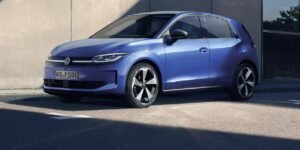
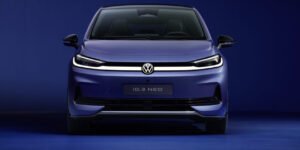
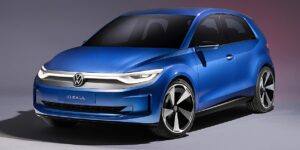
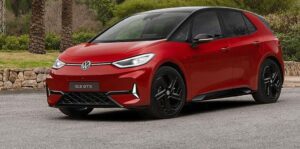
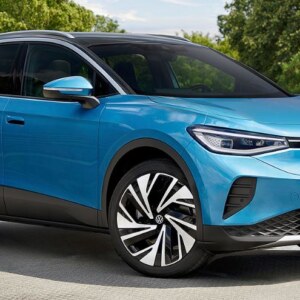
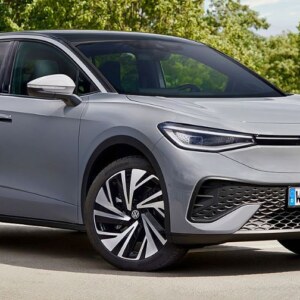
So you’re looking at affordable electric hatchbacks. Two new ones are turning heads: the Volkswagen ID.Polo and the Fiat Grande Panda. Both are small, five-door EVs built for city life. The VW is for someone who wants a familiar, solid hatchback with a bit of tech polish. The Fiat? That’s for the buyer who wants fun, style, and a lower price tag. Why compare them now? Because both are arriving in places like Africa and Europe at nearly the same time, giving mainstream EV shoppers real choices for the first time.

Volkswagen ID.Polo vs Fiat Grande Panda

Range and charging

The VW ID.Polo comes with two battery sizes. The smaller one (37 kWh) gives you about 300 km of WLTP range. The bigger one (52 kWh) stretches to 450 km. The Fiat Grande Panda has a single 44 kWh battery rated at roughly 320 km. Real-world driving will drop those numbers a bit, but the VW’s bigger battery is clearly better for longer trips.

On a fast charger, the VW hits 130 kW. That means 10–80% in about 23 minutes. The Fiat does 100 kW and takes around 27 minutes for the same charge. Both do 11 kW AC at home. Not a huge difference, but the VW wins if you road-trip often.

Price and who should buy what

Here’s where it gets personal. The VW ID.Polo starts around €20,000 (~22,000USD).TheFiatGrandePanda?About€18,000( 19,700 USD). That’s real money you could save.

Availability is still shaking out. Both are confirmed for Europe. Fiat has been louder about bringing the Panda to Africa and the Middle East. VW’s plans for places like South Africa are less certain right now. So if you’re in Nairobi or Johannesburg, double-check what’s actually coming to your dealer.

Other EVs worth a look

You could also check out the Renault 5 E-Tech or the Citroën ë-C3. They’re in the same affordable hatchback space. But the ID.Polo and Grande Panda stand out because one offers superior range and the other offers a lower entry price. No other pair makes that trade-off this clearly right now.

Pros and cons

Volkswagen ID.Polo

  • You get noticeably more range if you choose the bigger battery, which means fewer anxious glances at the range meter on longer drives.

  • The interior feels sturdier and more grown-up, with actual buttons and a surprisingly large 441-liter boot for a small car.

  • Faster charging saves you a real 5–10 minutes at a highway stop, which adds up over time.

  • It costs more upfront, so you have to really want that extra range to justify the price.

  • There’s a real chance it won’t arrive in some African markets as soon as the Fiat does.

Fiat Grande Panda

  • The lower price makes going electric genuinely easier on your wallet, no stretching required.

  • It’s more fun to look at and park – the retro design turns heads, and the small size slips into tight city spots like a dream.

  • Despite being compact, you still get a 361-liter boot, which is plenty for a weekly shop or a couple of weekend bags.

  • You’ll feel the range limit if you regularly drive more than 250 km in a day.

  • The cabin uses cheaper plastics, so it doesn’t feel as premium or quiet on the highway as the VW.

Quick verdict

Pick the Volkswagen ID.Polo if your main worry is running out of juice on longer trips and you want a nicer place to sit while you wait to charge. Pick the Fiat Grande Panda if your budget is tighter and you care more about saving money right now than having maximum range. It’s a simple trade: pay more for peace of mind, or pay less and live with a few more charging stops.

Related EV Comparisons

 
  Volkswagen ID.Polo Fiat Grande Panda
Price $27,000.00 $25,000.00
Our Rating 5.8 5.2
Brand VOLKSWAGEN Fiat
Category Electric Cars Electric Cars

MODEL

Full Model Name Volkswagen ID.Polo
Generation 1st Generation (Electric)
Segment / Class Supermini / B-Segment
Available Trims / Variants Trend, Life, Style
Powertrain Options 85 kW (LFP) · 99 kW (LFP) · 155 kW (NMC)
Special Editions ID.Polo GTI — 166 kW / 226 hp, arriving 2027
Additional Notes First ID. family model to carry a legacy VW nameplate; first model featuring VW's new "Pure Positive" design language

LAUNCH

Reveal Date December 2025 (pre-production preview) / April 2026 (official world premiere) 2024, June 17
Launch Year 2026
Availability Status On sale in Germany from April 29, 2026 — 52 kWh NMC variant first; 37 kWh LFP variant delayed to late 2026 or early 2027 due to LFP cell supply constraints Available to order. Released 2024, October
Brand / Manufacturer Volkswagen AG
Country of origin Germany (brand); assembled in Spain
Assembly Country Spain (Martorell, Catalonia)
Markets Available Europe (confirmed); UK (confirmed, later 2026); no confirmed timeline for US, African, or Asian markets
Base Price (USD) ~$27,600 USD (based on €24,995 launch price at approximate conversion) € 25,000
Additional Notes UK estimated from ~£21,700. At launch, only variants above €30,000 are available; the advertised €24,995 entry price is delayed

BATTERY

Battery Capacity 37 kWh (usable, net)
52 kWh (usable, net)
43.8 kWh usable, 44 kWh total
Battery Chemistry LFP (Lithium Iron Phosphate) - 37 kWh Variant
NMC (Nickel Manganese Cobalt) - 52 kWh Variant
Air-cooled Li-ion LFP battery (400V type)
Battery Architecture Cell-to-Pack (CTP), floor-mounted between axles
Thermal Management Liquid cooling
Range (WLTP/CLTC/EPA) Up to 329 km / 204 miles WLTP - 37 kWh Variant
Up to 454 km / 282 miles WLTP - 52 kWh Variant
199 mi WLTP
Energy Consumption 14.6–13.3 kWh/100 km - 52 kWh Variant 280 Wh/mi WLTP
Regen Braking (Max kW) Yes
Heat Pump
AC Charging (Max kW) 11 kW Type 2 7 kW, 20-80% in 3 h 43 min
Type 2 11 kW, 20-80% in 2 h 55 min
DC Charging (Max kW) 90 kW - 37 kWh Variant
105 kW - 52 kWh Variant
CCS 100 kW max, 20-80% in 32 min
Charging Time (10–80%) ~27 minutes - 37 kWh Variant
~23–24 minutes - 52 kWh Variant
Cell Brand PowerCo (Volkswagen Group battery subsidiary, Salzgitter, Germany)
Additional Notes LFP chemistry allows regular 100% charge without significant long-term degradation; V2L standard across all variants at 3.6 kW output

PERFORMANCE

Motor Type APP290 Permanent Magnet Synchronous Motor (PMSM)
Motor Configuration Front-mounted, single motor
Front Motor Output (kW / HP) 85 kW / 114 hp
99 kW / 133 hp
155 kW / 208 hp
Power Output (kW / hp) 85 kW / 114 hp
99 kW / 133 hp
155 kW / 208 hp
FWD 113 hp (83 kW)
Torque (Nm) 290 Nm - 85 kW
290 Nm - 99 kW
90 lb-ft (122 Nm)
0–100 km/h / 0-60 mph (seconds) The acceleration numbers are an easy way to compare car performance. We list either time from 0 to 100 km/h or time from 0 to 60mph, depending on which number(s) the manufacturers provide. The lower the acceleration time, the higher performance the car is. 11.0 seconds - 85 kW
9.8 seconds - 99 kW
11 sec 0-62 mph
Top Speed (km/h / mph) 160 km/h / 99 mph - 85 kW
160 km/h / 99 mph - 99 kW
82 mph (132 km/h)
Transmission / Drive Single-speed, FWD
Drive Mode Yes — includes Eco, Comfort, Sport, and B mode (one-pedal)

BODY

Body Style 5-door hatchback 5 door hatchback, 5 seats
Platform / Architecture MEB+ (MEB Entry) Smart Car
Dimensions (L×W×H mm) 4,053 mm × 1,816 mm × 1,530 mm 157.4 x 69.4 x 61.8 in (3999 x 1763 x 1570 mm)
Drag Coefficient (Cd) 0.264 100.0 in (2540 mm)
Wheelbase (mm) 2,600 mm
Kerb Weight (kg) 1,568 kg (37 kWh) · 1,576 kg (52 kWh) EU: 3331 lb unladen, 4376 lb gross
Suspension (Front / Rear) Front - MacPherson strut
Rear - Torsion beam (new development, EV-specific tuning)
Wheel Size (inches) R16, R17
Brakes (Front / Rear) Disc/disc; one-box brake system combining hydraulic and brake-by-wire
Parking Brake Electronic (assumed, standard on MEB platform)
Trunk/Boot Capacity (L) 441 L (seats up) · 1,240 L (seats folded) EU: 12.7 ft³, 46.4 ft³ max
Frunk/Bonnet Capacity (L) None — climate compressor occupies the front No
Towing Capacity (kg) EU: 1213 lb unbraked, 1213 lb braked
Wading Depth (mm) Not applicable (urban supermini)
Sunroof Panoramic glass roof — optional
Additional Notes 25% more cargo volume than combustion Polo; flat floor due to CTP battery design

SAFETY

Airbags (count) Side airbags, front, head airbag system
Anti-lock Braking System (ABS) Yes
Electronic Brakeforce Distribution (EBD) Yes
Electronic Stability Control (ESC) Yes
Traction Control System (TCS) Yes
Low-Speed Pedestrian Warning Yes — standard (EU regulatory requirement)
Structural Safety MEB Entry platform; 5-star Euro NCAP rating
Tyre Pressure Monitoring (TPMS) Yes — standard (EU regulatory requirement)
Child Seat Anchors (ISOFIX) Yes
Reversing Camera Yes — standard (EU regulatory requirement)
Hill Start Assist Yes — standard
Driver Assistance (ADAS) SAE Level 2 (with optional Connected Travel Assist)
ADAS Features Emergency braking, adaptive cruise control, lane assist, side assist — standard or optional depending on trim
Autonomous Driving System Name Connected Travel Assist (optional)
Autonomous Driving Hardware Cameras (confirmed); no LiDAR
Over-the-Air (OTA) Safety Updates Yes — MEB platform supports OTA
Additional Notes No aviation-grade redundancy; standard passenger car safety architecture

COMFORT

Seating Capacity 5 Heated front seats
Seat Material Varies by trim
Driver Seat Adjustment 12-way electrically adjustable — optional (top trim)
Passenger Seat Adjustment Manual (standard); electrically adjustable on higher trims
Power Seats Optional
Seat Heating Available
Massage Function Available — optional on top-spec trim
Climate Control Automatic air conditioning — standard
Steering Wheel Physical buttons retained; steering wheel controls standard
Roof Type Solid standard; optional panoramic glass roof No glass roof
Ambient Lighting Yes — available for dashboard and door panels
Rain-Sensing Wipers Standard
Heated Mirrors Standard
Interior Rear-View Mirror Standard
Central Armrest Standard
Gear Selector Shift-by-wire selector (standard MEB layout)
Noise Insulation Wind noise noted at motorway speeds in prototype testing
Bluetooth / Wi-Fi Yes Wireless Android Auto and Apple CarPlay
Wireless Charging Yes
Parking Aids Rear parking sensors standard; front sensors on higher trims
Additional Notes Return to physical backlit shortcut buttons — a deliberate reversal of the touch-only approach used on earlier ID. models

DISPLAYS

Centre Screen (inches) 13-inch touchscreen (tablet-style layout, not dashboard-integrated) 10.25" touchscreen
Driver's Display (inches) 10-inch digital instrument cluster Yes
Head-Up Display (HUD) No
Rear Passenger Screen Not available
Rotatable / Adjustable Screen No
Operating System Volkswagen software (MEB platform OS)
Mirror Link / Apple CarPlay / Android Auto Yes — standard (wireless assumed)
Voice Control Yes — standard
Additional Notes Volume knob between front seats retained for physical audio/media control

LIGHTING

Headlight Type (LED/Matrix/Laser) LED standard; IQ.LIGHT LED matrix headlights on Style trim
High Beams LED — standard
Daytime Running Lights (DRL) LED — standard
Adaptive Headlights Yes — on Style trim with IQ.LIGHT matrix
Delayed Headlight Shut-off Standard
Tail Light Design 3D LED tail light clusters (Style trim); illuminated VW logo front and rear on Style
Interior Ambient Lighting Yes — optional
Additional Notes Illuminated LED light strip across front on Style trim; IQ.LIGHT matrix confirmed on top-spec only

INFOTAINMENT & AUDIO

Sound System Brand Harman Kardon — optional
Speaker Count 10 speakers — optional Harman Kardon system
Audio Output (watts) 425 watts — optional Harman Kardon system
AM/FM/DAB Radio FM/DAB — standard; AM not confirmed
Navigation System Yes — integrated
USB Ports (count/type) Front USB-C standard; rear USB ports confirmed
Rear Entertainment Not available
Gaming / App Store Not available
Car KTV Not available
Dashcam Not available
Additional Notes Subwoofer in trunk — part of optional Harman Kardon package

TECHNOLOGY

Smartphone App Control Yes — myVolkswagen app (standard on MEB platform)
Keyless Entry / Start Yes — available
Vehicle-to-Load (V2L) Yes — 3.6 kW, standard across all variants
Remote Climate Control Yes — via myVolkswagen app
Over-the-Air Map Updates Yes — standard OTA update capability
Additional Notes V2L standard across all trims is a significant feature at this price point

OWNERSHIP

Official Dealer Network Available through Volkswagen dealer network in Europe;
Spare Parts Availability European markets — good (VW Group network);
Resale Value Too early to assess; comparable to Renault 5 segment expected
Roadside Assistance Via VW dealer network in covered markets
Additional Notes Eligible for 2026 European CEE subsidy and European battery super bonus in EU markets; battery produced in Salzgitter, Germany

Note

Data Source Volkswagen Newsroom (official); InsideEVs; Motor1; Drive Electric; Electrifying.com; go-electra.com; EVSpecifications.com
Last Updated May 2026
Additional Notes Several specs remain provisional — full official specification sheets not published for all trim levels at time of writing
  Volkswagen ID.Polo Fiat Grande Panda

Disclaimer Note

Specifications sourced from manufacturer data and may reflect WLTP, CLTC, or EPA test conditions. Import prices in your local are estimates based on grey-market landing costs and exclude duties, clearing fees, and local taxes. Figures are subject to change without notice. Always verify with your local importer before purchase. We can not guarantee that the information on this page is 100% correct

Electric Vehicles Filter

Recent EV News

EV Mobility Challenges in Accra: New Report Reveals Infrastructure Gaps Slowing Ghana's Electric Vehicle Sector

EV Mobility Challenges in Accra: New Report Reveals Infrastructure Gaps Slowing...

A new industry report from R.O Pita Pan Enterprise, an Accra-based enterprise monitoring Ghana's mobility and energy sector, identifies six major barriers preventing electric...

Recent EV Updates

Best Electric SUVs in America 2026: Full Comparison Guide

Best Electric SUVs in America 2026: Full Comparison Guide

The American electric SUV market has never been this crowded. You've got entry-level picks under $35K, luxury barges pushing six figures, and everything in...