- Home
- Electric Vehicles
- Compare
- XPeng MONA M03 vs BYD Qin Plus EV
XPeng MONA M03 vs BYD Qin Plus EV
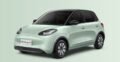
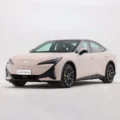
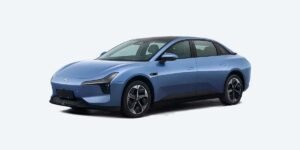
XPeng MONA M03 and BYD Qin Plus EV are compact electric sedans. Both use electric powertrains for daily commuting and short highway travel. XPeng MONA M03 targets urban buyers who want technology features and efficient city driving. BYD Qin Plus EV targets buyers who want balanced range, practicality, and value in a family EV.
Range comparison shows differences. XPeng MONA M03 focuses on city range with efficiency for short to mid distance travel. BYD Qin Plus EV offers longer range suited for extended daily use and highway trips. Charging differs. XPeng uses standard AC and public DC options. BYD Qin Plus EV supports AC and faster DC options with broader compatibility for quick top ups.
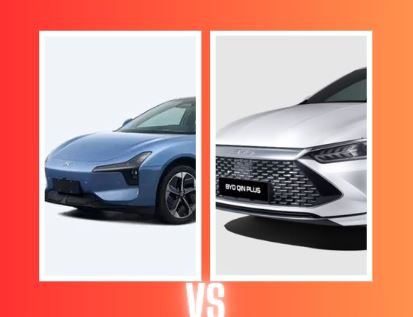
Price positioning places XPeng M03 below BYD Qin Plus EV. BYD Qin Plus EV sits above in price due to larger battery and extended range. XPeng M03 sells mainly in China and select regions. BYD Qin Plus EV also sells in China and some export markets. This comparison helps you choose between urban focus and broader range needs.
QUICK VERDICT; Choose XPeng MONA M03 for city centric use and tech features. Choose BYD Qin Plus EV for greater range and everyday flexibility.
Related EV Comparisons
- XPeng MONA M03 vs BYD Dolphin
- BYD Seagull vs DongFeng Nammi Box
- XPeng G9 vs BMW iX3
- Mercedes CLA vs BYD Seal (Atto 4)
- Lynk & Co 02 vs BYD Sea Lion 7

MODEL
| Models |
M03 515 M03 620 M03 502 Max M03 600 Max Qin Plus EV 420 km and 510 km range versions; also higher-power versions (~150 kW) in some markets |
LAUNCH
| Announced | August 2024 February 2024 |
| Status | In production In production / current as a BEV model |
| Country of origin | China China |
| Base Price | 16,900 to 19,800 USD From ~ US$ 12,600 up to ~US$ 23,000 in China depending on trim. |
PERFORMANCE
| Power |
188 hp FWD 215 hp FWD on higher trims 100 kW (≈ 136 hp); front-wheel drive (single electric motor) for most trims; some higher-power (~150 kW ≈ 204 hp) versions in special trims |
| Torque |
225 Nm 250 Nm on higher trims 180 Nm for the 100 kW version; ~250 Nm for higher-power version. |
| Acceleration The acceleration numbers are an easy way to compare car performance. We list either time from 0 to 100 km/h or time from 0 to 60mph, depending on which number(s) the manufacturers provide. The lower the acceleration time, the higher performance the car is. | 0 to 100 km/h in 7.4 to 7.8 seconds 7.3 seconds for standard EV version; the higher-power versions likely faster |
| Max Speed | 155 to 170 km/h 130 km/h for standard trims; some versions list up to ~150 km/h. |
BATTERY
| Capacity |
51.8 kWh 62.2 kWh Two main: 48 kWh and 57.6 kWh; in some versions larger (~72 kWh) for longer range trims. |
| Tech | LFP Lithium-Iron-Phosphate (LFP), Blade Battery technology. |
| Range | 320 to 385 miles (CLTC) ~ 420 km for 48 kWh; ~ 510 km for 57.6 kWh version. |
| Consumption | 11.5 to 11.8 kWh per 100 km ~ 11.6-12.5 kWh/100 km depending on version |
| Recuperation | Standard regenerative braking |
| Heat Pump | |
| AC Charging | 6-8 hours for full charge depending on charger power |
| DC Charging | 30 to 80 percent in about 26 minutes 30-80% in about 0.5 hours (≈30 minutes) for fast DC charging |
| Others | High thermal stability due to LFP chemistry |
BODY
| Type | 5 door liftback 5 seats 4-door sedan / 5 seats |
| Platform | XPeng compact EV platform Built on BYD’s e-Platform / Blade battery architecture / new generation EV platform. |
| Dimensions |
Length 4780 mm Width 1896 mm Height 1445 mm (L×W×H) 4765 × 1837 × 1515 mm |
| Drag Co-Efficient | 0.194 Cd |
| Wheelbase | 2815 mm 2718 mm |
| Weight | 1660 to 1740 kg 1,586 kg (for 420 km version) and ~ 1,657 kg for 510 km version |
| Suspension |
MacPherson front Torsion beam rear Front: MacPherson Independent; Rear: Multi-Link Independent in higher trims |
| Wheels | 18 or 19 inch 215/55 R17 |
| Trunk/Boot |
621 liters Up to 1602 liters with seats folded |
| Others | Focus on aerodynamics and interior space |
DISPLAYS
| Centre | 15.6 inch touchscreen Rotating touchscreen ~ 12.8-inch in some trims |
| Driver's Display | Small digital screen on select trims |
| Others | Snapdragon 8155 chipset Some trims have voice control, wireless charging, panoramic 360° camera etc. |
COMFORT
| Seats |
5 seats Heated and ventilated front seats on higher trims 5 seats; material varies by trim (cloth / leatherette in higher trims) |
| Roof | Panoramic glass roof |
| Parking Aids |
Cameras Ultrasonic sensors Radar Likely 360° camera in some trims; parking sensors/radars in higher versions. |
| Connectivity |
Voice control Over the air updates Voice control; wireless charging; infotainment via rotating touchscreen; standard connectivity features. |
| Others | Minimal physical buttons Advanced driver aids in higher trims; good cabin features; climate control with heat pump system etc |
SAFETY
| Airbags |
Airbags Multiple airbags |
| Driving Aids |
Adaptive cruise control Lane keep assist Automatic emergency braking Versions with lane-keeping, adaptive cruise control are mentioned in some listings. |
| Self Driving | XPeng XNGP on Max trims Some L2-level assistance in higher trims: lane keeping, adaptive cruise, assisted parking etc. |
Note
| Others |
Designed as a high efficiency affordable EV
Heat pump helps improve efficiency in cold or mild climates. ydchinauto.com Trim differences matter: higher-power / longer-range versions cost more, weigh more. Range figures are CLTC standard; real-world (WLTP or local) likely lower. Charging speed depends heavily on charger availability. |

|
Disclaimer Note
We can not guarantee that the information on this page is 100% correct