A new industry report from R.O Pita Pan Enterprise, an Accra-based enterprise monitoring Ghana’s mobility and energy sector, identifies six major barriers preventing electric vehicles from gaining reliable traction in Accra — and points to five emerging commercial opportunities for operators willing to fill the gaps.
The report, titled “EV Mobility Challenges in Accra: Infrastructure Gaps, Operational Risks & Emerging Opportunities,” was shared with EV Car Latest as Ghana’s EV sector draws growing attention from fleet operators, renewable energy companies, and mobility startups across West Africa.
Ghana’s EV Sector Is Growing — But the Supporting Infrastructure Isn’t Keeping Up
Rising fuel prices, lower long-term running costs, and corporate sustainability targets are pushing more Ghanaian buyers and fleet managers toward electric vehicles. Adoption in Accra is visible and increasing, particularly among individual owners, corporate fleets, and mobility startups.
But the report is direct: vehicle imports alone will not build a functional EV market. What Accra currently lacks is the operational layer underneath — reliable charging access, user support, trained technicians, and energy solutions that don’t depend entirely on a grid that has reliability issues.
6 EV Mobility Challenges Currently Affecting Accra
1. Limited Public Charging Infrastructure
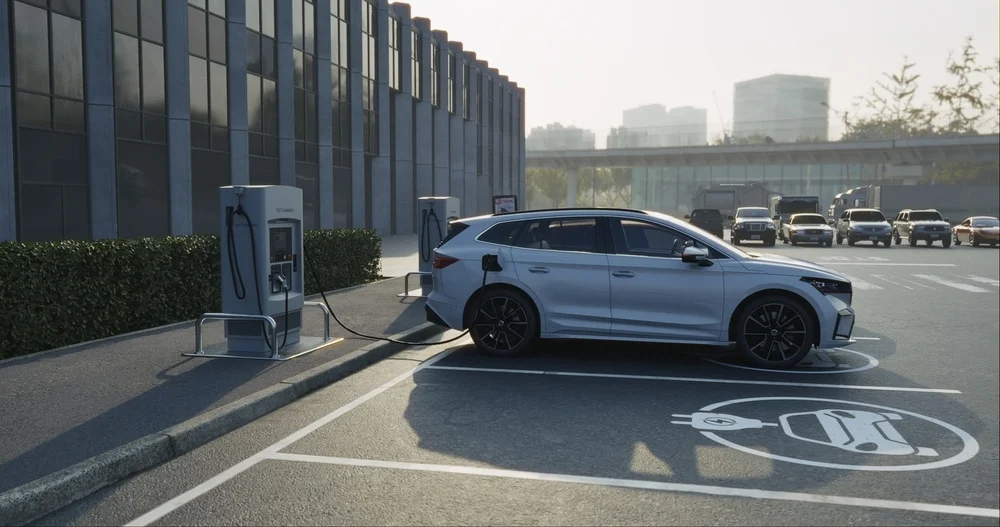
Public chargers in Accra are few in number and concentrated in specific parts of the city. Most of Accra’s neighbourhoods have no accessible charging points. For drivers on longer routes or caught in the capital’s heavy traffic, that creates genuine operational risk — not just inconvenience.
2. Range Anxiety Driven by Traffic Conditions
EVs should theoretically perform well in stop-and-go urban traffic, which is most of Accra’s driving. But when drivers don’t know whether a functioning charger will be available at the other end of a journey, uncertainty creeps in. The report classifies this as a psychological barrier that affects adoption decisions independently of vehicle capability.
3. No Emergency EV Support System
There is currently no structured roadside assistance for EV users in Accra. No mobile charging units. No dedicated towing coordination for low-battery situations. No rapid-response services. As individual ownership and fleet usage grow, the cost of this gap rises sharply.
4. Power Grid Reliability Undermines Charging Operations
EV charging infrastructure depends on stable electricity supply. Ghana’s grid fluctuations and outages affect charging station uptime, create uncertainty for fleet operators, and add operational complexity for individual users. The report identifies solar-assisted and hybrid charging setups as the practical path forward — viable given Ghana’s renewable energy potential.
5. Low Public Awareness of EV Ownership Realities
Many potential buyers still have limited understanding of charging logistics, real operating costs, battery lifespan, and maintenance requirements. Educational initiatives across Ghana’s EV sector remain thin, slowing first-purchase decisions among people who could otherwise afford to adopt.
6. Shortage of Trained EV Technicians
EV diagnostics, battery servicing, and charging system maintenance are different from conventional vehicle repair. Ghana currently has very limited specialist capacity in these areas. The report flags this as a bottleneck that will become more severe — and more expensive — as the national EV population grows.
5 Commercial Opportunities the Report Identifies
The same gaps that constrain EV adoption also represent business and partnership opportunities for operators moving now:
- Emergency EV support networks — roadside assistance, mobile charging response, and towing coordination tailored to EV users
- Charging coordination platforms — real-time charger availability, route planning tools, and support contacts
- Fleet charging and uptime management — scheduling systems, operational monitoring, and maintenance coordination for commercial EV fleets
- Solar and hybrid charging hubs — decentralised charging with battery backup, reducing dependence on grid stability
- EV technical training and certification — workforce development programmes for EV servicing, diagnostics, and charging system maintenance
The report recommends public-private collaboration across EV distributors, utility companies, renewable energy providers, commercial property developers, and government agencies to accelerate ecosystem development.
Why This Matters Beyond Ghana
Accra’s challenges are not unique. The same infrastructure gaps — unreliable charging networks, no emergency support, grid dependence, low technician capacity — appear across Lagos, Nairobi, Kampala, and Abidjan. What distinguishes Accra’s situation is that an organised body of analysis is now mapping these gaps explicitly, creating a foundation for targeted investment and policy attention.
For EV operators, fleet managers, and infrastructure investors watching West Africa, that mapping work matters.
This analysis is based on the report “EV Mobility Challenges in Accra: Infrastructure Gaps, Operational Risks & Emerging Opportunities,” prepared by R.O Pita Pan Enterprise, Accra, Ghana. Contact: ropitapanenterprise@gmail.com | +233 54 593 0983
Related EV News
- South Africa’s EV Market in 2026: Growth, Brands & Opportunity
- Kenya Electric Car Guide 2026: Models, Prices & What to Buy
- BYD Cars Nigeria: Prices, Specs, and Where to Buy (2026)
- Electric Motorcycle Nigeria: Best Options for Lagos & Abuja (2026)
- Electric Car vs Petrol: How Much Can You Save in Nigeria?