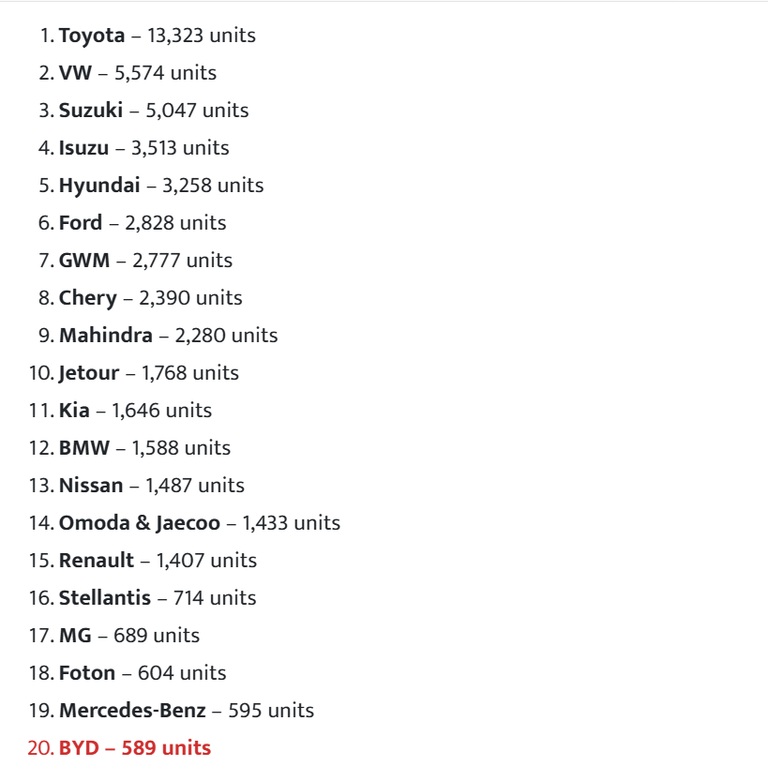
Chinese electric vehicle manufacturer BYD (Build Your Dreams) has publicly released its South African sales figures for the first time since launching in the country three years ago in 2023 — and the numbers tell a complex story.
BYD Sells 589 EVs in a Single Month
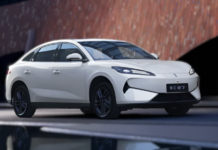
BYD recorded 589 EV sales last month, with its compact hatchback model driving nearly 40% of total sales. The model offers a range of 300–400km, making it a viable city commuter but impractical for South Africa’s long-distance travel demands.
The affordability of BYD’s lineup — widely attributed to Chinese government subsidies — remains its biggest competitive advantage in the local market.
Why South Africa Is Not Yet Ready for EVs
Despite the milestone, industry observers argue that South Africa’s EV market remains firmly in its infancy. Several structural challenges continue to hold back mass adoption:
- Unreliable electricity supply: Load shedding may not be officially declared, but “unplanned” outages averaged 300 incidents daily nationally over the past 12 months.
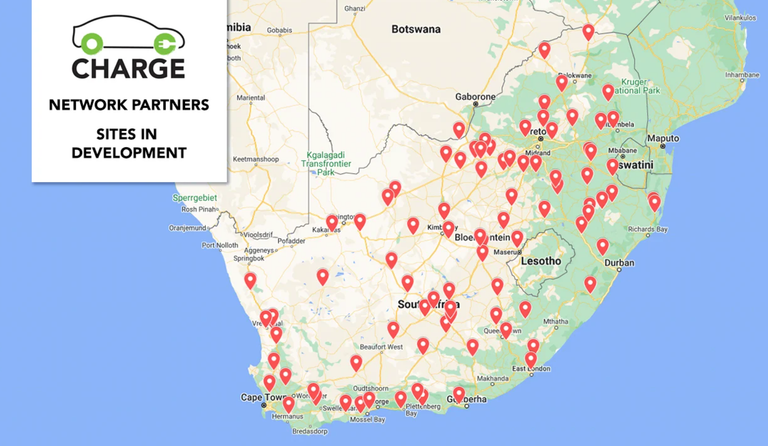
- Insufficient charging infrastructure: Charging stations remain sparse, with most sites offering only two chargers — creating queuing risks on key routes.
- Range limitations: South Africa’s vast geography means daily drives of 200–300km are common. Consumers are unlikely to commit to EVs until ranges reach 800–1,000km.
- Slow charging speeds: Many stations operate at only 60kW, meaning a vehicle with a 78kWh battery requires roughly an hour per charge. A trip to Durban, for example, would require two charging stops — each with limited charger availability.
Loadshedding Threat Looms Larger by 2029
Adding to consumer hesitation, two coal power stations are scheduled for decommissioning in 2029. Energy analysts warn this could trigger the return of formal load shedding, making the prospect of charging an EV at home even less reliable.
Tesla’s South African Launch on Hold
Tesla, which had been expected to enter the South African market this year, faces additional headwinds amid strained US–South Africa diplomatic relations. Under the current trade agreement, all vehicle imports — including EVs — attract a 25% tariff, while EU imports face 18%. This tariff structure further inflates EV pricing for non-Chinese brands.
Hybrids Make More Sense — For Now
Experts and industry insiders agree that hybrid vehicles are a more practical solution for South Africa’s current reality. One EV charging infrastructure professional, recently headhunted to join the sector, estimates the network is still five years away from being operationally viable.
South Africa is broadly considered a decade behind global EV adoption benchmarks. Until charging infrastructure expands across all major routes, electricity supply stabilises, and vehicle ranges improve significantly, the EV market will remain a niche segment.
The bottom line: BYD’s sales figures confirm demand exists — but the infrastructure, energy reliability, and range capabilities needed to support mass EV adoption in South Africa remain years away.
Related EV News
- 2026 BYD Seal 06 GT and DM-i Touring Prices, Specs
- BYD Song Ultra EV Gets 15 Orders Per Store in 72 Hours
- 2026 Denza D9 Pre-Sale Starts March 29 With 800 km Range
- 2026 BYD Seal 06 GT & DM-i Wagon Launch: Fast Charging & Upgrades
- BYD Song Ultra EV: 5-Min Charge, 441-Mile Range, $22K Price