- Home
- Electric Vehicles
- Hyundai
- Hyundai IONIQ 9 2026
Hyundai IONIQ 9 2026

- Drive Type: RWD, AWD
- Body Type: 5-door, 3-row SUV
- Self Driving:
- Airbags: Yes
PROS
- 800V DC fast charging delivers a 10–80% charge in 24 minutes at a 350 kW station, which is the fastest in the non-luxury three-row segment.
- All trim levels exceed 300 miles of EPA-rated range, removing the compromise that affects most rivals in this class.
- A seven-seat cabin with 86.9 cubic feet of total cargo space and competitive base pricing below $61,000 makes it one of the more accessible three-row EVs at this specification level.
CONS
- The 10.9 kW AC onboard charging rate is unchanged from older E-GMP models, meaning home charging on a standard 7.4 kW wall box takes over 14 hours from near-empty
- The IONIQ 9 has no confirmed official launch in Nigeria, Kenya, or South Africa
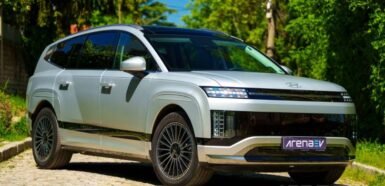
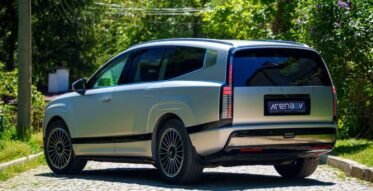
The 2026 Hyundai IONIQ 9 is a full-size, three-row, all-electric SUV manufactured by Hyundai and positioned as the brand’s EV flagship. It is a midsize all-electric SUV, 199.2 inches long, seating up to seven people across three rows, and offered in both rear-wheel-drive and all-wheel-drive configurations. It is Hyundai’s first three-row battery-electric model and the brand’s direct answer to the Kia EV9, sharing the same E-GMP 800V platform.
Every 2026 IONIQ 9 uses a 110.3 kWh lithium-ion battery pack. The base single-motor RWD configuration produces 215 hp, the dual-motor AWD SE/SEL trims produce 303 hp, and the Performance AWD variants top out at 422 hp. EPA-estimated range is 335 miles on the RWD S, 320 miles on the AWD SE/SEL, and 311 miles on the Performance trims — the only non-luxury three-row EV with over 300 miles in every configuration. On AC, the IONIQ 9 accepts up to 10.9 kW onboard; on DC, the 800V architecture supports a peak of 350 kW. The 10–80% charge benchmark is 24 minutes at a 350 kW station. AC onboard charge rate has been confirmed via owner documentation but has not been independently benchmarked by Hyundai in official press materials — flag if quoting for spec sheets.
US pricing runs from $60,555 for the RWD S to $78,090 for the AWD Performance Calligraphy Design, before destination fees. The IONIQ 9 has no official distribution in Nigeria, Kenya, or South Africa; grey-market import landed costs in Nigeria — including CIF shipping, 35% import duty, 7.5% VAT, and port clearing — would realistically push the base trim above ₦130–140 million at current exchange rates, making it a premium grey-market acquisition rather than a mass-market option. Within Hyundai’s own lineup, it sits above the IONIQ 5 and IONIQ 6. External rivals include the Kia EV9 and the Mercedes-Benz EQB; the closest direct spec and platform comparison is the Kia EV9, which shares the same E-GMP architecture, similar battery size, and overlapping price band.
Hyundai IONIQ 9 2026 Photos
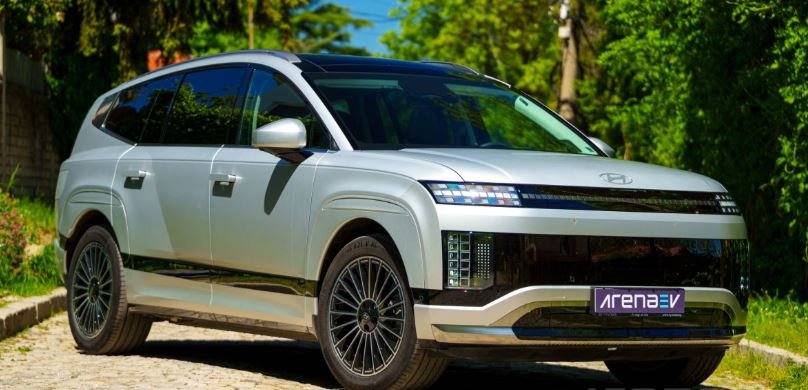
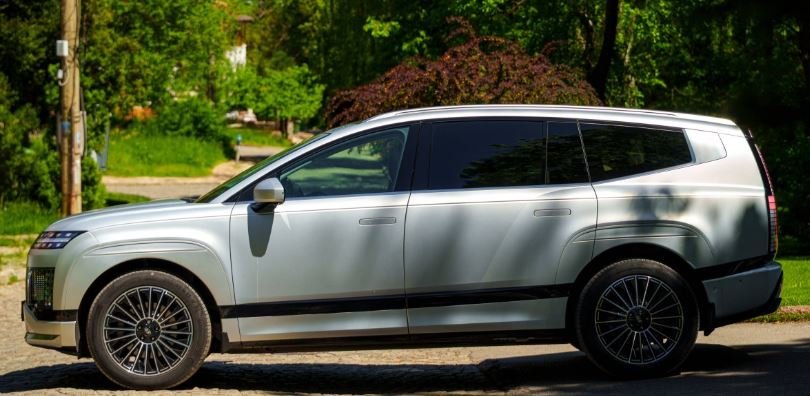
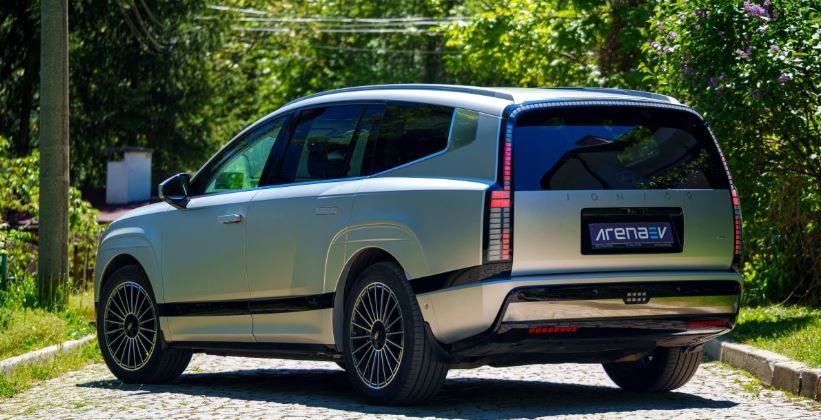
Full Electric Vehicle Specifications
MODEL
| Full Model Name | 2026 Hyundai IONIQ 9 |
| Segment / Class | Midsize three-row electric SUV |
| Available Trims / Variants | S (RWD), SE (AWD), SEL (AWD), Performance Limited (AWD), Performance Calligraphy (AWD), Performance Calligraphy Design (AWD) |
| Powertrain Options | Single-motor RWD (215 hp) · Dual-motor AWD (303 hp) · Dual-motor Performance AWD (422 hp) |
PRICE & AVAILABILITY
| Base Price (USD) | $58,955 (S RWD, before destination) — $78,090 (Performance Calligraphy Design AWD) |
| Availability Status | On sale (US, May 2025) |
| Markets Available | United States, Canada, South Korea; select others TBC |
| Brand / Manufacturer | Hyundai Motor Company |
BATTERY & CHARGING
| Battery Capacity | 110.3 kWh gross |
| Range (WLTP/CLTC/EPA) | 335 mi / 539 km (S RWD) · 320 mi / 515 km (SE/SEL AWD) · 311 mi / 500 km (Performance AWD) — EPA cycle |
| DC Charging (Max kW) | 350 kW peak |
| Charging Time (10–80%) | ~24 minutes at 350 kW DC |
| AC Charging (Max kW) | 10.9 kW |
| Battery Warranty | 10 years / 100,000 miles |
| Energy Consumption | 92 MPGe (S) · 88 MPGe (SE/SEL) · 85 MPGe (Performance) |
PERFORMANCE
| Power Output (kW / hp) | 160 kW / 215 hp (RWD) · 226 kW / 303 hp (AWD) · 315 kW / 422 hp (Performance AWD) |
| 0–100 km/h / 0-60 mph (seconds) The acceleration numbers are an easy way to compare car performance. We list either time from 0 to 100 km/h or time from 0 to 60mph, depending on which number(s) the manufacturers provide. The lower the acceleration time, the higher performance the car is. | 4.9 sec claimed (Performance AWD) |
| Motor Configuration | Single rear (S RWD) · Dual front+rear (SE/SEL and Performance AWD) |
| Torque (Nm) | ~350 Nm / 258 lb-ft (RWD) · ~605 Nm / 446 lb-ft (AWD) · ~700 Nm / 516 lb-ft (Performance AWD) |
| Top Speed (km/h / mph) | ~200 km/h / 124 mph (Hyundai stated — Performance AWD) |
BODY & DIMENSIONS
| Dimensions (L×W×H mm) | 5,060 × 1,981 × 1,791 mm |
| Trunk/Boot Capacity (L) | 620 L (behind row 3) · 1,323 L (behind row 2) · 2,461 L (maximum) |
| Body Style | 5-door, 3-row SUV |
| Kerb Weight (kg) | ~2,725 kg / 6,008 lbs (Performance Calligraphy — varies by trim) |
| Ground Clearance (mm) | 175 mm (6.9 in) |
| Frunk/Bonnet Capacity (L) | 88 L (RWD) / 52 L (AWD) |
| Sunroof | Available — panoramic; standard vs optional varies by trim |
SAFETY & DRIVER ASSISTANCE
| ADAS Features | Highway Driving Assist, Lane Keeping Assist, Blind-Spot Collision Warning, Rear Cross-Traffic Alert, Forward Collision Avoidance — full list varies by trim |
| Crash Test Ratings | IIHS TOP SAFETY PICK+ (2025) |
| Over-the-Air (OTA) Safety Updates | Yes |
COMFORT & SEATING
| Seating Capacity | 6 or 7 — configuration-dependent |
| Seat Material | Varies by trim (cloth base, leatherette/leather upper trims) |
| Wireless Charging | Yes |
DISPLAYS & CONNECTIVITY
| Centre Screen (inches) | 12.3 inches |
| Mirror Link / Apple CarPlay / Android Auto | Yes — wireless |
| Driver's Display (inches) | 12.3 inches |
| Head-Up Display (HUD) | Available |
TECHNOLOGY
| Vehicle-to-Load (V2L) | Yes — 1.5 kW / 110 V outlet (trunk) |
| Over-the-Air Map Updates | Yes |
ADDITIONAL SPECS
| Headlight Type (LED/Matrix/Laser) | LED |
| Adaptive Headlights | Yes |
Note
| Data Source | Hyundai Motor America press releases; Cars.com; KBB; Edmunds; Carbuzz; Electrek; Roadtripper.ca |
| Last Updated | June 2026 |
| Editor's Note | Usable battery capacity (vs. gross 110.3 kWh), individual motor output splits, full ADAS feature list by trim, suspension specification, and frunk capacity for US-market RWD/AWD — flag as unconfirmed until Hyundai publishes updated official spec sheet |
User Reviews
Disclaimer Note
Specifications sourced from manufacturer data and may reflect WLTP, CLTC, or EPA test conditions. Import prices in your local are estimates based on grey-market landing costs and exclude duties, clearing fees, and local taxes. Figures are subject to change without notice. Always verify with your local importer before purchase. We can not guarantee that the information on this page is 100% correct