- Home
- Electric Vehicles
- Maxus
- Maxus eDeliver 9
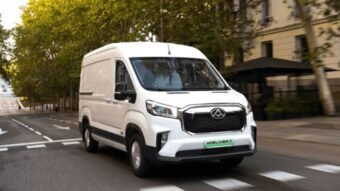
Maxus eDeliver 9

- Drive Type: RWD
- Type: Large electric panel van
- Self Driving: No
- Airbags: 3 Airbags
PROS
- Large cargo capacity
- Multiple battery configurations
- Suitable for fleet electrification
CONS
- Efficiency drops under heavy loads
- Availability varies by market
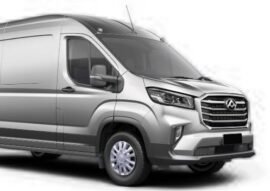
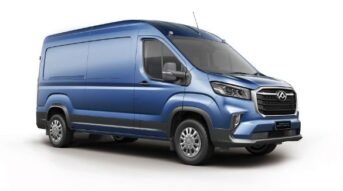
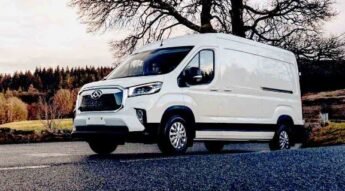
The Maxus eDeliver 9 is a large electric van designed for commercial use. It sits in the full size light commercial vehicle segment. The body style focuses on cargo transport, fleet operations, and logistics duties.
The van uses a large battery pack depending on configuration. Most versions offer around 65 kWh to 88.5 kWh capacity. Real world range typically falls between 200 km and 300 km per charge depending on load, driving conditions, and variant. DC fast charging support allows rapid top ups, while AC charging handles overnight depot charging.
The Maxus eDeliver 9 targets businesses seeking an electric replacement for diesel vans. Pricing varies by region, battery size, and roof length configuration. It suits delivery fleets, urban logistics, shuttle services, and commercial operators managing predictable routes. Within the same brand, buyers often cross shop the Maxus eDeliver 3 and Maxus MIFA 9. Common alternatives include the Mercedes-Benz eSprinter and Ford E-Transit. Compared with the Ford E-Transit, the eDeliver 9 typically offers a larger battery option.
Maxus eDeliver 9 Images


Full Specifications
MODEL
| Models |
Maxus eDeliver 9 Panel Van Maxus eDeliver 9 Chassis Cab Maxus eDeliver 9 Luton Box Van |
LAUNCH
| Announced | 2020 (Global), 2021 (EU/UK rollout) |
| Status | In production and available for purchase |
| Country of origin | China |
| Base Price | ~£55,000–£70,000 (UK, pre-incentive, varies by spec & battery) |
PERFORMANCE
| Power |
150 kW (201 hp) permanent magnet synchronous motor Rear-wheel drive (RWD) |
| Torque | 310 Nm |
| Acceleration The acceleration numbers are an easy way to compare car performance. We list either time from 0 to 100 km/h or time from 0 to 60mph, depending on which number(s) the manufacturers provide. The lower the acceleration time, the higher performance the car is. | ~17 seconds (0–100 km/h, estimated) |
| Max Speed | 100 km/h (electronically limited) |
BATTERY
| Capacity |
51.5 kWh 72 kWh 88.5 kWh |
| Tech | Lithium-ion NMC (Nickel Manganese Cobalt) |
| Range |
51.5 kWh: ~180 km 72 kWh: ~235 km 88.5 kWh: ~296 km (WLTP) / ~353 km (city) |
| Consumption | Approx. 30–35 kWh/100 km (real-world use) |
| Recuperation | Yes – regenerative braking with selectable levels |
| Heat Pump | |
| AC Charging | 11 kW onboard charger (3-phase Type 2) |
| DC Charging | Up to 80–90 kW (10–80% in approx. 40–45 min) |
| Others | Battery warranty: 8 years or 160,000 km |
BODY
| Type | Large electric panel van |
| Platform | Modified Maxus V90 platform (originally ICE-based) |
| Dimensions |
(LWB High Roof): Length: 5,940 mm Width: 2,466 mm (with mirrors) Height: 2,745 mm |
| Wheelbase |
MWB: 3,366 mm LWB: 3,760 mm |
| Weight |
Kerb weight: ~2,300–2,700 kg GVW: up to 3,500–4,050 kg |
| Suspension |
Front: Independent MacPherson struts Rear: Leaf spring solid axle |
| Wheels | 16-inch steel wheels |
| Trunk/Boot |
MWB: ~9.7 m³ LWB High Roof: up to 12.3 m³ |
| Frunk/Bonnet | No |
| Towing |
Up to 1,500 kg (braked trailer) 750 kg (unbraked trailer) |
| Others | Side-sliding door + twin rear doors (wide opening), non-powered |
DISPLAYS
| Centre | 10" or 12.3" central touchscreen (depending on trim) |
| Driver's Display | Analog gauges with 4.2" color multi-info display |
| Head-Up | No |
COMFORT
| Seats |
Driver + dual front passenger bench (3 total) Fabric seats, manual adjustment |
| Roof | No sunroof options available |
| Parking Aids |
Rear parking sensors & reversing camera standard Front parking sensors optional |
| Connectivity | USB port, Bluetooth, smartphone mirroring (CarPlay/Android Auto) |
| Others |
Manual A/C Electric windows Limited cabin storage (no central console box) |
SAFETY
| Airbags | Driver and front passenger airbags |
| Driving Aids |
ABS, ESC, Hill Start Assist Autonomous Emergency Braking (AEB) Lane Departure Warning Blind Spot Monitoring (optional) |
Note
| Others |
Eligible for EV incentives in many countries Competitive real-world range for large e-vans Practical, fleet-friendly, though cabin lacks premium features Maintenance savings vs diesel vans Best suited for urban and mid-range delivery use |
Reviews
Disclaimer Note
We can not guarantee that the information on this page is 100% correct