- Home
- Electric Vehicles
- Compare Electric Cars
- Nissan Ariya vs Toyota bZ4X Touring
Nissan Ariya vs Toyota bZ4X Touring
The Nissan Ariya and Toyota bZ4X Touring are both mid-size electric crossover SUVs from Japanese legacy automakers competing in the same fast-growing segment. The Ariya targets tech-forward buyers who want a premium cabin experience and stronger performance, while the bZ4X Touring is built for reliability-first buyers who trust the Toyota nameplate and want a practical daily EV without surprises. With both models now reaching markets in South Africa, parts of East Africa, and through grey import channels into Nigeria, this comparison is increasingly relevant for African EV buyers in 2025.
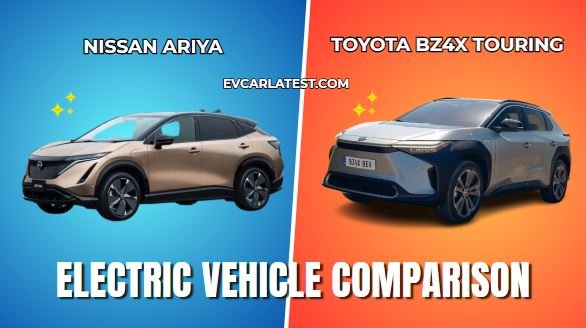
The Nissan Ariya offers a choice between a 63 kWh standard battery or an 87 kWh long-range pack, with the top Venture+ FWD variant delivering up to 304 miles (489 km) EPA-rated range. Real-world range sits closer to 260–270 km in mixed driving conditions. DC fast charging peaks at 130 kW, which means a 10–80% charge takes roughly 35–40 minutes. The Toyota bZ4X, built on the e-TNGA platform, returns an EPA-estimated 252 miles (405 km) on the FWD variant. Real-world figures land around 330–360 km depending on trim. Its DC fast charging maxes at 150 kW, achieving 10–80% in approximately 30 minutes — a slight edge over the Ariya at the charger.
In the US, a new Nissan Ariya starts from around $32,110, while the Toyota bZ4X starts from approximately $37,981. For African buyers importing through South Africa or Kenya, expect landed costs of roughly ZAR 950,000–1,200,000 or KES 4.5–5.5 million depending on trim and duties. In Nigeria, grey market pricing for either model typically runs ₦45–65 million depending on battery size and spec. The bZ4X is formally distributed in South Africa through Toyota’s network, giving it a meaningful service and warranty advantage on the continent. The Ariya remains largely grey-import territory outside of Europe and the US. This page helps you decide: do you need brand-backed aftersales support, or is higher range and tech worth the import risk?
Nissan’s EV ecosystem around the Ariya includes the Nissan Leaf, which sits below it as a more affordable hatchback entry point. Toyota’s lineup around the bZ4X includes the bZ3 sedan and the Lexus RZ 450e for buyers willing to step up. Outside both brands, the Hyundai IONIQ 5 and Kia EV6 are the strongest alternatives in this segment — both offering faster charging and broader availability in Africa. Still, this Ariya vs bZ4X matchup matters because both brands carry stronger resale confidence in African markets than Korean alternatives, which affects long-term ownership value.
The Ariya’s strongest case is its interior. The completely flat floor and dual 12.3-inch displays create a genuinely premium feel that justifies the price over the bZ4X. Its long-range 87 kWh battery makes it more practical for the kind of highway runs common between Nigerian cities. ProPILOT Assist 2.0 adds real hands-free driving value for buyers commuting on better-quality expressways. However, the Ariya’s 130 kW charging ceiling is slow for a modern EV, which adds time on longer trips. Its 5-year depreciation rate of over 63% is also a concern for buyers thinking about resale.
The bZ4X Touring earns trust through Toyota’s established dealer network in Africa, making it far easier to service and warranty. Its 150 kW charging speed is meaningfully faster at public chargers. Its resale value retention is significantly better, losing around 46% over five years against the Ariya’s 63%. On the downside, its interior feels less sophisticated, and range slightly trails the Ariya’s long-range variant — a real consideration for buyers between cities with limited charging infrastructure.
Quick Verdict
Choose the Nissan Ariya if interior quality, longer range, and cutting-edge tech are your priorities and you’re comfortable with grey-import ownership. Choose the Toyota bZ4X Touring if aftersales support, better resale value, and faster DC charging matter more to you. For African buyers specifically, the bZ4X’s formal distribution in South Africa gives it a practical edge most buyers shouldn’t ignore.
FAQ
Is the Nissan Ariya better than the Toyota bZ4X for long trips?
The Ariya’s 87 kWh long-range pack covers more ground on a single charge, making it the stronger option for long-distance driving. That said, the bZ4X’s faster 150 kW DC charging can close the gap on routes with available chargers, making charge stops shorter.
Which is cheaper to maintain, the Nissan Ariya or Toyota bZ4X?
The bZ4X is easier and cheaper to maintain anywhere Toyota has an authorized dealer, including South Africa. The Ariya, arriving mostly as a grey import in African markets, carries higher service risk and longer parts wait times.
Is the Toyota bZ4X available in Nigeria or Africa?
The bZ4X is formally sold in South Africa through Toyota’s dealer network. In Nigeria, it comes via grey importers. Availability is expanding in Kenya and parts of East Africa as EV infrastructure develops.
Related EV Comparsions
- Toyota bZ4X Touring vs Subaru Solterra
- Nissan Micra EV vs Nissan Ariya
- Nissan Leaf vs Kia EV4 hatchback
- Nissan Leaf vs Renault 4 E-Tech
- Chevrolet Equinox EV vs Nissan Ariya

| |
| Price | $39,600.00 |
| Our Rating | |
| Brand | Nissan Toyota |
| Category | Electric Cars Electric Cars |
MODEL
| Available Trims / Variants |
Nissan Ariya 63kWh Nissan Ariya 87kWh Nissan Ariya e-4ORCE 63kWh Nissan Ariya e-4ORCE 87kWh 225kW Nissan Ariya e-4ORCE 87kWh 290kW Toyota bZ4X Touring FWD Toyota bZ4X Touring AWD |
PRICE & AVAILABILITY
| Base Price (USD) |
$ 39,600 € 47,500 £ 39,700 - Nissan Ariya 63kWh $ 41,200 € 53,500 £ 44,700 - Nissan Ariya 87kWh $ 43,600 - Nissan Ariya e-4ORCE 63kWh € 57,500 £ 50,850 - Nissan Ariya e-4ORCE 87kWh 225kW $ 48,200 € 65,500 £ 59,000 - Nissan Ariya e-4ORCE 87kWh 290kW |
| Availability Status |
Available to order. Released 2022, Q4 - Nissan Ariya 63kWh Available to order. Released 2022, July - Nissan Ariya 87kWh Available to order. Released 2022, Q4 - Nissan Ariya e-4ORCE 63kWh Available to order. Released 2022, July - Nissan Ariya e-4ORCE 87kWh 225kW Available to order. Released 2023, April 03 - Nissan Ariya e-4ORCE 87kWh 290kW Coming soon. Expected release 2026, Q1-Q2 |
BATTERY & CHARGING
| Battery Capacity |
63 kWh usable, 65 kWh total - Nissan Ariya 63kWh 87 kWh usable, 90 kWh total - Nissan Ariya 87kWh 63 kWh usable, 65 kWh total - Nissan Ariya e-4ORCE 63kWh 87 kWh usable, 90 kWh total - Nissan Ariya e-4ORCE 87kWh 225kW 87 kWh usable, 90 kWh total - Nissan Ariya e-4ORCE 87kWh 290kW 74.7 kWh total |
| Range (WLTP/CLTC/EPA) |
251 mi WLTP (216 mi EPA) - Nissan Ariya 63kWh 333 mi WLTP (304 mi EPA) - Nissan Ariya 87kWh 205 mi EPA - Nissan Ariya e-4ORCE 63kWh 319 mi WLTP - Nissan Ariya e-4ORCE 87kWh 225kW 309 mi WLTP (272 mi EPA) - Nissan Ariya e-4ORCE 87kWh 290kW 348 mi WLTP - Toyota bZ4X Touring FWD 314 mi WLTP - Toyota bZ4X Touring AWD |
| DC Charging (Max kW) |
CCS 130 kW max, 10-80% in 30 min - Nissan Ariya 63kWh CCS 130 kW max, 10-80% in 30 min - Nissan Ariya 87kWh CCS 130 kW max - Nissan Ariya e-4ORCE 63kWh CCS 130 kW max, 20-80% in 30 min - Nissan Ariya e-4ORCE 87kWh 225kW CCS 130 kW max, 20-80% in 30 min - Nissan Ariya e-4ORCE 87kWh 290kW CCS 150 kW max |
| AC Charging (Max kW) |
Type 2 7.4 kW - Nissan Ariya 63kWh Type 2 7.4 kW - Nissan Ariya 87kWh Type 2 7.4 kW - Nissan Ariya e-4ORCE 63kWh Type 2 22 kW - Nissan Ariya e-4ORCE 87kWh 225kW Type 2 22 kW - Nissan Ariya e-4ORCE 87kWh 290kW Type 2 11 kW Type 2 22 kW |
| Energy Consumption |
285 Wh/mi WLTP (330 Wh/mi EPA) - Nissan Ariya 63kWh 293 Wh/mi WLTP (330 Wh/mi EPA) - Nissan Ariya 87kWh 350 Wh/mi EPA - Nissan Ariya e-4ORCE 63kWh 319 Wh/mi WLTP -Nissan Ariya e-4ORCE 87kWh 225kW 328 Wh/mi WLTP (370 Wh/mi EPA) - Nissan Ariya e-4ORCE 87kWh 290kW |
PERFORMANCE
| Power Output (kW / hp) |
FWD 218 hp (160 kW) - Nissan Ariya 63kWh FWD 242 hp (178 kW) - Nissan Ariya 87kWh AWD 335 hp (250 kW) - Nissan Ariya e-4ORCE 63kWh AWD 306 hp (225 kW) - Nissan Ariya e-4ORCE 87kWh 225kW AWD 389 hp (290 kW) - Nissan Ariya e-4ORCE 87kWh 290kW FWD 224 hp (165 kW) - Toyota bZ4X Touring FWD AWD 380 hp (280 kW) - Toyota bZ4X Touring AWD |
| 0–100 km/h / 0-60 mph (seconds) The acceleration numbers are an easy way to compare car performance. We list either time from 0 to 100 km/h or time from 0 to 60mph, depending on which number(s) the manufacturers provide. The lower the acceleration time, the higher performance the car is. |
7.5 sec 0-62 mph - Nissan Ariya 63kWh 7.2 sec 0-60 mph (7.6 sec 0-62 mph) - Nissan Ariya 87kWh 5.7 sec 0-62 mph - Nissan Ariya e-4ORCE 87kWh 225kW 4.8 sec 0-60 mph (5.1 sec 0-62 mph) - Nissan Ariya e-4ORCE 87kWh 290kW |
| Torque (Nm) |
300 Nm (221 lb-ft) - Nissan Ariya 63kWh 300 Nm (221 lb-ft) - Nissan Ariya 87kWh 560 Nm (413 lb-ft) - Nissan Ariya e-4ORCE 63kWh 600 Nm (443 lb-ft) - Nissan Ariya e-4ORCE 87kWh 225kW 600 Nm (442 lb-ft) - Nissan Ariya e-4ORCE 87kWh 290kW 265 Nm (195 lb-ft) |
| Top Speed (km/h / mph) |
99 mph (160 km/h) - Nissan Ariya 63kWh 99 mph (160 km/h) - Nissan Ariya 87kWh 124 mph (200 km/h) - Nissan Ariya e-4ORCE 63kWh 124 mph (200 km/h) - Nissan Ariya e-4ORCE 87kWh 225kW 124 mph (200 km/h) - Nissan Ariya e-4ORCE 87kWh 290kW 99 mph (160 km/h) |
BODY & DIMENSIONS
| Dimensions (L×W×H mm) | 4595 x 1850 x 1660 mm (180.9 x 72.8 x 65.4 in) 4830 x 1860 x 1670 mm (190.2 x 73.2 x 65.7 in) |
| Trunk/Boot Capacity (L) |
EU: 468 l - Nissan Ariya 63kWh EU: 468 l - Nissan Ariya 87kWh US: 646 l, 1691 l max - Nissan Ariya e-4ORCE 63kWh EU: 415 l - Nissan Ariya e-4ORCE 87kWh 225kW EU: 415 l, 2655 l max (US: 646 l, 1691 l max) - Nissan Ariya e-4ORCE 87kWh 290kW EU: 600 l |
| Body Style |
5 door SUV, 5 seats 5 door SUV, 5 seats |
| Kerb Weight (kg) |
EU: 1980 kg unladen, 2499 kg gross - Nissan Ariya 63kWh EU: 2121 kg unladen, 2530 kg gross - Nissan Ariya 87kWh US: 2090 kg curb - Nissan Ariya e-4ORCE 63kWh EU: 2259 kg unladen, 2655 kg gross - Nissan Ariya e-4ORCE 87kWh 225kW EU: 2259 kg unladen, 2655 kg gross (US: 2222 kg curb) - Nissan Ariya e-4ORCE 87kWh 290kW |
| Ground Clearance (mm) | 185 mm (7.3 in) 240 mm (9.4 in) |
| Frunk/Bonnet Capacity (L) |
No No |
SAFETY & DRIVER ASSISTANCE
| Crash Test Ratings | NCAP 2022: 5 stars |
COMFORT & SEATING
| Seating Capacity | Heated and ventilated front seats, heated rear seats Heated front seats |
DISPLAYS & CONNECTIVITY
| Centre Screen (inches) | 12.3" touchscreen 14" touchscreen |
| Driver's Display (inches) | 12.3" 7" |
| Head-Up Display (HUD) | Yes, with augmented reality No |
TECHNOLOGY
ADDITIONAL SPECS
Note
| Additional Notes | Nissan Ariya e-4ORCE 63kWh Also known as Nissan Ariya Engage e-4ORCE AWD |

|
Disclaimer Note
Specifications sourced from manufacturer data and may reflect WLTP, CLTC, or EPA test conditions. Import prices in your local are estimates based on grey-market landing costs and exclude duties, clearing fees, and local taxes. Figures are subject to change without notice. Always verify with your local importer before purchase. We can not guarantee that the information on this page is 100% correct