- Home
- Electric Vehicles
- PEUGEOT
- Peugeot e-Partner
Peugeot e-Partner

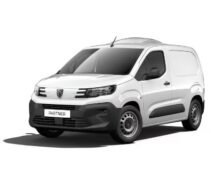

- Drive Type: FWD
- Type: Compact electric commercial van
- Self Driving: No
- Airbags: Yes
PROS
- Useful range for urban and regional runs
- DC fast charging shortens stops
- Flat load floor and usable cargo volume
CONS
- Range drops under heavy load or highway speeds
- Charging peak is lower than some larger EV vans
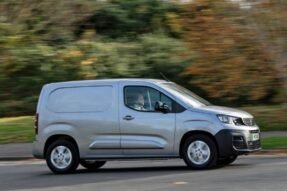
Peugeot e‑Partner is an all-electric light commercial van built on the Partner platform. It sits in the small van segment with a boxy body designed for cargo and utility work. The design focuses on load space and durability for business use.
It uses a lithium-ion battery around 50-54 kWh usable, with WLTP range figures typically around 170 to 205 miles (275–330 km) depending on load, battery choice, and region. AC charging on a Wallbox (7.4 kW) takes about 7 to 7.5 hours for a full charge, with an optional 11 kW three-phase ACcharger reducing full charge time to around 5 hours. DC fast charging up to roughly 100 kW lets the battery go from about 20 to 80 percent in around 30 minutes under strong charger conditions.
Price places the e-Partner in the commercial electric van bracket, often above small city EVs and below larger electric cargo vehicles. It suits tradespeople, delivery services, and businesses needing a zero emissions work vehicle with usable load space and modest range. Other Peugeot EVs include the Peugeot e-2008 and the Peugeot e-208. Alternatives in electric vans are the Citroën ë-Berlingo and the Vauxhall Combo‑e Cargo. Compared with the Citroën ë-Berlingo, the e-Partner offers similar range and payload, but individual features and cabin layouts differ.
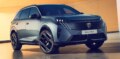
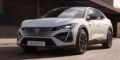
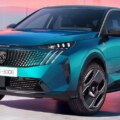
Peugeot e-Partner Images


Full Specifications
MODEL
| Models |
Peugeot e-Partner Standard Peugeot e-Partner Long |
LAUNCH
| Announced | 2020 |
| Status | In production and available in European markets |
| Country of origin | France |
| Base Price |
£30,000 - Peugeot e-Partner Standard £31,000 - Peugeot e-Partner Long |
PERFORMANCE
| Power | 100 kW (136 hp) electric motor; front-wheel drive (FWD) |
| Torque | 260 Nm |
| Acceleration The acceleration numbers are an easy way to compare car performance. We list either time from 0 to 100 km/h or time from 0 to 60mph, depending on which number(s) the manufacturers provide. The lower the acceleration time, the higher performance the car is. | ~11.7 s (0–100 km/h / 0–62 mph) |
| Max Speed | ~130 km/h (81 mph) |
BATTERY
| Capacity | 50 kWh usable (52 kWh gross) |
| Tech | Lithium-ion (high-voltage, underfloor pack) |
| Range | Up to 275 km WLTP (~170–213 mi depending on version/load) |
| Consumption | ~18–22 kWh/100 km (real-world) |
| Recuperation | Yes; standard and “B” (brake) mode |
| Heat Pump | |
| AC Charging | 7.4 kW standard; optional 11 kW onboard charger (~5h on 11 kW, ~7.5h on 7.4 kW) |
| DC Charging | Up to 100 kW; 0–80% in ~30 min |
| Others | Battery warranty: 8 years or 160,000 km (to 70% capacity) |
BODY
| Type | Compact electric commercial van |
| Platform | EMP2 |
| Dimensions |
Standard: ~4.40 m L Long: ~4.75 m L Width: ~1.85 m Height: ~1.80 m |
| Drag Co-Efficient | Not published; designed for urban delivery efficiency |
| Wheelbase | 2.78 m (Standard); 2.97 m (Long) |
| Clearance | ~150–160 mm |
| Weight | ~1,615–1,730 kg (kerb) |
| Suspension | Front MacPherson struts; rear torsion beam |
| Wheels | 15–16″ steel/alloy depending on trim |
| Trunk/Boot | N/A – cargo space only |
| Frunk/Bonnet | None |
| Towing | 750 kg (braked trailer capacity) |
| Others |
Load Volume: 3.3–4.4 m³ Payload: up to 803 kg Sliding side doors (1 or 2) and rear swing doors |
DISPLAYS
| Centre | 8″ or 10″ touchscreen (trim-dependent) |
| Driver's Display | 10″ digital instrument cluster |
| Head-Up | None |
COMFORT
| Seats | 2 or 3 front seats (Multiflex bench); manual adjust |
| Roof | Solid |
| Parking Aids | Rear sensors standard; rearview camera and front sensors optional |
| Connectivity | USB, Bluetooth, DAB, smartphone integration |
| Others |
Dual-zone climate control (optional) Smart cargo pass-through in Multiflex system Heated seats (trim-dependent) |
SAFETY
| Airbags | 6 airbags standard |
| Driving Aids |
AEB with pedestrian/cyclist detection Lane Keep Assist Blind Spot Monitor Speed Sign Recognition Driver Attention Alert Hill Start Assist |
| Self Driving | No autonomous driving; standard ADAS only |
Note
Reviews
Disclaimer Note
We can not guarantee that the information on this page is 100% correct