- Home
- Electric Vehicles
- Compare Electric Cars
- Volkswagen ID.3 Neo vs BYD Seal (Atto 4)
Volkswagen ID.3 Neo vs BYD Seal (Atto 4)
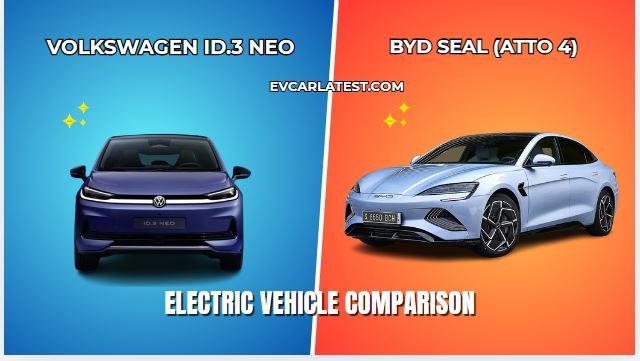
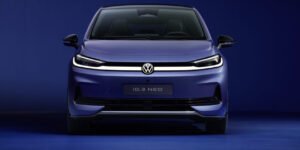
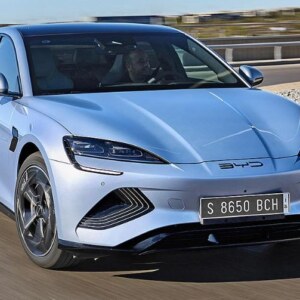
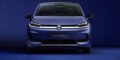
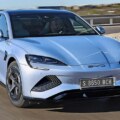
The Volkswagen ID.3 Neo is a compact electric hatchback built on VW’s MEB platform, designed for urban professionals who trust European engineering and want a proven grey-import option. The BYD Seal is a sleek electric fastback sedan from China’s BYD — built on e-Platform 3.0 and targeting buyers who want premium sedan proportions with competitive pricing. With BYD expanding aggressively across South Africa, Kenya, and Nigeria in 2025, this comparison is timely for African buyers weighing value against brand familiarity. Note: the BYD Atto 4 is a separate compact SUV — the Seal is the direct segment rival here.
The ID.3 Neo (77 kWh) offers 430 km WLTP range, with real-world figures around 340–370 km. The BYD Seal Standard Range claims 570 km WLTP, with real-world estimates of 430–470 km — a substantial advantage. On DC fast charging, both are competitive: ID.3 Neo at 170 kW, Seal Standard at 150 kW. Both complete 10–80% in roughly 28–32 minutes. The Seal’s range lead is the standout figure for buyers operating where charging is sparse.
The ID.3 Neo starts around €35,000 (~₦63M / ~$38,000) via grey-market import. The BYD Seal Standard Range opens near €33,000 (~₦59M / ~$36,000) in European markets, with AWD variants climbing to €42,000. In South Africa, BYD officially sells the Seal from approximately ZAR 720,000. Kenya and Nigeria see grey-market Seal imports at competitive rates. This page helps buyers decide whether BYD’s official presence and stronger range justify switching from a VW grey-import.
VW’s lineup extends to the ID.4 and ID.7 for buyers needing more space. BYD’s EV family in Africa includes the Atto 3 (compact SUV), Dolphin (affordable hatchback), and Han (executive sedan) — giving BYD buyers a broader local ecosystem. The Hyundai Ioniq 6 and Tesla Model 3 are the key cross-brand rivals here — both competitive on range and charging — but the ID.3 Neo and Seal lead on import availability and price accessibility across African markets.
ID.3 Neo — VW’s grey-import network is well-established in West Africa, giving buyers reasonable access to mechanics familiar with MEB platform servicing. Its compact hatchback size handles Lagos and Nairobi traffic more practically than a full sedan. The 170 kW DC charging is fast enough for most inter-city stops. The downside: its range trails the Seal noticeably, and cabin materials feel underwhelming at this price. It also lacks official African distribution, leaving buyers fully dependent on grey-market support.
BYD Seal — Its 570 km WLTP range gives genuine comfort for long-distance driving, particularly valuable in markets like Nigeria where public chargers are sparse. Official BYD distribution in South Africa provides warranty coverage and service access that no VW grey-import can match. Interior quality and technology feel punchy for the price. The trade-offs: sedan proportions are less practical for rough urban roads, and outside South Africa, after-sales support remains thin.
Quick Verdict
Choose the ID.3 Neo if you’re based in Nigeria or Kenya, prefer a compact hatchback, and already have a trusted grey-import mechanic. Choose the BYD Seal if range and official dealer support matter more — especially in South Africa where BYD’s network makes ownership significantly easier. The Seal offers more car for the money; the ID.3 Neo offers more familiar import infrastructure.
FAQ
Is the BYD Seal better than the VW ID.3 Neo for long trips?
Yes. The Seal’s 570 km WLTP range meaningfully outpaces the ID.3 Neo’s 430 km, reducing charging stops on inter-city routes where infrastructure is limited.
Which is cheaper to maintain, the ID.3 Neo or BYD Seal?
The BYD Seal is likely cheaper to maintain in South Africa where official service centres exist. In Nigeria or Kenya, the ID.3 Neo may be easier to service through established VW grey-import mechanics.
Is the BYD Seal available in Nigeria?
BYD does not yet have an official Nigerian dealership network. The Seal can be sourced through grey-market importers, but buyers should account for limited warranty coverage and parts availability locally.
Related EV Comparisons
- Volkswagen ID.3 Neo vs Tesla Model 3 2025
- Volkswagen ID.3 Neo vs Cupra Born
- Hongqi Tiangong 05 (EH5) vs BYD Han
- Hongqi Tiangong 06 vs BYD Atto 3 2026
- BYD Sealion 05 EV vs OMODA E5 (5 EV)
| |
| Price | $39,000.00 |
| Our Rating | |
| Brand | VOLKSWAGEN BYD |
| Category | Electric Cars Electric Cars |
MODEL
| Available Trims / Variants |
Volkswagen ID.3 Neo 50 kWh Volkswagen ID.3 Neo 58 kWh Volkswagen ID.3 Neo 79 kWh BYD Seal (Atto 4) Standard Range BYD Seal (Atto 4) Long Range BYD Seal (Atto 4) Performance |
PRICE & AVAILABILITY
| Availability Status | Coming soon. Expected release 2026, Q3 Available. Released 2023, September |
BATTERY & CHARGING
| Battery Capacity |
50 kWh usable - Volkswagen ID.3 Neo 50 kWh 58 kWh usable, 62 kWh total - Volkswagen ID.3 Neo 58 kWh 79 kWh usable, 82 kWh total - Volkswagen ID.3 Neo 79 kWh 61.4 kWh total |
| Range (WLTP/CLTC/EPA) |
259 mi WLTP - Volkswagen ID.3 Neo 50 kWh 307 mi WLTP - Volkswagen ID.3 Neo 58 kWh 391 mi WLTP - Volkswagen ID.3 Neo 79 kWh |
| DC Charging (Max kW) |
CCS 105 kW, 10-80% in 29 min - Volkswagen ID.3 Neo 50 kWh CCS 105 kW, 10-80% in 29 min - Volkswagen ID.3 Neo 58 kWh CCS 183 kW, 10-80% in 26 min - Volkswagen ID.3 Neo 79 kWh CCS 110 kW, 30-80% in 26 min |
| AC Charging (Max kW) |
Type 2 7.2 kW Type 2 11 kW Type 11 kW |
| Energy Consumption | 240 Wh/mi WLTP |
PERFORMANCE
| Power Output (kW / hp) |
RWD 170 hp (125 kW) - Volkswagen ID.3 Neo 50 kWh RWD 190 hp (140 kW) - Volkswagen ID.3 Neo 58 kWh RWD 231 hp (170 kW) - Volkswagen ID.3 Neo 79 kWh RWD 204 hp (150 kW) |
| 0–100 km/h / 0-60 mph (seconds) The acceleration numbers are an easy way to compare car performance. We list either time from 0 to 100 km/h or time from 0 to 60mph, depending on which number(s) the manufacturers provide. The lower the acceleration time, the higher performance the car is. | 7.3 sec 0-62 mph 7.5 sec 0-62 mph |
| Torque (Nm) | 310 Nm (229 lb-ft) |
| Top Speed (km/h / mph) | 99 mph (160 km/h) 112 mph (180 km/h) |
BODY & DIMENSIONS
| Dimensions (L×W×H mm) | 4265 x 1809 x 1554 mm (167.9 x 71.2 x 61.2 in) 4800 x 1875 x 1460 mm (189.0 x 73.8 x 57.5 in) |
| Trunk/Boot Capacity (L) | EU: 385 l, 1267 l max EU: 402 l |
| Body Style | 5 door hatchback, 4/5 seats 4 door sedan, 5 seats |
| Frunk/Bonnet Capacity (L) | No 53 l |
SAFETY & DRIVER ASSISTANCE
COMFORT & SEATING
| Seating Capacity | Heated front seats, massage Heated and ventilated front seats |
DISPLAYS & CONNECTIVITY
| Centre Screen (inches) | 12.9" touchscreen 15.6" rotating touchscreen |
| Driver's Display (inches) | 10.25" 10.25" |
| Head-Up Display (HUD) | Yes, with augmented reality Yes |
TECHNOLOGY
ADDITIONAL SPECS
Note
| Additional Notes |
Digital Video Recorder 40500 Nm/degree torsional stiffness |
|
Disclaimer Note
Specifications sourced from manufacturer data and may reflect WLTP, CLTC, or EPA test conditions. Import prices in your local are estimates based on grey-market landing costs and exclude duties, clearing fees, and local taxes. Figures are subject to change without notice. Always verify with your local importer before purchase. We can not guarantee that the information on this page is 100% correct