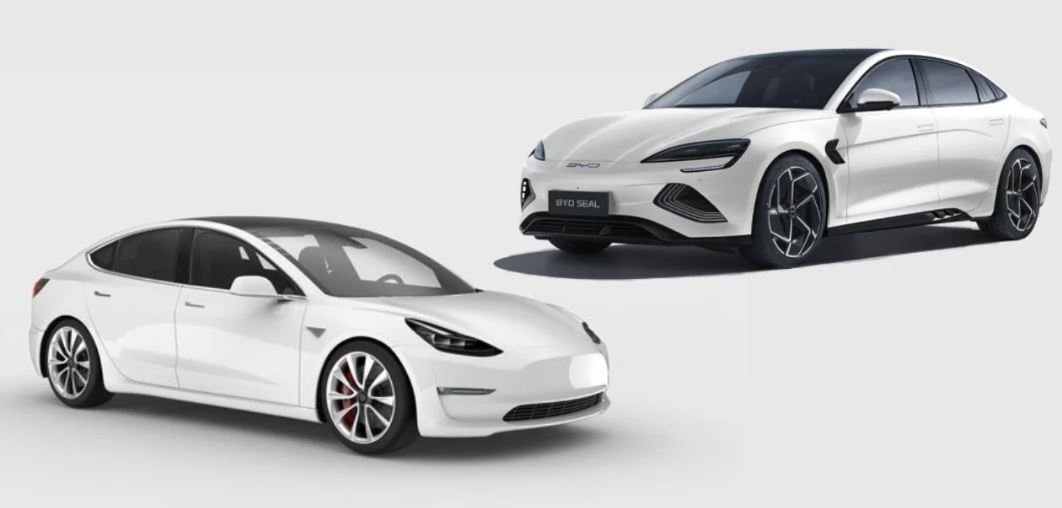
If you want the short answer: the Tesla Model 3 wins on charging network reach and resale familiarity, while the BYD Seal wins on range-for-the-money and standard equipment. At their respective entry points, the Seal undercuts the Model 3’s mid-tier trims while offering a larger battery and a longer WLTP-rated range (WLTP figures run higher than EPA equivalents, so they aren’t directly comparable). Which one actually makes sense depends on how much you weigh charging convenience against raw spec sheet numbers — and that’s exactly what we break down below, trim by trim, dollar by dollar.
Quick Summary
- Price: Tesla Model 3 starts lower in the US (from $36,990 MSRP, EPA-rated), while the BYD Seal starts from roughly £45,730 in the UK (≈ $58,000 / €53,000, converted estimate — confirm local pricing, as the Seal isn’t officially sold in the US)
- Range: BYD Seal claims up to 354 miles WLTP on its higher trims; Tesla Model 3 tops out at 363 miles EPA on the base Standard trim
- Battery chemistry: Seal uses BYD’s Blade LFP battery (82.5 kWh usable) on an 800V platform; Model 3 uses a mix of chemistries across trims (75 kWh on Premium/Performance)
- Charging network: Model 3 has direct native access to Tesla’s Supercharger network; Seal owners rely on third-party CCS networks depending on market
- Warranty: BYD backs the Seal with a 6-year/93,750-mile vehicle warranty and an 8-year/155,350-mile battery warranty — among the longest in the segment
BYD Seal vs Tesla Model 3: The Full Comparison
Pricing: Who Actually Costs Less?
Pricing is the first thing most buyers check, and it’s also where these two cars are hardest to compare directly, because they’re not sold in identical markets.
The Tesla Model 3 lineup for 2026 starts with the reintroduced Standard trim at $36,990 MSRP before destination fees, positioned specifically to undercut sub-$40,000 rivals like the Hyundai Ioniq 6. From there, pricing climbs through the Premium RWD (~$42,490), Premium AWD (~$45,490 – $47,490), and tops out at the Performance trim at $54,990.
The BYD Seal, by contrast, isn’t officially sold in the US market. In the UK, the updated 2026 model starts from £45,730 on-the-road — that converts to roughly $58,000 / €53,000 (currency conversion is an estimate and doesn’t reflect any local taxes, incentives, or import adjustments buyers outside the UK would actually see). In markets like the UAE, Seal pricing starts noticeably lower, from around 149,900 AED (≈ $40,800) before options, showing how much regional variation exists.
Bottom line on price: if you’re shopping in the US, the Model 3 is simply the only one of these two you can buy today. If you’re comparing UK or Middle East pricing, the Seal’s entry price sits closer to a mid-tier Model 3 Premium than to the base Standard.
Range and Battery: LFP vs Tesla’s Pack Strategy
Range numbers look close on paper but come from different test cycles, so treat them as directionally useful rather than perfectly equivalent.
The Model 3 Standard is EPA-rated at up to 363 miles, dropping to 346 miles on the Premium RWD and 309 miles on the Performance trim, which trades range for a 2.9-second 0-60 mph time. Battery capacity sits at 75 kWh on Premium and Performance trims.
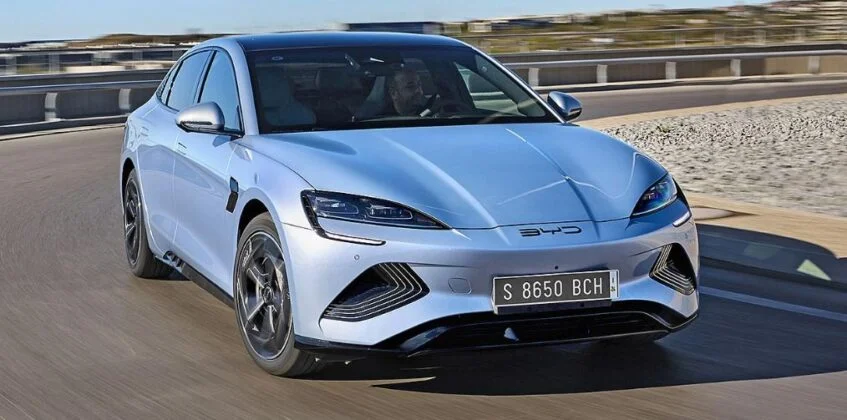
The BYD Seal uses BYD’s own Blade LFP chemistry — an 82.5 kWh usable (84 kWh nominal) pack across the higher-spec Seal trims — riding on an 800V architecture designed for faster DC charging sessions. WLTP-rated range runs from about 460 km to 570 km (roughly 285 to 354 miles) depending on trim and wheel size, with the top single-motor variant claiming the longest range and the AWD Performance variant trading some of that range for a 523 bhp dual-motor setup.
Because WLTP tends to report higher numbers than EPA for the same real-world driving, a “354-mile WLTP” Seal and a “363-mile EPA” Model 3 are closer in real-world range than the headline figures suggest — likely putting the Model 3 slightly ahead in practice.
Charging: Supercharger Access vs Third-Party Networks
This is the category where ecosystem matters as much as the spec sheet.
Tesla’s Model 3 has native, dashboard-integrated access to the Supercharger network, which remains one of the largest and most reliable fast-charging networks globally, regardless of market. Route planning, charger status, and stall availability are all built into the car’s own navigation.
The BYD Seal’s 800V platform is capable of very fast DC charging sessions on paper, but Seal owners depend on third-party CCS charging networks that vary significantly in reliability and density by country. In markets with dense DC fast-charging infrastructure this is a non-issue; in markets still building out that infrastructure, it’s a meaningful practical gap.
Standard Equipment and Warranty
BYD has leaned hard into standard equipment as a value argument for the Seal. The 2026 model adds a panoramic sunroof, a 12-speaker Dynaudio sound system, a 15.6-inch touchscreen, and a driver monitoring system as standard fitment on UK-spec cars, alongside a 6-year/93,750-mile vehicle warranty and an 8-year/155,350-mile battery warranty — both well ahead of typical industry norms.
Tesla’s Model 3 warranty sits at the more conventional 4-year/50,000-mile basic warranty with an 8-year battery warranty (mileage varies by trim), and equipment scales more steeply by trim: the base Standard trim is comparatively stripped-down (three exterior colors, no ventilated seats), while Premium and Performance trims add the features most buyers expect at this price point.
Performance
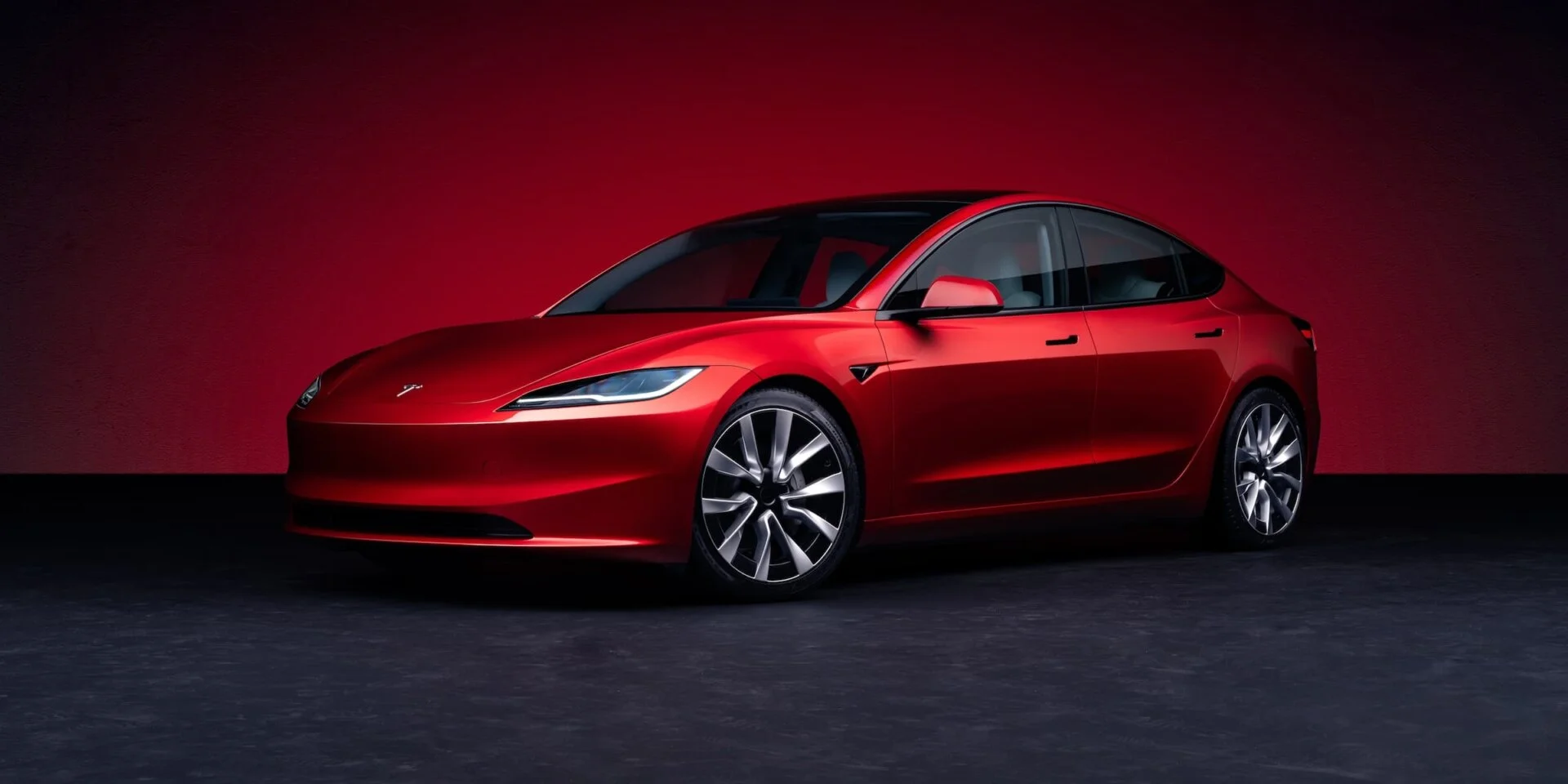
The Model 3 Performance’s dual-motor setup (a combined output from a 265 kW rear motor and 137 kW front motor) delivers a 2.9-second 0-60 mph time and a 161.6 mph top speed — figures that remain class-leading in this segment.
The Seal’s top AWD Performance variant, rated at 523 bhp combined, is BYD’s answer to that performance positioning, though independent 0-60 mph testing for the 2026 update wasn’t confirmed at the time of writing.
Comparison Table
| Spec | Tesla Model 3 (2026, US) | BYD Seal (2026, UK-spec) |
|---|---|---|
| Starting price | $36,990 MSRP (Standard) | £45,730 (~$58,000 / €53,000 ) |
| Top trim price | $54,990 (Performance) | Not disclosed for top AWD trim |
| Max range | 363 miles (EPA, Standard trim) | ~354 miles (WLTP, higher trim) |
| Battery | 75 kWh (Premium/Performance) | 82.5 kWh usable Blade LFP |
| Platform voltage | Not disclosed | 800V |
| 0-60 mph | 2.9s (Performance) – 5.8s (Standard) | Not confirmed for 2026 update |
| Top power output | Dual-motor (Performance) | 523 bhp (AWD Performance) |
| Charging network | Native Tesla Supercharger access | Third-party CCS networks |
| Vehicle warranty | 4 yr / 50,000 mi | 6 yr / 93,750 mi |
| Battery warranty | 8 yr (mileage varies) | 8 yr / 155,350 mi |
| US availability | Yes | Not officially sold in the US |
Bottom Line
If Supercharger access, US availability, and outright acceleration matter most, the Tesla Model 3 remains the safer default — it’s proven, widely serviced, and the charging network alone removes a lot of ownership friction. If you’re shopping in a market where the BYD Seal is sold and value long warranties, generous standard equipment, and LFP battery longevity over brand familiarity, the Seal makes a genuinely strong case at a comparable or lower real-world price. Neither car is a bad choice; the right one comes down to which ownership priorities — network convenience or spec-per-dollar — matter more to you.