The short answer: the Rivian R1S is the better buy for most shoppers in 2026, mainly because the Tesla Model X isn’t really a going concern anymore. Tesla wound down Model X production earlier this year, leaving only limited remaining inventory at raised prices, while Rivian continues to build and sell the R1S with more trims, more range options, and a starting price roughly $23,000 lower. That’s the headline. But the two SUVs still appeal to different kinds of buyers — one leans into off-road capability and interior tech, the other into raw acceleration and Supercharger access. Below, we break down pricing, range, performance, cargo space, and long-term ownership considerations so you can see exactly where each vehicle wins.
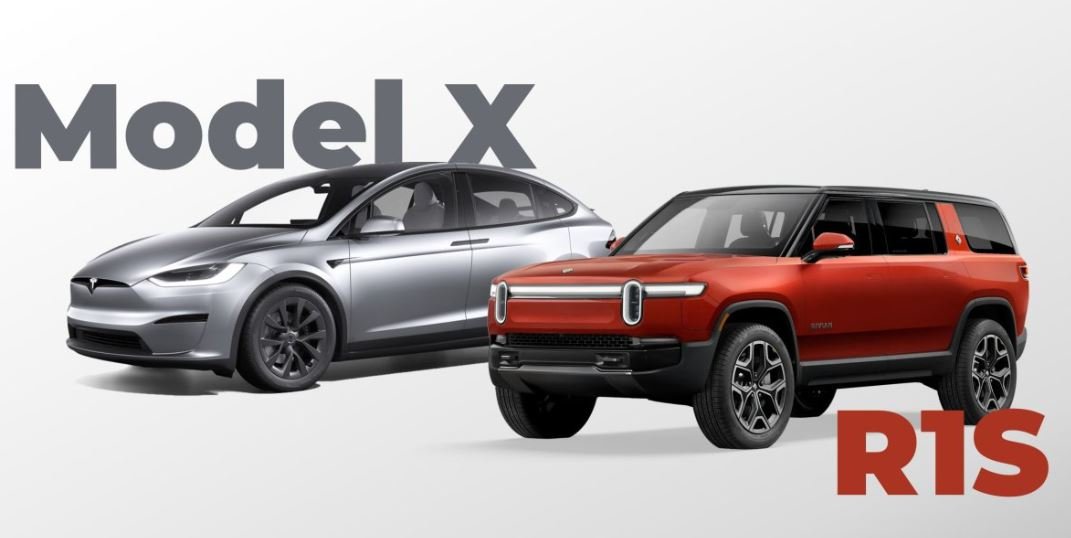
Quick Summary Box
- Tesla Model X production has ended. Tesla confirmed in January 2026 that Model X (and Model S) manufacturing would stop by mid-2026; production formally wound down in April 2026, with only limited Signature Series inventory left.
- Rivian R1S starts at $76,990, roughly $23,000 less than the current Model X starting price of $99,990 (before Tesla’s post-discontinuation $15,000 price increase on remaining units).
- Range advantage goes to Rivian, with the Dual Motor Max configuration reaching up to 410 miles EPA-estimated, versus 352 miles for the Model X’s Dual Motor AWD trim.
- Performance advantage goes to Tesla. The Model X Plaid’s 1,020 hp and 2.5-second 0–60 mph time remain quicker than anything Rivian currently ships, though the R1S Quad’s 1,025 hp is close on paper.
- Towing and off-road capability strongly favor the R1S, which can tow up to 7,700 lbs versus the Model X’s 5,000 lbs, with genuine trail-rated ground clearance.
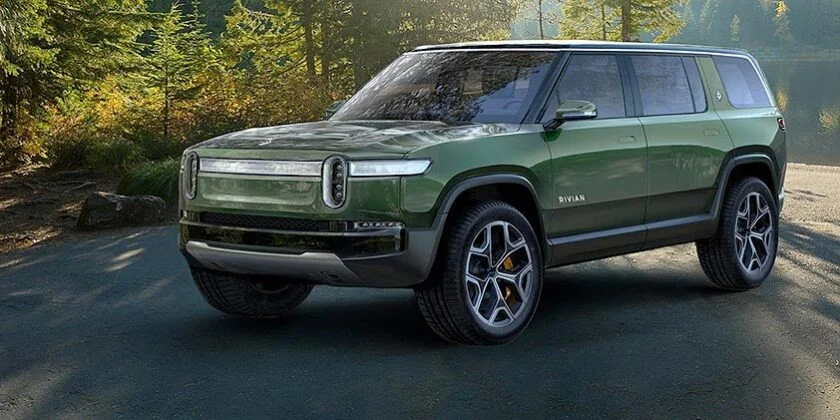
Rivian R1S: What You’re Getting in 2026
Pricing and Trims
The 2026 Rivian R1S is offered in Dual, Tri, and Quad-Motor configurations, with pricing from $76,990 to $125,990 for the Quad Launch Edition. The Dual Motor is the only trim available with a choice of battery pack (Large or Max) and an optional Performance Upgrade Package that raises output from 533 hp to 665 hp for an additional $5,000, without reducing range.
Range and Charging
EPA-estimated range varies by motor and wheel configuration, topping out around 410 miles on the Dual Motor with the Max battery pack and smaller wheels. The Tri-Motor and Quad-Motor variants land closer to 370–374 miles (figures vary slightly by source and wheel size, so treat these as approximate rather than final EPA-certified numbers for every configuration). Notably, Rivian switched the R1S’s charging port from CCS to Tesla’s NACS standard for the 2026 model year, meaning R1S owners can now plug directly into Tesla’s Supercharger network without an adapter.
Performance
The range-topping Quad-Motor R1S produces 1,025 hp and 1,198 lb-ft of torque, a significant jump from the outgoing generation’s 835 hp. Rivian has not published an official 0–60 mph time for the 2026 Quad-Motor trim in the sources checked for this article, so treat any acceleration claims you see elsewhere with some caution until Rivian confirms them.
Space and Practicality
The R1S seats up to seven across three rows, with 32.8 inches of third-row legroom — generous for the segment. Cargo capacity runs from 17.7 cubic feet behind the third row up to 104.7 cubic feet with all rear seats folded, plus an 11.1-cubic-foot front trunk. Towing capacity is rated at 7,700 lbs across all trims, well above what the Model X offers.
Technology
Standard tech includes a 12.3-inch digital instrument cluster, a 15.6-inch central touchscreen, a rear 6.8-inch touchscreen for back-seat passengers, Amazon Alexa integration, a Wi-Fi hotspot, and eight USB-C ports. Rivian’s Autonomy+ hands-free driving system is now optional on every R1S trim, expanding beyond highways to roughly 3.5 million miles of two-lane roads, per Rivian’s claims (unverified independently).
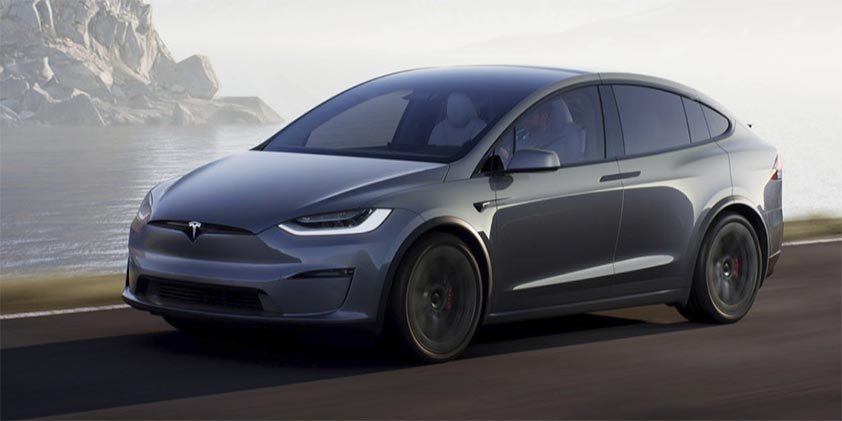
Tesla Model X: What’s Actually Left to Buy
The Discontinuation Changes Everything
This is the single biggest factor in this comparison. During Tesla’s Q4 2025 earnings call in January 2026, CEO Elon Musk announced that Model S and Model X production would end in Q2 2026, redirecting the Fremont, California factory toward Optimus robot manufacturing. Production formally wound down in early April 2026, and new custom orders are no longer being accepted. What remains is limited leftover inventory, including a low-volume Signature Series.
Because supply has effectively dried up, Tesla raised prices on remaining Model X units by $15,000, pushing the starting price (with destination fees included) to $116,380. Buyers shopping listings today may see older, pre-increase pricing around $99,990–$114,990 for dealer or third-party inventory ⚠️, so confirm current pricing directly with a Tesla dealer before assuming any figure is accurate — this is a fast-moving situation.
Range and Performance
When the Model X was in full production, EPA-estimated range ran from 329 to 352 miles depending on trim and wheel size, with the base Dual Motor AWD trim topping out at 352 miles. Performance remains the Model X’s calling card: the base trim hits 60 mph in 3.8 seconds with 670 hp, while the Plaid trim reaches 60 mph in as little as 2.5 seconds with 1,020 hp — still among the quickest production SUVs sold anywhere.
Space and Practicality
The Model X seats up to seven with the optional third row, offering 43.6 cubic feet of maximum cargo space — noticeably less than the R1S’s cargo figures. Towing capacity is capped at 5,000 lbs, and the signature Falcon Wing rear doors, while eye-catching, have a reputation for being finicky in tight parking spaces (a widely repeated but not universally experienced complaint).
Technology and Charging Network
The Model X’s biggest structural advantage is Tesla’s Supercharger network — still the largest and most reliable fast-charging network for EVs. Tesla says it will continue supporting Model S and Model X owners with service and software updates for as long as people own the vehicles, even without ongoing production.
Comparison Table
| Spec | Rivian R1S (2026) | Tesla Model X (2026) |
|---|---|---|
| Starting price | $76,990 | $99,990 (pre-increase) / $116,380 (current, w/ destination) |
| Top trim price | $125,990 (Quad Launch Edition) | ~$114,990–$131,380 (Plaid, varies by inventory) |
| Max EPA range | Up to 410 miles | Up to 352 miles |
| Base horsepower | 533–665 hp (Dual Motor) | 670 hp (base AWD) |
| Top horsepower | 1,025 hp (Quad-Motor) | 1,020 hp (Plaid) |
| 0–60 mph | Not officially published for 2026 Quad | 2.5 sec (Plaid) / 3.8 sec (base) |
| Towing capacity | 7,700 lbs | 5,000 lbs |
| Seating | Up to 7 | Up to 7 |
| Max cargo space | 104.7 cu ft | 43.6 cu ft |
| Charging standard | NACS (Tesla-compatible, 2026 model year) | NACS (native) |
| Production status | In active production | Production ended April 2026; limited inventory only |
Prices are USD MSRP figures as reported by manufacturer and third-party automotive data sources at time of writing and are subject to change without notice.
Verdict
For most buyers, the Rivian R1S is the more sensible choice in 2026 — it costs less, goes farther on a charge, tows more, and is still in active production with full manufacturer support. The Tesla Model X remains the pick if raw acceleration and Supercharger-network access matter more to you than long-term availability, but with production discontinued and inventory shrinking, it’s increasingly a car for buyers who want one of the last examples off the line rather than a long-term ownership platform. If you’re shopping today, expect the R1S to hold its value and support better simply because Rivian isn’t walking away from the nameplate.