- Home
- Electric Vehicles
- Compare
- BYD Seal U vs BYD Tang
BYD Seal U vs BYD Tang
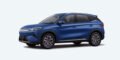
BYD Tang and BYD Seal U are electric SUVs designed for daily use and family transport. Both sit in the mid-size EV SUV segment. Tang targets buyers who want a mix of space, power, and utility. Seal U targets users who focus on efficiency and agility in a slightly smaller package.
Range figures differ by specs. Tang range is higher on larger battery versions. Seal U range is lower but still enough for most trips. Charging rates differ. Seal U supports higher peak charging speeds on certain networks. Tang charging is solid but slower at peak. Real-world time on both depends on charger type and conditions.
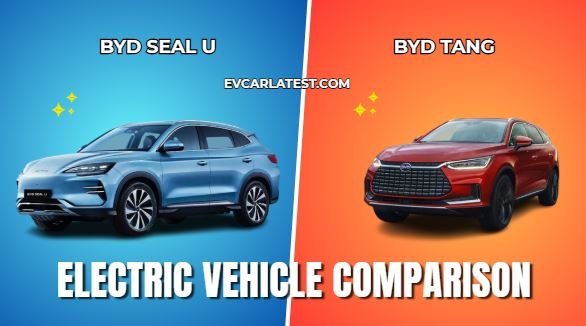
Price for Tang is higher than Seal U in most markets. Tang has three rows or large cabin choices in some trims. Seal U stays two-row with sportier stance. Both sell in China and select global markets. This post helps you decide based on range, charging, size, and price.
QUICK VERDICT; Tang fits buyers who need space and range. Seal U suits those who want quicker charge and lighter SUV feel.
Related EV Comparisons
- XPeng MONA M03 vs BYD Dolphin
- XPeng MONA M03 vs BYD Qin Plus EV
- BYD Atto 2 vs BYD Atto 3
- BYD Atto 2 vs BYD Dolphin
- Zeekr 7X vs BYD Sea Lion 7

MODEL
| Models |
BYD Seal U Comfort BYD Seal U Design |
LAUNCH
| Announced |
2024, January 29 2024, January 26 |
| Status |
Available to order. Released 2024, February Available to order. Released 2024, December |
| Country of origin | China China |
| Base Price |
€ 42,000 -BYD Seal U Comfort € 47,000 - BYD Seal U Design € 69,600 |
PERFORMANCE
| Power |
FWD 218 hp (160 kW) AWD 517 hp (380 kW) |
| Torque |
310 Nm (229 lb-ft) - BYD Seal U Comfort 330 Nm (243 lb-ft) - BYD Seal U Design 680 Nm (502 lb-ft) |
| Acceleration The acceleration numbers are an easy way to compare car performance. We list either time from 0 to 100 km/h or time from 0 to 60mph, depending on which number(s) the manufacturers provide. The lower the acceleration time, the higher performance the car is. |
9.3 sec 0-62 mph - BYD Seal U Comfort 9.6 sec 0-62 mph - BYD Seal U Design 4.9 sec 0-62 mph |
| Max Speed |
109 mph (175 km/h) 112 mph (180 km/h) |
| transmission | Single-speed |
BATTERY
| Capacity |
71.8 kWh total - BYD Seal U Comfort 87 kWh total - BYD Seal U Design 108 kWh total |
| Tech |
Liquid-cooled Li-ion LFP battery (800V type) Liquid-cooled Li-ion LFP battery |
| Range |
261 mi WLTP - BYD Seal U Comfort 311 mi WLTP - BYD Seal U Design 329 mi WLTP |
| Consumption |
320 Wh/mi WLTP - BYD Seal U Comfort 330 Wh/mi WLTP - BYD Seal U Design Consumption |
| Recuperation |
Yes Yes |
| Heat Pump | |
| AC Charging |
Type 2 11 kW, 0-100% in 7.5 hours - BYD Seal U Comfort Type 2 11 kW, 0-100% in 9.3 hours - BYD Seal U Design Type 2 11 kW |
| DC Charging |
CCS 115 kW, 30-80% in 27 min, 10-80% in 42 min -BYD Seal U Comfort CCS 140 kW, 30-80% in 28 min, 10-80% in 43 min - BYD Seal U Design CCS 190 kW |
| Others | Vehicle to load (V2L) - 3 kW max Vehicle to load (V2L) |
BODY
| Type |
5 door SUV, 5 seats
5 door SUV, 5/7 seats |
| Platform | e-platform 3.0 e-platform 3.0 |
| Dimensions |
4785 x 1890 x 1668 mm (188.4 x 74.4 x 65.7 in)
4870 x 1950 x 1725 mm (191.7 x 76.8 x 67.9 in) |
| Drag Co-Efficient | 0.32 Cd 0.335 Cd |
| Wheelbase |
2765 mm (108.9 in)
2820 mm (111.0 in) |
| Clearance |
150 mm (5.9 in) |
| Weight |
EU: 2020 kg unladen, 2430 kg gross - BYD Seal U Comfort EU: 2147 kg unladen, 2557 kg gross - BYD Seal U Design EU: 2705 kg unladen, 3204 kg gross |
| Suspension |
Front MacPherson struts, rear multi-link Front MacPherson struts, rear multi-link, independent front and rear suspension |
| Wheels | R19 R20, R22 |
| Trunk/Boot |
EU: 552 l, 1440 l max EU: 940 l, 1655 l max |
| Frunk/Bonnet | No No |
| Towing |
EU: 750 kg unbraked, 1300 kg braked EU: 750 kg unbraked, 1500 kg braked |
DISPLAYS
| Centre |
12.8" or 15.6" rotating touchscreen 12.8" rotating touchscreen |
| Driver's Display |
12.3" 12.3" |
| Head-Up | Yes No |
COMFORT
| Seats |
Heated and ventilated front seats Heated and ventilated front seats |
| Roof |
Panoramic glass roof, tilt & slide Panoramic glass roof, tilt & slide |
| Parking Aids |
Front and rear sensors, 360 camera, reversing camera Front and rear sensors, 360 camera, reversing camera |
| Connectivity |
Android Auto and Apple CarPlay Android Auto and Apple CarPlay |
SAFETY
| Airbags |
Front, side, rear, head airbag system, front seats knee airbags 8 airbags: front, side, rear, 3rd row side, including head airbag system |
| Driving Aids |
4 radars, 1 camera, 12 sensors. Blind Spot Warning, High Beam Assist, Lane departure Warning, Emergency Lane Keep Assist, Front/Rear Cross Traffic Alert, Front/Rear Cross Traffic Brake, Traffic Sign Recognition, Automatic Emergency Braking System, Door Open Warning, Forward/Rear Collision Warning 3 radars, 8 cameras, 12 sensors. Blind Spot Warning, High Beam Assist, Advanced Driver Assistance System, Lane departure Warning, Predictive Collision Warning, Automatic Emergency Braking, Traffic Sign Recognition |
| Crash Tests |
NCAP 2023: 5 stars |
Note
| disclaimer | We can not guarantee that the information on this page is 100% correct We can not guarantee that the information on this page is 100% correct |

|
Disclaimer Note
We can not guarantee that the information on this page is 100% correct