Africa EV market snapshot — 2026
Key figures shaping the continent’s electric vehicle revolution.
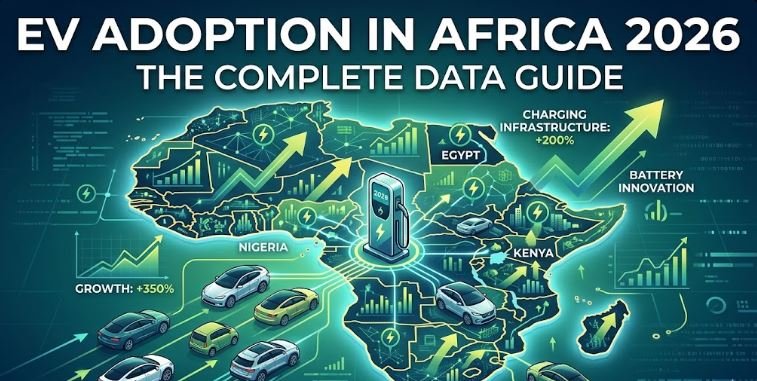
The Africa and Middle East EV market grew from $3.83 billion in 2025 to an estimated $5.06 billion in 2026, with battery electric vehicles holding over 78% of market share. Despite this growth, EV penetration remains below 1% in most African countries — meaning the opportunity ahead is massive.
Country by country — EV activity 2026
Based on EV sales, policy strength, infrastructure, and growth trajectory.
Nigeria — the giant waking up
Nigeria EV fast facts — 2026
Nigeria is at a turning point. In January 2026, the country signed a landmark Memorandum of Understanding with South Korea’s Asia Economic Development Committee to build a large-scale EV manufacturing plant with an annual production capacity of 300,000 vehicles — and plans for local battery component production. This follows the Nigeria Tax Act 2025, which eliminates VAT on electric vehicles entirely.
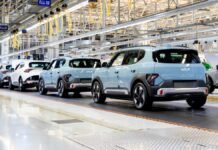
On the infrastructure side, LUG West Africa announced plans in January 2026 to install over 250 EV charging points across Lagos, cleverly integrating them into the city’s 50,000 solar-powered street lighting network. Local assembly is already underway: CIG Motors builds the Wuling Bingo and Hongguang Mini EV in Lagos, while Saglev — winner of the 2025 Nigeria EV Brand of Year — assembles 18-seat electric passenger vans from Dongfeng kits.
The dominant EV segment — it’s not passenger cars
Africa’s EV story is being written by two-wheelers, not Tesla.
Electric motorcycles — the #1 segment
Electric motorcycles account for 45% of new EV sales globally and dominate Africa. Spiro alone operates 60,000+ e-motos and 1,500 battery swap stations across Nigeria and Kenya. Battery swapping solves both range anxiety and the unreliable grid problem in one move.
Electric buses — city transport
Major African cities are deploying electric buses to modernise public transport. Kenya committed to 200 electric buses by 2026. Lagos inaugurated West Africa’s largest fast-charging hub in 2025. Electric buses are becoming a cornerstone of urban mobility planning.
Passenger EVs — prices dropping
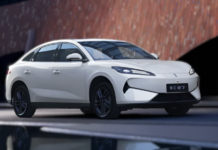
BYD, GAC, and Wuling are leading the passenger EV push. The Wuling Bingo and Hongguang Mini EV are now assembled locally in Lagos by CIG Motors. Chinese brands dominate with price points approaching $10,000 — making passenger EVs increasingly realistic for African buyers.
Africa EV timeline — key milestones
Opportunities and challenges
Solar charging
Africa has the highest solar potential globally. Solar-powered EV charging is cost-effective and grid-independent — a natural fit for countries with unreliable grids.
Battery swapping
Spiro, Ampersand, and others running swap networks at scale — removing the need for expensive charging infrastructure while solving range anxiety for daily users.
Local assembly
Kit-based assembly in Nigeria, Kenya, Rwanda, and Ghana is cutting costs and creating technical jobs, while building local EV ecosystems with Chinese OEM partnerships.
Policy momentum
Nigeria’s VAT exemption, Kenya’s national EV policy, Ethiopia’s ban on ICE imports — governments are creating real, legislative foundations for EV growth.
Grid reliability
Power outages remain a barrier. Most EV owners use solar or generators as backup. Home charging is unreliable without alternative energy solutions.
Upfront cost
EVs still cost more upfront than equivalent ICE vehicles. Limited financing options slow mass adoption, especially outside Lagos, Nairobi, and Johannesburg.
Charging infrastructure gaps
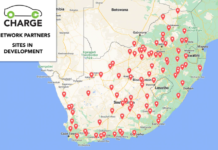
Even South Africa — Africa’s most mature EV market — only has ~316 public chargers. Most of the continent has fragmented, sparse charging networks.
Consumer awareness
Many consumers remain unfamiliar with EV technology, maintenance, and charging. Education and demonstration programmes are still in early stages.
Stay ahead of Africa’s EV revolution
EV Car Latest covers every major electric vehicle launching in Africa — specs, prices, availability, and the policy stories that matter for buyers on the continent.
- BYD EV Sales Hit 589 Units — But South Africa Isn’t Ready
- XPeng Turns Profit and Expands to Mexico With G6 and G9
- XPeng Mona D02 SUV Leaks Ahead of 2026 Debut
- Toyota C-HR+ EV Hits Europe With 377-Mile Range, 150 kW Charging
- Xiaomi YU7 GT Revealed: 990 HP Electric SUV With 404-Mile Range