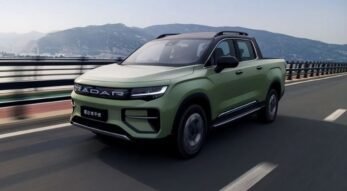
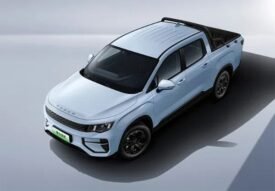
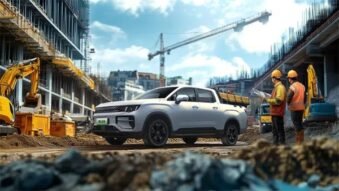
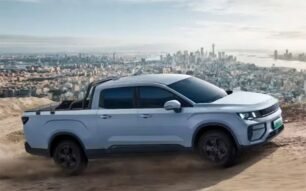
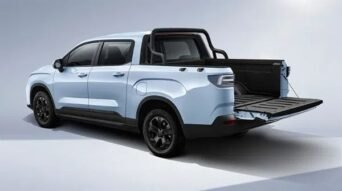
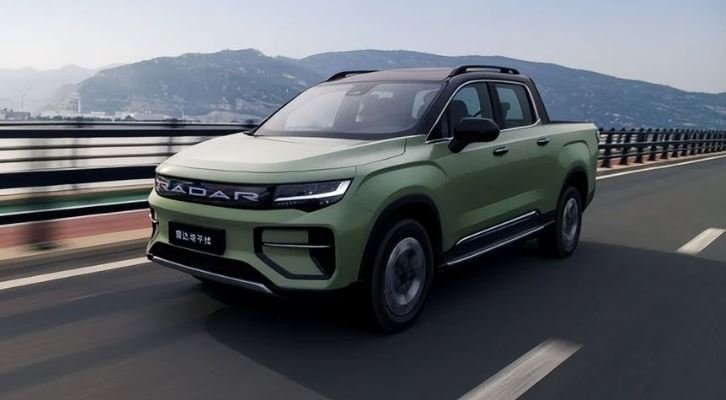
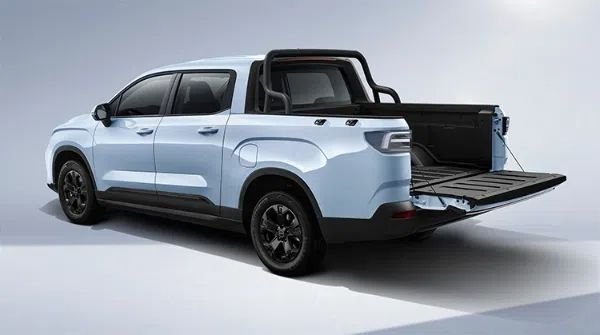
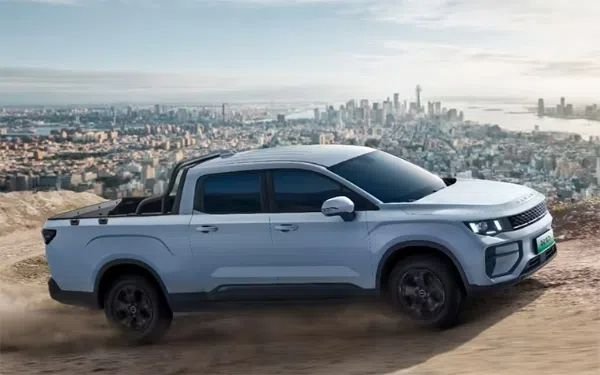
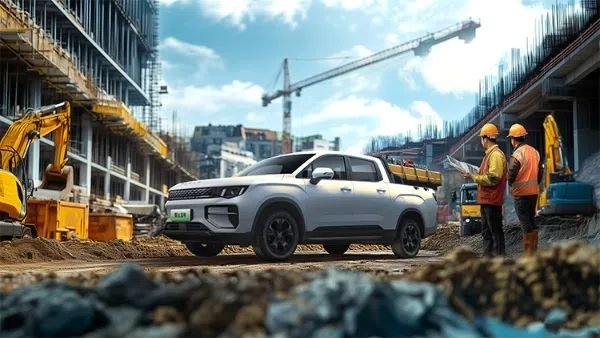
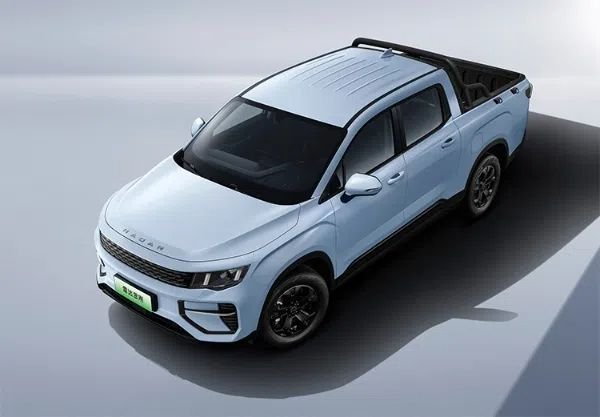
Radar King Kong EV is an electric midsize pickup from Geely’s Radar brand. Toyota Hilux is a global midsize pickup from Toyota built around diesel and petrol powertrains.
Radar King Kong EV targets urban users, fleet operators, and light-duty commercial buyers who want lower running cost and quieter driving. Toyota Hilux targets heavy-duty users, construction work, agriculture, and long-distance regional transport buyers who depend on durability and fuel availability.

This comparison matters now because electric pickups continue entering African markets while Hilux remains the dominant work truck across the region.
Radar King Kong EV uses CLTC range ratings between 400 km and 600 km depending on battery size. Real-world driving in mixed conditions delivers around 320 km to 480 km depending on load and speed.
Toyota Hilux diesel variants deliver fuel range between 700 km and 1000 km depending on tank size and driving conditions.
Radar supports AC charging at 6.6 kW to 11 kW and DC fast charging around 120 kW. Hilux relies on diesel refueling with standard fuel stations.
A 10 to 80 percent charge session for Radar King Kong EV takes around 35 to 50 minutes on DC fast charging. Hilux refuels in around 5 to 8 minutes at a fuel station, which suits remote travel and heavy-duty operations.
Radar King Kong EV starts near $25,000 to $35,000, which aligns with about ₦30M to ₦45M in Nigeria after import costs. Toyota Hilux starts near $28,000 to $60,000 depending on trim, translating to about ₦40M to ₦90M in Nigeria.
Radar trims focus on battery size, payload configuration, and cabin utility. Hilux trims include single cab work variants, double cab lifestyle trims, and off-road-focused versions like the Rugged and GR Sport variants.
Radar sells mainly in China with gradual export expansion. Hilux sells across Africa, Asia, Europe, and South America with strong dealer networks.
This comparison helps buyers choose between electric low-running-cost pickup ownership and diesel-powered long-range work reliability.
Radar lineup includes RD6 and King Kong variants focused on utility and lifestyle pickup use. Toyota Hilux sits within Toyota’s pickup range alongside models like Toyota Tacoma in select markets.
Other electric rivals include Ford F-150 Lightning and Tesla Cybertruck, both positioned in higher price tiers with stronger performance output and software features.
This comparison holds value because Radar introduces electric affordability in the pickup segment while Hilux maintains unmatched fuel access and durability in harsh environments.
Radar King Kong EV offers lower running cost due to electricity pricing versus diesel fuel. It delivers smooth driving in urban traffic with low noise levels, which suits city-based logistics. It also reduces maintenance needs linked to engine oil and exhaust systems. It shows limited fast refueling flexibility in rural areas. It depends on charging infrastructure that remains uneven across many African routes.
Toyota Hilux offers strong reliability in harsh terrain and long-distance travel conditions. It supports fast refueling anywhere fuel stations exist, which suits remote operations. It maintains strong resale value across African markets. It produces higher fuel and maintenance cost compared to electric alternatives. It creates higher engine noise and emissions during daily operation.
QUICK VERDICT
Choose Radar King Kong EV if lower running cost, city delivery work, and quiet driving matter more. Choose Toyota Hilux if long-distance travel, rural access, and heavy-duty reliability matter more. The trade-off sits between charging dependence and fuel independence. Your usage pattern decides the better fit.
Related EV Comparisons
| Models |
7 variants — 4 RWD, 3 AWD (Standard Bed & Long Bed) Export name - Riddara RD6 Toyota Hilux BEV |
| Announced | December 23, 2024 2025, November 10 |
| Status | On sale Coming soon. Expected release, 2025 December |
| Country of origin | China Japan |
| Base Price | $13,700 (¥99,800 CNY) — up to ~$21,900 (¥159,800 CNY) |
| Power | RWD: 241 hp (180 kW) single motor · AWD: 375 hp (280 kW) dual motor AWD 196 hp (144 kW) |
| Torque | RWD: 309 Nm · AWD: 485 Nm 474 Nm (350 lb-ft) |
| Acceleration The acceleration numbers are an easy way to compare car performance. We list either time from 0 to 100 km/h or time from 0 to 60mph, depending on which number(s) the manufacturers provide. The lower the acceleration time, the higher performance the car is. | RWD: 8.1 sec · AWD: 5.7 sec (7.8 sec fully loaded) 9 sec 0-62 mph |
| Max Speed | 87 mph (140 km/h) |
| transmission | Single-speed direct drive |
| Capacity | RWD: 42 / 55 / 73 / 86 kWh · AWD: 42 / 63 / 73 kWh 59.2 kWh total |
| Tech | LFP (Lithium Iron Phosphate) Li-Ion (400V type) |
| Range | RWD: 310–605 km · AWD: 330–520 km 149 mi WLTP |
| Recuperation | Yes |
| Heat Pump | |
| AC Charging | Type 2 |
| DC Charging | CCS 150 kW |
| Others | Five-star battery protection system; battery warranty: lifetime (3 electric systems) |
| Type | 4-door, 5-seat pickup truck (dual-cab) 4 door pickup, 5 seats |
| Platform | MAP Radar Hanhai (monocoque) |
| Dimensions |
(Standard Bed) 5,260 × 1,900 × 1,865 mm (RWD) / 1,880 mm height (AWD) (Long Bed)5,500 × 1,900 × 1,865 mm (RWD) / 1,880 mm height (AWD) 5320 x 1855 x 1865 mm (209.4 x 73.0 x 73.4 in) |
| Wheelbase | Standard: 3,120 mm · Long: 3,310 mm 3085 mm (121.5 in) |
| Clearance | 225 mm 207 mm (8.1 in) |
| Weight | EU: 2420 kg unladen, 3165 kg gross |
| Suspension | Front: MacPherson struts · Rear: Multi-link Front double wishbone-type coil spring, rear leaf springs |
| Wheels | R17 |
| Trunk/Boot |
(Standard)1,525 × 1,450 × 540 mm (Long)1,765 mm depth EU: 1150 l |
| Frunk/Bonnet | No |
| Towing |
EU: 715 kg unbraked, 1600 kg braked |
| Cargo Capacity (kg) | 1,000 kg Payload limited to 715 kg (1,576 lbs) |
| Others | 70% high-strength steel body; torsional rigidity: 30,300 Nm; turning radius: 6.1 m |
| Centre | 14.6-inch touchscreen (Galaxy OS infotainment) up to 12.3" touchscreen |
| Driver's Display | 10.2-inch digital instrument cluster 12.3" |
| Head-Up | No |
| Seats | 5 seats; artificial leather upholstery; electric seats (higher trims) Heated front seats |
| Parking Aids | Surround-view cameras confirmed Front and rear sensors, reverse camera |
| Connectivity | Galaxy OS; Bluetooth/wireless Wireless Android Auto and Apple CarPlay |
| Others | Active noise insulation; 4 terrain modes (Snow, Mud, Off-road, Sand); 3 drive modes (Eco, Comfort, Sport) on AWD |
| Airbags | Yes |
| Driving Aids | Automatic emergency braking, lane-keeping assist confirmed; full ADAS Front, side, rear cameras. Pre-Collision system, Lane departure alert, Lane keep assist, Low Speed Acceleration Suppression, Proactive Driving Assist, Emergency Driving Stop System |
|
We can not guarantee that the information on this page is 100% correct