- Electric Vehicles
- Compare Electric Cars
- Roewe D6 vs BYD Qin Plus EV
Roewe D6 vs BYD Qin Plus EV
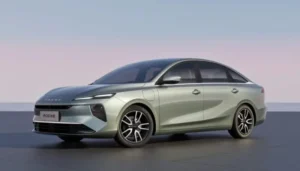
The Roewe D6 is a compact electric sedan from SAIC Motor. The BYD Qin Plus EV is also a compact electric sedan from BYD. Both models sit in the affordable EV sedan segment. The D6 targets buyers who want a low-cost entry into electric driving with strong range. The Qin Plus EV targets buyers who want proven battery tech and a more established EV brand. This comparison matters now as both models compete in export markets where demand for budget EV sedans is rising.
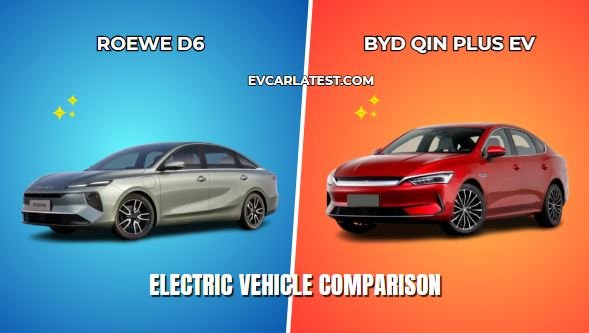
The Roewe D6 delivers up to about 520 km (CLTC), which equals around 420–450 km in real-world driving. The BYD Qin Plus EV offers between 420 km and 510 km (CLTC), with real-world range around 350–430 km depending on variant. The D6 supports about 7 kW AC charging and up to 80–100 kW DC charging. The Qin Plus EV supports similar AC charging around 7 kW and DC charging up to about 60–80 kW. In practical use, both EVs charge from 10–80% in about 30–40 minutes, with small differences depending on charger output and battery size.
The Roewe D6 starts at about $18,000–$22,000, which equals around ₦27–₦33 million landed in Nigeria. The BYD Qin Plus EV starts around $20,000–$25,000, or about ₦30–₦38 million depending on variant and import costs. The D6 focuses on fewer trims with strong range for price. The Qin Plus EV offers multiple trims with different battery sizes and feature levels. The Qin Plus EV has wider export presence through BYD’s global expansion, while the D6 remains more China-focused with import availability. This comparison helps you decide between slightly lower cost with strong range or a more widely supported EV with proven battery systems.
Within Roewe’s lineup, alternatives include the Roewe Ei5 and other SAIC-based EVs like MG models. Within BYD’s lineup, the Qin Plus EV sits alongside the Dolphin and Atto 3, which target hatchback and SUV buyers. Outside both brands, rivals include the Nissan Leaf and the MG5 EV, both offering practical electric options in a similar price range. This comparison stands out because it focuses on two closely priced EV sedans with different brand strengths and support levels.
The Roewe D6 offers lower purchase cost, which helps reduce entry barriers for new EV buyers. It delivers strong range for its price, which reduces charging frequency in daily use. Its simple design helps keep running costs low over time. On the downside, it has limited global support, which may affect servicing. It also lacks brand recognition outside China, which may impact resale value.
The BYD Qin Plus EV offers proven battery technology, which improves reliability and long-term confidence. It has wider market presence, which improves service access and parts availability. It also offers more trim options, which allows buyers to choose based on budget and features. On the downside, its range is slightly lower in base variants, which may require more frequent charging. It also costs slightly more than the D6, which increases upfront cost.
QUICK VERDICT
Choose the Roewe D6 if you prioritize lower cost and strong range for daily commuting. Choose the BYD Qin Plus EV if brand support, battery reliability, and wider availability matter more to you. The trade-off is small but clear between price and ecosystem strength. Both options serve similar use cases with different advantages.
Related EV Comparisons
- Hyundai Ioniq 3 vs BYD Dolphin
- BYD Seal U vs Tesla Model Y
- BYD Seagull vs Wuling Bingo
- Volvo EX30 vs BYD Atto 3
- BYD Han vs Tesla Model 3

| |
| Price | $10,000.00 $12,500.00 |
| Our Rating | |
| Brand | Roewe BYD |
| Category | Electric Cars Electric Cars |
MODEL
| Available Trims / Variants |
D6 450 (Standard), D6 520 (Long Range)
Qin Plus EV 420 km and 510 km range versions; also higher-power versions (~150 kW) in some markets |
LAUNCH
| Reveal Date | April 2025 (Auto Shanghai) February 2024 |
| Availability Status | On Sale In production / current as a BEV model |
| Country of origin | China China |
| Base Price (USD) | $10,900 (RMB 79,800) — China only From ~ US$ 12,600 up to ~US$ 23,000 in China depending on trim. |
BATTERY
| Battery Capacity |
42.8 kWh - D6 450 53.9 kWh - D6 520 Two main: 48 kWh and 57.6 kWh; in some versions larger (~72 kWh) for longer range trims. |
| Battery Chemistry | LFP (Lithium Iron Phosphate) CTB (Cell-to-Body) Lithium-Iron-Phosphate (LFP), Blade Battery technology. |
| Range (WLTP/CLTC/EPA) |
450 km / 280 mi (CLTC) - D6 450 520 km / 323 mi (CLTC) - D6 520 (CLTC) ~ 420 km for 48 kWh; ~ 510 km for 57.6 kWh version. |
| Energy Consumption | 9.125 kWh/100km - D6 450 ~ 11.6-12.5 kWh/100 km depending on version |
| Heat Pump | |
| AC Charging (Max kW) | 6-8 hours for full charge depending on charger power |
| DC Charging (Max kW) | 20 min (30–80%) 30-80% in about 0.5 hours (≈30 minutes) for fast DC charging |
PERFORMANCE
| Power Output (kW / hp) |
127 hp (95 kW) - D6 450 143 hp (105 kW) - D6 520 100 kW (≈ 136 hp); front-wheel drive (single electric motor) for most trims; some higher-power (~150 kW ≈ 204 hp) versions in special trims |
| Torque (Nm) | 201 Nm (confirmed) - D6 520 180 Nm for the 100 kW version; ~250 Nm for higher-power version. |
| 0–100 km/h / 0-60 mph (seconds) The acceleration numbers are an easy way to compare car performance. We list either time from 0 to 100 km/h or time from 0 to 60mph, depending on which number(s) the manufacturers provide. The lower the acceleration time, the higher performance the car is. | 7.3 seconds for standard EV version; the higher-power versions likely faster |
| Top Speed (km/h / mph) | 150 km/h 130 km/h for standard trims; some versions list up to ~150 km/h. |
| Transmission / Drive | Single-speed fixed ratio |
BODY
| Body Style | 4-door compact sedan, 5 seats 4-door sedan / 5 seats |
| Platform / Architecture | SAIC Nebula 2nd-gen pure electric architecture Built on BYD’s e-Platform / Blade battery architecture / new generation EV platform. |
| Dimensions (L×W×H mm) |
Length: 4,792 mm Width: 1,828 mm Height: 1,496 mm (L×W×H) 4765 × 1837 × 1515 mm |
| Drag Coefficient (Cd) | 0.27 Cd |
| Wheelbase (mm) | 2,750 mm 2718 mm |
| Kerb Weight (kg) | 1,586 kg (for 420 km version) and ~ 1,657 kg for 510 km version |
| Suspension (Front / Rear) | Front: MacPherson Independent; Rear: Multi-Link Independent in higher trims |
| Wheel Size (inches) | Alloy 215/55 R17 |
SAFETY
| Driver Assistance (ADAS) | L2 ADAS — adaptive cruise control, lane keep assist, auto lane change, highway assist Versions with lane-keeping, adaptive cruise control are mentioned in some listings. |
| Autonomous Driving Level | L2 (not L3) Some L2-level assistance in higher trims: lane keeping, adaptive cruise, assisted parking etc. |
COMFORT
| Seating Capacity | Mosaic micro-perforated matrix seats 5 seats; material varies by trim (cloth / leatherette in higher trims) |
| Bluetooth / Wi-Fi | Bluetooth key, remote app control (pre-conditioning, charging), USB/Type-C ports, keyless entry, push-button start Voice control; wireless charging; infotainment via rotating touchscreen; standard connectivity features. |
| Parking Aids | Likely 360° camera in some trims; parking sensors/radars in higher versions. |
| Additional Notes | Single-zone automatic, heat pump standard Advanced driver aids in higher trims; good cabin features; climate control with heat pump system etc |
DISPLAYS
| Centre Screen (inches) | 12.8-inch floating touchscreen Rotating touchscreen ~ 12.8-inch in some trims |
| Driver's Display (inches) | Full LCD instrument panel |
| Additional Notes | Some trims have voice control, wireless charging, panoramic 360° camera etc. |
LIGHTING
INFOTAINMENT & AUDIO
TECHNOLOGY
OWNERSHIP
Note
| Additional Notes |
Heat pump helps improve efficiency in cold or mild climates. ydchinauto.com Trim differences matter: higher-power / longer-range versions cost more, weigh more. Range figures are CLTC standard; real-world (WLTP or local) likely lower. Charging speed depends heavily on charger availability. |

|
Disclaimer Note
Specifications sourced from manufacturer data and may reflect WLTP, CLTC, or EPA test conditions. Import prices in your local are estimates based on grey-market landing costs and exclude duties, clearing fees, and local taxes. Figures are subject to change without notice. Always verify with your local importer before purchase. We can not guarantee that the information on this page is 100% correct