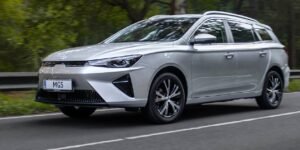
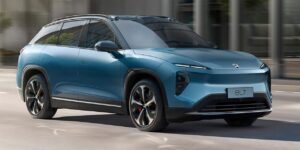
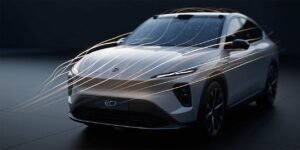
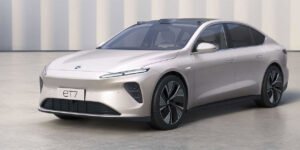
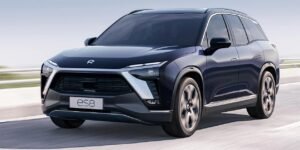
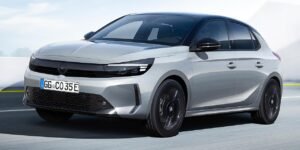
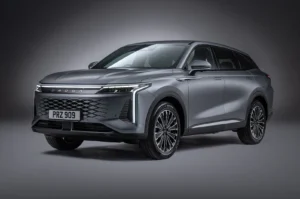
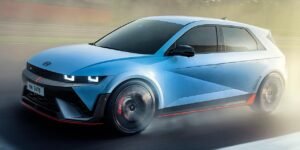
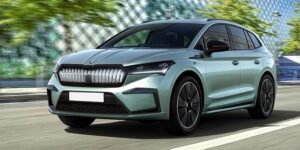
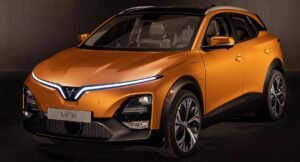
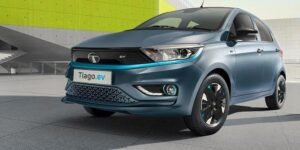
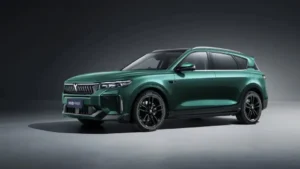
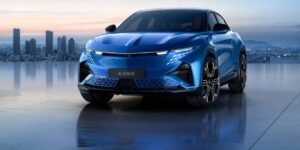
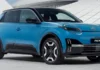
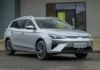
The Roewe D6 is a compact electric sedan from SAIC Motor, while the MG4 EV (2026 model) is a compact electric hatchback from MG Motor, also owned by SAIC. The D6 targets budget-focused drivers who want a simple sedan with strong range for daily use. The MG4 targets drivers who want a more engaging drive, modern design, and better global support. This comparison matters now as the MG4 expands across global markets while newer budget EVs like the D6 push lower entry prices.

The Roewe D6 offers up to about 520 km (CLTC), which translates to around 420–450 km in real-world driving. The MG4 EV 2026 offers between 350 km and 520 km (WLTP) depending on battery size, with real-world figures around 300–450 km. The D6 supports about 7 kW AC charging and up to 80–100 kW DC fast charging. The MG4 improves on this with 7–11 kW AC charging and DC fast charging between 117 kW and 150 kW depending on variant. In practical use, the MG4 charges from 10–80% in about 25–35 minutes, while the D6 takes closer to 30–40 minutes.
The Roewe D6 starts at about $18,000–$22,000, which equals around ₦27–₦33 million landed in Nigeria. The MG4 EV starts around $28,000–$38,000, or roughly ₦42–₦60 million depending on trim and import costs. The D6 focuses on lower-cost trims with fewer features. The MG4 offers multiple variants, including Standard Range, Long Range, and performance-focused XPower models. The MG4 is widely available in Europe, the UK, and expanding into markets like South Africa, while the D6 is mainly China-based and imported into other regions. This comparison helps you decide between a lower-cost sedan or a more refined hatchback with stronger availability and support.
Within Roewe’s lineup, buyers can also consider models like the Roewe Ei5 or other SAIC-based EVs for similar pricing. Within MG’s lineup, the MG4 sits alongside the MG ZS EV and MG5 EV, offering SUV and wagon alternatives. Outside both brands, rivals include the BYD Dolphin and the Volkswagen ID.3, both popular in the compact EV segment. This comparison stands out because it compares two vehicles from the same parent company with different priorities, price points, and global reach.
The Roewe D6 offers lower purchase cost, which makes it easier to enter the EV market. It delivers strong range for its price, which reduces charging frequency for daily use. Its sedan shape improves efficiency, which helps reduce energy consumption over time. On the downside, it lacks advanced features found in higher-priced EVs. It also has limited global support, which may affect servicing and resale.
The MG4 EV offers better driving dynamics, which improves handling and driver engagement. It supports faster charging, which reduces waiting time on long trips. It also has wider global availability, which improves service access and resale value. On the downside, it costs more upfront, which increases the total investment. Its base variants offer lower range compared to higher trims, which may limit long-distance use.
QUICK VERDICT
Choose the Roewe D6 if you prioritize lower cost and strong range for daily commuting. Choose the MG4 EV if better driving performance, faster charging, and wider support matter more to you. The trade-off comes down to budget versus overall ownership experience. Both options serve different types of drivers.
Related EV Comparisons
| |
| Price | $10,000.00 $30,000.00 |
| Our Rating | |
| Brand | Roewe MG |
| Category | Electric Cars Electric Cars |
| Available Trims / Variants |
D6 450 (Standard), D6 520 (Long Range)
Standard Range Long Range XPower performance |
| Reveal Date | April 2025 (Auto Shanghai) 2025 update for 2026 model year |
| Availability Status | On Sale Production |
| Country of origin | China Britain |
| Base Price (USD) | $10,900 (RMB 79,800) — China only $30,000 |
| Battery Capacity |
42.8 kWh - D6 450 53.9 kWh - D6 520 51 kWh 64 kWh 77 kWh |
| Battery Chemistry |
LFP (Lithium Iron Phosphate) CTB (Cell-to-Body)
Lithium iron phosphate for smaller pack Lithium NMC for larger pack |
| Range (WLTP/CLTC/EPA) |
450 km / 280 mi (CLTC) - D6 450 520 km / 323 mi (CLTC) - D6 520 About 218 mi Standard About 281 mi Long Range About 323 mi Extended |
| Energy Consumption | 9.125 kWh/100km - D6 450 15 to 17 kWh per 100 km |
| Regen Braking (Max kW) | Adjustable regenerative braking |
| Heat Pump | |
| AC Charging (Max kW) |
7 kW to 11 kW AC Full charge about 6 to 8 h |
| DC Charging (Max kW) |
20 min (30–80%)
Up to about 135 kW DC 10 to 80 percent about 30 to 35 min |
| Additional Notes | Vehicle to load support on some trims |
| Power Output (kW / hp) |
127 hp (95 kW) - D6 450 143 hp (105 kW) - D6 520 168 HP RWD Standard 201 HP RWD Long Range 429 HP AWD XPower |
| Torque (Nm) |
201 Nm (confirmed) - D6 520
184 lb ft Standard 184 lb ft Long Range 443 lb ft XPower |
| 0–100 km/h / 0-60 mph (seconds) The acceleration numbers are an easy way to compare car performance. We list either time from 0 to 100 km/h or time from 0 to 60mph, depending on which number(s) the manufacturers provide. The lower the acceleration time, the higher performance the car is. |
0 to 62 mph about 7.7 s Standard 0 to 62 mph about 7.0 s Long Range 0 to 62 mph about 3.8 s XPower |
| Top Speed (km/h / mph) |
150 km/h
About 100 mph Standard About 112 mph XPower |
| Transmission / Drive | Single-speed fixed ratio Single speed automatic |
| Body Style | 4-door compact sedan, 5 seats 5 door hatchback, 5 seats |
| Platform / Architecture | SAIC Nebula 2nd-gen pure electric architecture MSP modular scalable platform |
| Dimensions (L×W×H mm) |
Length: 4,792 mm Width: 1,828 mm Height: 1,496 mm Length about 168.7 in Width about 72.8 in Height about 59.1 in |
| Drag Coefficient (Cd) | 0.27 Cd 0.27 Cd |
| Wheelbase (mm) | 2,750 mm 106.3 in |
| Ground Clearance (mm) | 5.9 in |
| Kerb Weight (kg) | 3,600 to 4,000 lb depending on battery |
| Suspension (Front / Rear) |
Front MacPherson strut Rear multi link |
| Wheel Size (inches) | Alloy 17 to 18 inch alloy wheels |
| Trunk/Boot Capacity (L) | 12.9 cu ft |
| Towing Capacity (kg) | 500 kg small trailer |
| Additional Notes | Rear wheel drive base architecture |
| Airbags (count) |
Front airbags Side airbags Curtain airbags |
| Driver Assistance (ADAS) |
L2 ADAS — adaptive cruise control, lane keep assist, auto lane change, highway assist
Adaptive cruise control Lane keep assist Automatic emergency braking |
| Autonomous Driving Level | L2 (not L3) Level 2 driver assist |
| Crash Test Ratings | 5 star rating in Euro NCAP testing |
| Seating Capacity | Mosaic micro-perforated matrix seats Fabric or synthetic leather |
| Roof Type | Standard metal roof |
| Bluetooth / Wi-Fi |
Bluetooth key, remote app control (pre-conditioning, charging), USB/Type-C ports, keyless entry, push-button start
Apple CarPlay Android Auto Navigation |
| Parking Aids |
Rear camera Parking sensors |
| Additional Notes |
Single-zone automatic, heat pump standard
Keyless entry Mobile app control |
| Centre Screen (inches) | 12.8-inch floating touchscreen 10.25 inch touchscreen |
| Driver's Display (inches) | Full LCD instrument panel 7 inch digital cluster |
| Additional Notes | Wireless software updates |
| Additional Notes | XPower version uses dual motor AWD performance setup. |
|
Specifications sourced from manufacturer data and may reflect WLTP, CLTC, or EPA test conditions. Import prices in your local are estimates based on grey-market landing costs and exclude duties, clearing fees, and local taxes. Figures are subject to change without notice. Always verify with your local importer before purchase. We can not guarantee that the information on this page is 100% correct