- Home
- Electric Vehicles
- Compare
- Stelato S9 vs BYD Han
Stelato S9 vs BYD Han
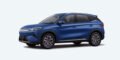
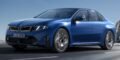
The Stelato S9 and BYD Han compete in the full-size to executive EV sedan space. The S9 targets premium buyers who want next-gen tech, large cabin space, and flagship comfort. The Han focuses on value-driven luxury with strong performance and hybrid or EV flexibility. Both suit buyers moving from ICE luxury sedans into EVs with different priorities.
Range shows a clear gap in pure EV form. The Stelato S9 reaches up to about 816 km CLTC in rear-wheel-drive trim, while the BYD Han EV delivers around 605 km (NEDC) in standard versions. Charging differs by architecture. The S9 uses an 800V system with ultra-fast charging capability, designed for rapid energy intake in short sessions. The Han uses BYD’s blade battery with fast charging from 30 to 80 percent in about 25 minutes, but peak charging speed stays lower than newer high-voltage platforms.
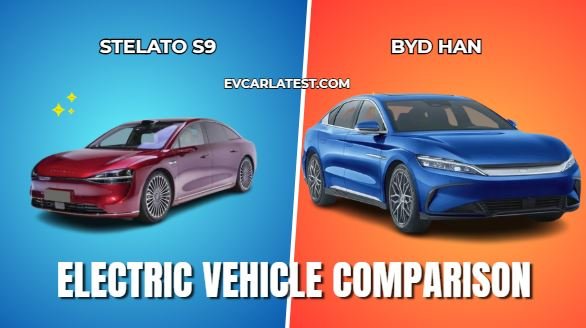
Pricing positions the S9 higher as a newer flagship model, starting around the premium executive bracket. The Han sits lower, offering a broader range across EV and plug-in hybrid variants. The S9 is focused on China with limited global rollout so far. The Han has wider availability across China, parts of Asia, and selected export markets. This comparison helps you choose between cutting-edge luxury tech or proven value with wider accessibility.
Within their brands, the S9 aligns with Huawei-backed models like the AITO M9 and Luxeed S7. The Han sits alongside the BYD Seal and BYD Tang. Key rivals include the Nio ET7, XPeng P7, and Tesla Model S, all competing across range, tech, and pricing.
The Stelato S9 delivers long range, advanced driver-assistance with LiDAR integration, and a high-end rear-seat experience, but it has limited global availability and higher pricing, with a new platform still building long-term reliability data. The BYD Han offers strong value, multiple powertrain options, and proven battery safety with the blade battery, but it trails in charging architecture and does not match the latest flagship tech features.
Quick Verdict; Pick the Stelato S9 if range, next-gen tech, and flagship comfort matter more. Pick the BYD Han if pricing, availability, and proven platform matter more.
Related EV Comparisons
- XPeng MONA M03 vs BYD Dolphin
- XPeng MONA M03 vs BYD Qin Plus EV
- BYD Seagull vs DongFeng Nammi Box
- Mercedes CLA vs BYD Seal (Atto 4)
- Lynk & Co 02 vs BYD Sea Lion 7
MODEL
| Models |
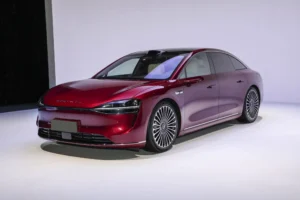
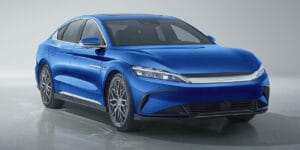
Stelato S9 RWD Stelato S9 AWD Stelato S9 Ultra (flagship AWD variant) |
LAUNCH
| Announced |
May 2024 - Stelato S9 RWD May 2024 - Stelato S9 AWD August 2024 - Stelato S9 Ultra 2022, September 28 |
| Status | In production Available to order. Released 2022, Q4 |
| Country of origin | China |
| Base Price |
$55,800 USD - Stelato S9 RWD $62,600 - Stelato S9 AWD € 72,000 |
PERFORMANCE
| Power |
RWD: 227 kW (~309 hp) - Stelato S9 RWD AWD: 385 kW (~516 hp) - Stelato S9 AWD 515 hp (385 kW), Dual-Motor AWD - Stelato S9 Ultra AWD 509 hp (380 kW) |
| Torque |
396 Nm - Stelato S9 RWD 673 Nm - Stelato S9 AWD 673 Nm - Stelato S9 Ultra 516 lb-ft (700 Nm) |
| Acceleration The acceleration numbers are an easy way to compare car performance. We list either time from 0 to 100 km/h or time from 0 to 60mph, depending on which number(s) the manufacturers provide. The lower the acceleration time, the higher performance the car is. |
5.98 s - Stelato S9 RWD 3.9 s - Stelato S9 AWD 3.9 s - Stelato S9 Ultra 3.9 sec 0-62 mph |
| Max Speed | 214 km/h 112 mph (180 km/h) |
BATTERY
| Capacity | 100 kWh (NMC) 85.4 kWh total |
| Tech | 800 V fast charging Liquid-cooled Li-ion LFP battery |
| Range |
816 km (~506 mi) - Stelato S9 RWD 721 km (~448 mi) - Stelato S9 AWD 721 km CLTC (~448 mi WLTP est.) 324 mi WLTP |
| Recuperation | Yes Yes |
| Heat Pump | |
| AC Charging |
Type 2 7 kW Type 2 11 kW |
| DC Charging |
CCS 150 kW, 30-80% in 30 min Vehicle to load (V2L) |
BODY
| Type | 4‑door sedan (5 seats) 4 door sedan, 5 seats |
| Platform | BE22 e-platform 3.0 |
| Dimensions | 5160 mm L × 1987–2005 mm W × 1486–1492 mm H 196.7 x 75.2 x 58.9 in (4995 x 1910 x 1495 mm) |
| Drag Co-Efficient | 0.193 0.233 Cd |
| Wheelbase | 3050 mm 115.0 in (2920 mm) |
| Clearance | 5.1 in (130 mm) |
| Weight | 2246–2355 kg EU: 4960 lb unladen |
| Suspension | Double wishbone front, multi‑link rear with air suspension Front MacPherson struts, rear multi-link |
| Wheels | 245/45 R20 or 255/40 R21 R19 |
| Trunk/Boot | 375 L EU: 14.5 ft³ |
| Frunk/Bonnet | 38 L No |
| Towing | No |
DISPLAYS
| Centre | 15.6‑inch touchscreen 15.6" rotating touchscreen |
| Driver's Display | 12.3‑inch digital cluster 12.3" |
| Head-Up | Yes, projector type |
| Others | Optional 32‑inch ceiling projector and rear 13.2‑inch tablet |
COMFORT
| Seats | 5‑seater, heated, ventilated, massage (high-end) Heated and ventilated front seats |
| Roof | Panoramic sunroof Panoramic glass roof |
| Parking Aids | Front and rear sensors, 360 camera, reversing camera |
| Connectivity | HarmonyOS, smart features Android Auto and Apple CarPlay |
| Others | Digital door handles, streaming-media mirrors Multifunctional pad in the rear seat armrest |
SAFETY
| Airbags | Yes 11 airbags: front, side, rear, including head airbag system |
| Driving Aids | Huawei ADS 3.0 with LiDAR and radar sensors Multiple radars, 6 cameras, 12 sensors. Blind Spot Warning, High Beam Assist, Advanced Driver Assistance System, Lane departure Warning, Predictive Collision Warning, Automatic Emergency Braking, Traffic Sign Recognition |
| Self Driving | Advanced driver assist, not full autonomous |
Note
| Others | For European market |

|
Disclaimer Note
We can not guarantee that the information on this page is 100% correct