Tesla continues to lead the EV market in 2025 through performance, range, and charging scale. This list focuses on Tesla electric vehicles available or relevant for the 2025 model year, including confirmed 2026 models already shaping buyer demand. You get a clear breakdown of strengths, positioning, and buyer fit.
List of 2025 Tesla Top Electric Vehicles
Tesla Model S Plaid
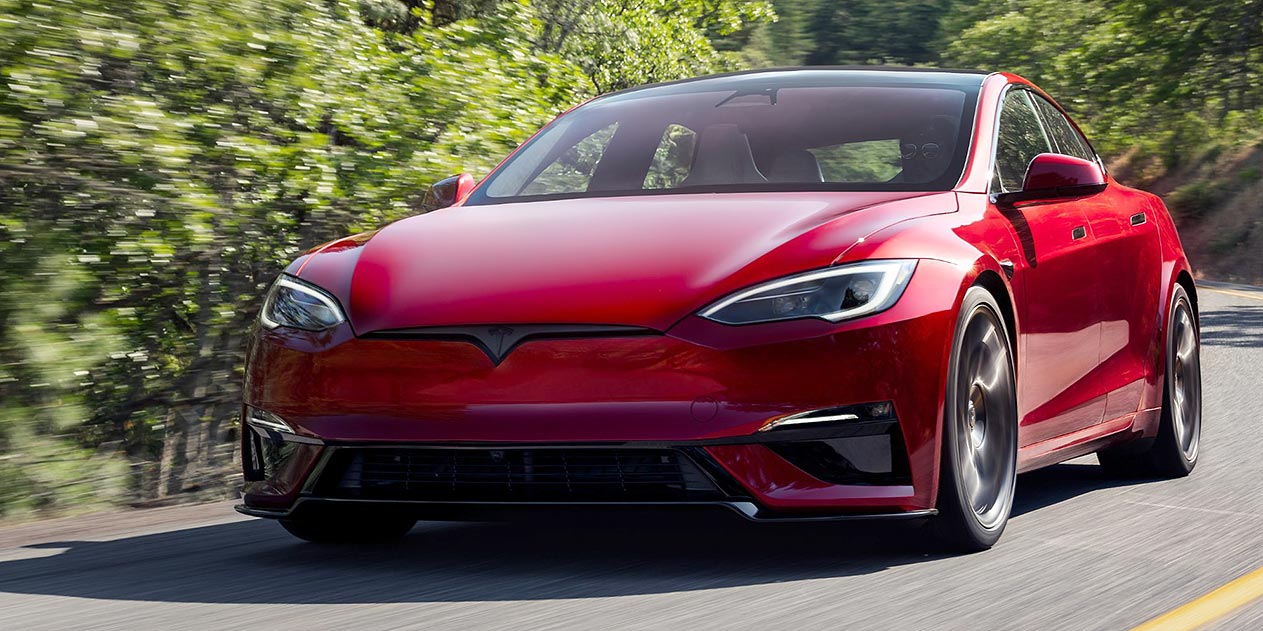 The Model S Plaid remains Tesla’s flagship performance sedan.
• 1,020 hp tri-motor setup
• 0 to 60 mph in under 2 seconds
• Estimated range around 396 miles
• All-wheel drive standard
Who it fits
You want extreme acceleration with long-range capability in a luxury sedan format.
Tesla Model S Long Range
 This version prioritizes efficiency over raw speed.
• Dual-motor AWD
• Estimated range above 400 miles
• Faster charging efficiency than Plaid
• Lower cost entry into Model S lineup
Who it fits
You want maximum range with premium comfort and daily usability.
Tesla Model X Plaid
 The fastest electric SUV on sale.
• Tri-motor AWD
• 0 to 60 mph around 2.5 seconds
• Falcon Wing rear doors
• Seating for up to seven
Who it fits
You want supercar-level speed in a full-size family SUV.
Tesla Model X Long Range Plus
 Range-focused alternative to the Plaid.
• Dual-motor AWD
• Estimated range near 350 miles
• Strong towing capacity
• Lower energy consumption than Plaid
Who it fits
You value long-distance travel and space over extreme acceleration.
Tesla Model X Standard Range
Entry-level Model X option.
• Reduced battery capacity
• Dual-motor AWD
• Same interior and safety tech as higher trims
• Lower purchase price
Who it fits
You want Model X design and features with a tighter budget.
2026 Tesla Cybertruck Cyberbeast
 Tesla’s most aggressive truck variant.
• Tri-motor AWD
• Estimated 845 hp
• 0 to 60 mph under 2.7 seconds
• Over 11,000 lbs towing
Who it fits
You want maximum performance, towing, and off-road capability in an electric pickup.
2026 Tesla Cybertruck AWD
 Balanced Cybertruck configuration.
• Dual-motor AWD
• Longer range than Cyberbeast
• Strong towing and payload ratings
• Lower price point
Who it fits
You want Cybertruck utility with better efficiency and range.
Tesla Semi
 Purpose-built electric truck for logistics.
• Up to 500 miles per charge
• Designed for heavy freight hauling
• Megawatt charging support
• Proven real-world fleet data
Who it fits
You operate fleet or long-haul commercial transport.
Tesla Roadster
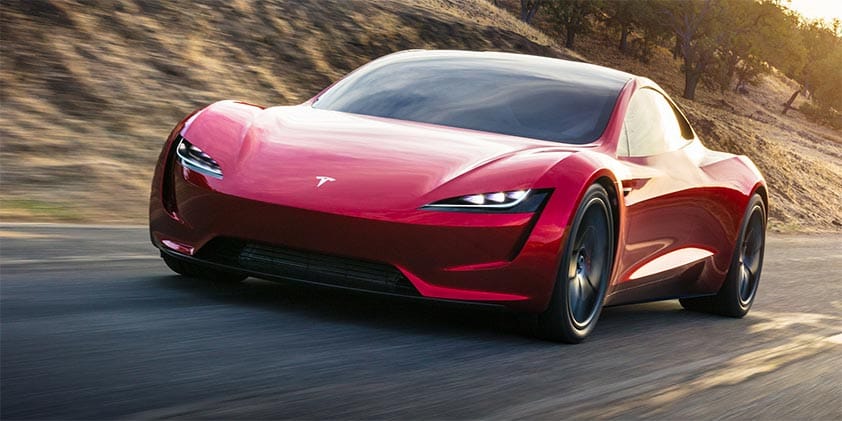 Tesla’s upcoming halo sports car.
• Claimed 0 to 60 mph under 1.9 seconds
• Over 600 miles estimated range
• Quad-motor AWD
• Limited production focus
Who it fits
You want top-tier electric performance and exclusivity.
Quick Comparison Overview
Model S Plaid and Model X Plaid dominate performance.
Model S Long Range leads efficiency.
Cybertruck Cyberbeast targets power users.
Cybertruck AWD suits daily utility.
Semi serves commercial demand.
Roadster acts as Tesla’s performance statement.
| Model | Powertrain | 0–60 mph | Estimated Range | Segment | Best For |
|---|---|---|---|---|---|
| Tesla Model S Plaid | Tri-motor AWD | Under 2.0s | ~396 miles | Sedan | Maximum performance |
| Tesla Model S Long Range | Dual-motor AWD | ~3.1s | 400+ miles | Sedan | Long-distance driving |
| Tesla Model X Plaid | Tri-motor AWD | ~2.5s | ~330 miles | SUV | Performance family SUV |
| Tesla Model X Long Range Plus | Dual-motor AWD | ~3.8s | ~350 miles | SUV | Range and space |
| Tesla Model X Standard Range | Dual-motor AWD | ~4.4s | ~300 miles | SUV | Lower-cost Model X |
| 2026 Tesla Cybertruck Cyberbeast | Tri-motor AWD | Under 2.7s | ~320 miles | Pickup | Towing and off-road |
| 2026 Tesla Cybertruck AWD | Dual-motor AWD | ~4.1s | ~340 miles | Pickup | Daily utility |
| Tesla Semi | Electric multi-motor | N/A | Up to 500 miles | Commercial truck | Freight hauling |
| Tesla Roadster | Quad-motor AWD | Under 1.9s | 600+ miles | Sports car | Ultimate performance |
Tesla’s 2025 lineup covers every EV segment. Sedans, SUVs, trucks, and commercial platforms all remain competitive on range, speed, and charging access. Your best choice depends on performance needs, cargo demands, and travel distance priorities.