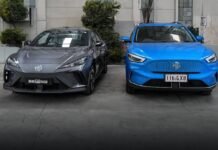
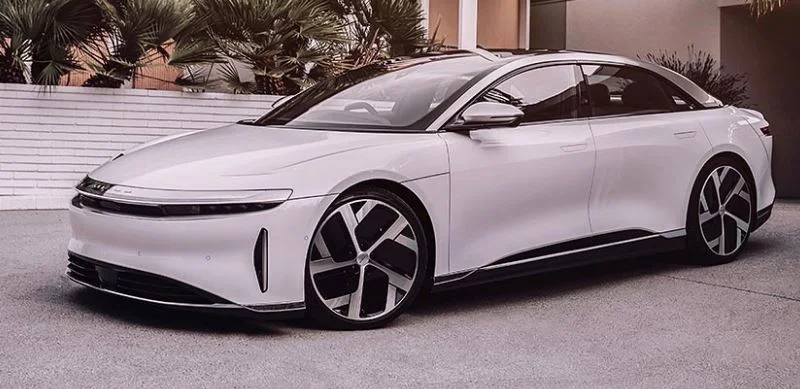
The most efficient EV on sale in 2026 is the Lucid Air Pure, rated at roughly 4.3–4.35 miles per kWh on the U.S. EPA cycle (23 kWh/100 miles, 146 MPGe) and closer to 5.0 miles per kWh under Europe’s more forgiving WLTP cycle. Close behind on the EPA scale sit the rear-wheel-drive Tesla Model 3 and Tesla Model Y, both landing around 4.17 miles per kWh (24 kWh/100 miles). If you’re cross-shopping for the lowest electricity cost per mile, those three nameplates currently define the top of the market. Below, we break down the full 2026 efficiency ranking, explain why EPA and WLTP numbers don’t match up, and show what the gap actually means for your monthly charging bill.
Quick Summary Box
| Takeaway | Detail |
|---|---|
| 🏆 Most efficient overall | Lucid Air Pure — ~23 kWh/100 mi (EPA), 146 MPGe |
| 🥈 Best mainstream value | Tesla Model 3 RWD — ~24 kWh/100 mi (EPA), 139 MPGe |
| 📏 Cycle matters | WLTP-rated efficiency figures run 10–15% higher than EPA for the same car — they are not directly comparable |
| 🚙 Most efficient SUV | Tesla Model Y RWD — up to 138 MPGe |
| Watch for trims | Wheel size, AWD vs RWD, and performance variants can shift a car’s efficiency by 15–25% within the same model line |
How EV Efficiency Is Actually Measured
Efficiency and range are related but not the same thing. Range tells you how far a battery takes you; efficiency tells you how much energy it took to get there. Three metrics show up across specification sheets, and they describe the same underlying number from different directions:
- kWh/100 miles (or /100 km) — energy consumed per distance. Lower is better.
- Miles per kWh (mi/kWh) — distance per unit of energy. Higher is better. Most mainstream EVs land between 3.0 and 4.0 mi/kWh; the current efficiency leaders exceed 4.3 mi/kWh on the EPA cycle.
- MPGe — the EPA’s “miles per gallon equivalent,” which converts electricity use into a unit gasoline-car shoppers already understand. Today’s most efficient EVs sit in the 130–146 MPGe range.
A car’s WLTP-rated efficiency (used across Europe, the UK, and much of Asia-Pacific) and its EPA-rated efficiency (used in the U.S.) are not interchangeable. WLTP testing is generally less aggressive than the EPA’s five-cycle test, so the same physical car often posts a noticeably better mi/kWh figure under WLTP than under EPA protocol. Always compare cars within the same test cycle, never across cycles.
Why City Driving Beats Highway Driving in an EV
Unlike combustion cars, EVs are typically more efficient in city driving than on the highway — the reverse of what most car buyers expect. Two factors explain this:
- Regenerative braking recaptures energy every time the car slows down, which happens constantly in stop-and-go traffic.
- Lower city speeds mean less aerodynamic drag, and drag is the dominant efficiency penalty at speed.
Combined, these effects typically produce 15–25% better efficiency in city driving than on the highway — the opposite of a gasoline car’s mileage pattern.
What Actually Makes an EV Efficient
Four engineering factors separate the efficiency leaders from the rest of the market:
Aerodynamics. The Lucid Air’s drag coefficient of roughly 0.197–0.21 is among the lowest ever recorded on a production car, and it’s the single biggest reason the Air Pure tops every efficiency chart it appears on. The Hyundai Ioniq 6 follows a similar playbook, using a streamliner-style fastback body to reach a drag coefficient near 0.21.
Weight and size. The Fiat 500e reaches WLTP figures near 4.9 miles per kWh not through aerodynamic sophistication but through compact dimensions and a lightweight body — proof that efficiency isn’t only a large-luxury-sedan story.
Drivetrain configuration. Rear-wheel-drive, single-motor variants consistently out-efficient dual-motor AWD versions of the same car. The Tesla Model 3 Standard RWD outperforms every AWD Model 3 trim; the same pattern holds across the Model Y line and the Lexus RZ, where the AWD Performance trim drops to roughly 32 kWh/100 miles versus 27 kWh/100 miles for the standard AWD Premium trim.
Software and thermal management. A heat pump can meaningfully protect winter-efficiency numbers; its absence — as on some Kia EV3 configurations — doesn’t hurt WLTP lab figures but tends to show up in real-world cold-weather consumption.
2026 Efficiency Leaders by Category
Sedans lead the overall efficiency charts because low ride height and aerodynamic shaping reduce drag more effectively than an SUV body allows. The Lucid Air Pure, Tesla Model 3 RWD, and Hyundai Ioniq 6 SE RWD are the class benchmarks.
SUVs post decent but generally lower efficiency than sedans — 110–140 MPGe is considered a strong result for the category in 2026, versus 130–146 MPGe for the best sedans. The Tesla Model Y RWD, at up to 138 MPGe, remains the SUV benchmark, with the Kia EV6 and Toyota bZ close behind.
Budget and compact EVs can still post excellent numbers despite modest battery sizes — the Fiat 500e and Kia EV3 both demonstrate that a smaller, lighter car can rival far pricier efficiency leaders on a per-kWh basis, even if total range is lower.
Performance variants carry a real efficiency tax. The Tesla Model S Plaid drops to roughly 31 kWh/100 miles (110 MPGe) chasing its sub-2-second 0–60 time — a reminder that outright performance and best-in-class efficiency are generally in tension within the same model line.
What the Efficiency Gap Means for Real Ownership Costs
The difference between a 23 kWh/100-mile car and a 32 kWh/100-mile car is not trivial over a full ownership period. On a 12,000-mile annual driving pattern, an efficiency gap of this size can translate into meaningful annual electricity-cost differences depending on local per-kWh rates — often in the range of tens to low hundreds of dollars (or the local-currency equivalent) per year between the most and least efficient cars on this list. Exact savings depend heavily on local electricity pricing, home versus public charging mix, and climate, so treat any single dollar figure as illustrative rather than a guarantee.
Comparison Table: 2026 EV Efficiency Rankings
| Model | Test Cycle | Efficiency (kWh/100 mi or km) | Miles per kWh | MPGe (EPA only) | Notes |
|---|---|---|---|---|---|
| Lucid Air Pure RWD | EPA | ~23 kWh/100 mi | ~4.3–4.35 | 146 | Highest EPA MPGe ever recorded for a production EV |
| Lucid Air Pure RWD | WLTP | 20.0 kWh/100 mi | 5.0 | N/A | WLTP and EPA figures are not directly comparable |
| Tesla Model 3 RWD (18″) | EPA | ~24 kWh/100 mi | ~4.17 | 139 | Most efficient mainstream sedan on EPA cycle |
| Tesla Model Y RWD (18″) | EPA | ~24 kWh/100 mi | ~4.17 | ~138 | Benchmark for the midsize SUV segment |
| Hyundai Ioniq 6 SE RWD | Manufacturer-rated | Not disclosed (mi/kWh basis) | ~4.7 | Not disclosed | 0.208–0.21 drag coefficient; 800V architecture |
| Fiat 500e | WLTP | 20.3 kWh/100 mi | 4.92 | N/A | Compact/lightweight body, not aero-led |
| Kia EV3 (81.4 kWh pack) | WLTP | Not disclosed | 4.6 | N/A | No heat pump as standard — may affect winter efficiency |
| Lexus RZ Premium AWD | EPA | 27 kWh/100 mi | ~3.7 | Not disclosed | |
| Tesla Model S Plaid | EPA | 31 kWh/100 mi | ~3.2 | 110 | Efficiency traded for 0–60 performance |
| Lexus RZ Performance AWD | EPA | 32 kWh/100 mi | ~3.1 | Not disclosed | Least efficient vehicle on this list |
Figures compiled from EPA fueleconomy.gov data and manufacturer WLTP specifications current as of mid-2026. Availability varies by global market and rollout timing.
Bottom Line Verdict
For 2026, the Lucid Air Pure is the efficiency benchmark of the entire EV market on the EPA cycle, with the Tesla Model 3 RWD and Tesla Model Y RWD as the more attainable mainstream picks that still clear 4 miles per kWh. If low running cost matters more than outright range or performance, prioritize rear-wheel-drive, single-motor configurations on smaller wheels — the efficiency penalty for AWD and performance trims is consistently 15–30% across every model line in this ranking.