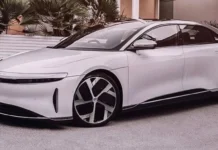
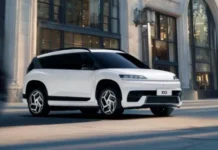
Yes — in 2026, driving an EV from coast to coast is not just possible, it’s genuinely easy compared to just two years ago. The connector wars are effectively over: most major automakers have adopted the North American Charging Standard (NACS), which means native or adapter-based access to Tesla’s Supercharger network — <cite index=”6-1,6-2″>now over 35,000 Superchargers across North America</cite> — on top of growing networks like Electrify America, EVgo, Ionna, and the Rivian Adventure Network. Below, we mapped a real coast-to-coast route, timed the charging stops, and compared the EVs best suited for the job — plus where the trip can still slow you down.
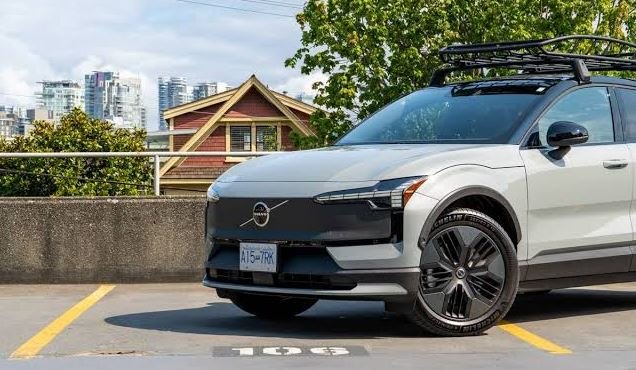
Quick Summary Box
| Takeaway | Detail |
|---|---|
| Is it possible? | Yes — a 2,800–3,000 mile coast-to-coast route is drivable in 5–7 days with planning |
| Charging backbone | Tesla Supercharger network (NACS/J3400) is now the primary cross-country artery for most brands |
| Biggest holdout | Volkswagen Group (VW, Audi, Porsche) still ships CCS1-only in the US as of early 2026, no native NACS |
| Best range buffer | Look for 300+ mile EPA range to avoid rural charging gaps |
| Weak spot | Rural/scenic detours off major interstates still have thin fast-charging coverage |
The State of Cross-Country EV Travel in 2026
For years, a coast-to-coast EV trip meant juggling apps, hunting for functioning plugs, and building in wide safety margins. <cite index=”6-4,6-5″>A convergence of standardized charging hardware, better predictive route-planning software, and battery packs that routinely exceed 400 miles has turned the electric road trip from an early-adopter challenge into a mainstream, everyday option</cite>. The bigger shift isn’t battery size — it’s access. <cite index=”6-1″>Legacy automakers including Ford, General Motors, Hyundai, and Rivian have adopted NACS, unlocking access to the Tesla Supercharger network</cite> without needing a bulky third-party adapter for most newer models.
Mapping the Route: I-80 Coast to Coast
For this route, we mapped a classic I-80 corridor run — San Francisco, California to New York City, New York — roughly 2,900 miles.
Day-by-Day Breakdown
- Day 1–2: San Francisco → Salt Lake City, Utah (~750 mi) — dense Supercharger and Electrify America coverage along I-80
- Day 3: Salt Lake City → Denver/Cheyenne corridor (~500 mi) — mixed Tesla, EVgo, and Ionna stops
- Day 4–5: Cheyenne → Chicago, Illinois (~950 mi) — strong interstate coverage, occasional rural gaps
- Day 6–7: Chicago → New York City (~800 mi) — dense charging along I-80/I-76, minimal planning required
Real-world charging stop counts vary by vehicle range and charging curve; treat the above as a planning framework, not a fixed itinerary.
Charging Networks: What Actually Works in 2026
Tesla Supercharger / NACS <cite index=”2-1″>Tesla still owns the largest share of high-speed highway charging infrastructure, and an increasing number of non-Tesla EVs now support Supercharger access</cite> either natively or via adapter. This is the backbone most route planners default to first.
Electrify America, EVgo, Ionna <cite index=”2-1″>Electrify America now runs hundreds of stations with thousands of fast-charging ports, many rated up to 350 kW, and the newer Ionna joint venture (backed by BMW, GM, Honda, Hyundai, and others) is expanding rapidly</cite>. Reliability on these networks has improved but still trails Supercharger in consistency at busy times.
The Connector Divide That Remains <cite index=”7-2,7-3″>Volkswagen Group — including Volkswagen, Audi, and Porsche — remains the most notable NACS holdout, with the ID.4 and Q4 e-tron still shipping with CCS1-only connectors</cite> as of early 2026. <cite index=”7-1″>There is no widely available CCS-to-NACS adapter for non-Tesla vehicles, though Tesla’s Magic Dock program adds CCS connectors at select Supercharger locations</cite>. Confirm NACS/CCS compatibility for your specific model before relying on Supercharger stops.
What Makes an EV “Road-Trip Ready” in 2026
A capable long-distance EV in 2026 generally needs:
- 300+ miles of EPA-rated range to keep charging stops manageable
- Native NACS port or included adapter for Supercharger access
- DC fast-charging above 150 kW to keep 10–80% charge stops under 30 minutes
- A built-in route planner that accounts for elevation, weather, and real-time charger status
Where the Trip Still Slows You Down
<cite index=”2-1″>Interstate corridors are well covered, but deep rural detours off the main highways still require careful planning and sometimes slower Level 2 charging</cite>. <cite index=”2-1″>Drivers also still juggle multiple apps — Electrify America, EVgo, ChargePoint, and PlugShare — to locate, start, and pay for charging sessions</cite>, since not every network has folded into a single seamless experience yet.
Comparison Table: Best EVs for a 2026 Cross-Country Trip
| Model | EPA Range (est.) | Charging Standard | 10–80% Fast Charge | Starting MSRP (USD) |
|---|---|---|---|---|
| Hyundai Ioniq 9 | <cite index=”1-1″>Up to 335 miles</cite> | Native NACS | <cite index=”1-1″>~24 min on 350 kW DC</cite> | <cite index=”1-1″>Under $60,000</cite> |
| Tesla Model 3/Y | 300–330 miles | Native NACS | ~25–27 min | $40,000–$50,000 |
| Rivian R1S | 320+ miles | Native NACS | ~25 min | $75,000+ |
| Ford F-150 Lightning | 300–320 miles | NACS (adapter/native varies by trim) | ~30 min | $55,000+ |
| Kia EV9 | 280–300 miles | NACS | ~24 min | $55,000+ |
| VW ID.4 | 275–290 miles | CCS1 only — no native NACS | ~28 min | $40,000+ |
confirm exact specs with the manufacturer before purchase or trip planning. Pricing shown in USD; availability reflects global rollout timelines and may vary by market.
Verdict
Yes, you can comfortably drive cross-country in an EV in 2026 — the charging network has matured enough that this is now a mainstream road trip, not an experiment. For the smoothest experience, prioritize a vehicle with native NACS access and 300+ miles of range; if you’re eyeing a Volkswagen Group model, budget extra planning time around its CCS-only charging. With the right car and a route planner, coast to coast is a long weekend away, not a logistical gamble.