Rivian’s R1S and R1T, the Tesla Model Y, and the Porsche Taycan currently hold their value better than almost any other EVs on the market, with two-year retention rates as high as 70%+ — while models like the Jaguar I-PACE and early Lucid Air have shed more than half their value in the same window. While the average new gas car loses about 40% of its value in three years, EV depreciation varies far more widely, from under 30% for the strongest holders to over 60% for the weakest. Below, we break down exactly which models are winning and losing on resale in 2026, why the gap has gotten this wide, and what it means whether you’re buying new, buying used, or planning to sell.
Quick Summary
- A 2024-or-newer EV held for five years and driven reasonably will typically land at roughly half its original MSRP — now close to a typical gas car’s five-year retention.
- Average EVs keep only around 39% of their value after three years, versus 52–56% for petrol, diesel, and hybrid vehicles, according to Carwow’s late-2025 value-retention research.
- Premium EVs do notably better, retaining roughly 55–77% of value over three years — but the steepest drop still lands in the first 12–18 months.
- The Porsche Taycan retains around 68% of its value after three years, while the Nissan Leaf retains only about 32%.
- Charging-standard longevity matters: an EV still tied to CHAdeMO depreciates faster than one on NACS or CCS, because future charging access is shrinking for the former.
Why EV Depreciation Doesn’t Behave Like Gas-Car Depreciation
Modern lithium-ion packs typically lose around 1–2% of usable capacity per year under normal use, and that capacity loss is a direct input into resale value. Unlike a gas engine, where wear is harder for a buyer to assess at a glance, an EV’s battery health — its State of Health (SoH) — is something increasingly visible to used-car shoppers through diagnostic tools, and it’s becoming as important to resale price as mileage.
Three forces largely explain the spread between the best and worst depreciating EVs: brand perception, battery-technology generational risk, and charging-standard longevity. A 2015-era Leaf with an early air-cooled pack faces more capacity-risk pricing than a 2022 Ioniq 5 with a liquid-cooled battery, simply because buyers trust the newer chemistry more.
The 2023–2025 Price Reset Still Echoes
A large share of the pain in EV depreciation happened up front, during the 2023–2025 price reset, when automakers — Tesla especially — cut new-vehicle prices and dragged used values down with them. That correction is why some 2022–2023 EVs look artificially “cheap” on paper today: it isn’t that the cars aged badly, it’s that the goalposts for new pricing moved underneath them.
The Strongest Value Retainers in 2026
Mainstream Segment: Tesla Still Leads
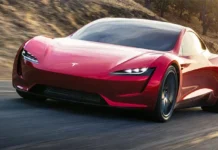
The Tesla Model Y and Model 3 have the strongest resale data among mainstream EVs, supported by high demand, a well-developed charging network, regular over-the-air updates, and a mature certified pre-owned program. The Model Y holds around 64% of its value after two years.
Trucks and Adventure Vehicles: Rivian’s Surprise Dominance
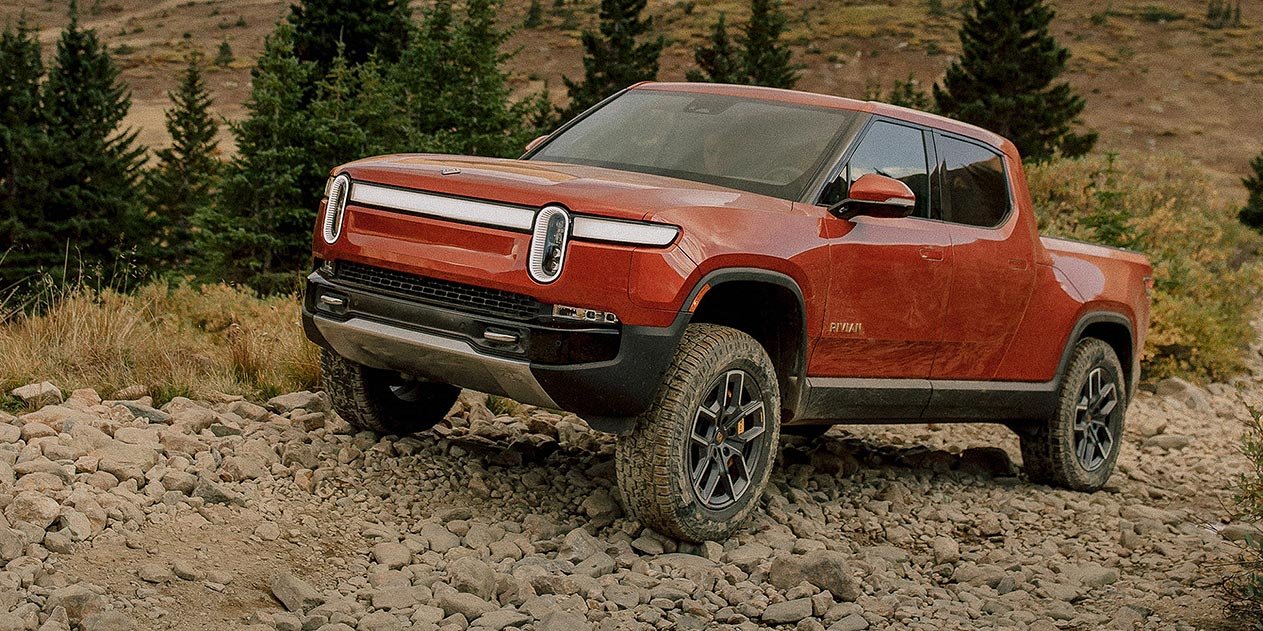
Rivian has emerged as a surprise winner in depreciation data — the R1T pickup holds its value better than almost any other EV, helped by having no direct competitor and a more premium, more off-road-capable positioning than rivals like the Ford F-150 Lightning. The R1S specifically holds around 73% of its value after two years, among the best of any EV tracked. Limited supply and strong enthusiast demand support both R1S and R1T resale.
Premium/Performance Segment: Porsche and the “Buy Used” Trade
The Porsche Taycan retains roughly 68% of its value after three years — an outlier in the luxury EV segment, where most nameplates fare far worse. That strength has created an unusual dynamic: a two-to-three-year-old Taycan, BMW iX, or Polestar bought against a transferable battery warranty is now arguably a smarter purchase than a showroom example, since the original owner has already absorbed the steepest part of the depreciation curve.
The Weakest Value Retainers in 2026
Not every EV is aging gracefully. Early-generation models, short-range city EVs, and heavily discounted luxury cars are still depreciating brutally.
- Nissan Leaf (early generations): retains only around 32% of value after three years, weighed down by an air-cooled battery, CHAdeMO charging, and comparatively short range by 2026 standards.
- Jaguar I-PACE and early Lucid Air: both have shed over 60% of value, hurt by high original MSRPs, complex tech, and reliability questions that scare off second owners.
- Sub-200-mile EVs generally: 2026 buyers are wary of anything under roughly 200 real-world miles of range, so EVs that can’t clear that bar depreciate faster unless they’re priced very cheaply.
Models tied to weak or shrinking DC fast-charging networks also underperform on resale, since a limited charging network makes road trips a chore for a second owner.
What Actually Drives Resale Value: The Checklist
1. Battery State of Health (SoH)
A healthy battery pack is the single biggest driver of EV resale value, and buyers now watch State-of-Health readings closely — a heavy fast-charging history can raise red flags even before a car is inspected.
2. Real-World Range
Real-world range now matters more to buyers than brochure figures, and EVs with under roughly 200 miles of honest range depreciate faster unless priced to compensate.
3. Charging Standard
An EV on a shrinking charging standard (legacy CHAdeMO, for example) is priced down relative to one on NACS or CCS, simply because future charging access is a real ownership risk.
4. Brand and Demand Signal
Strong resale isn’t just about specs — it’s about whether buyers trust the brand’s software support, service network, and long-term viability. This is where Tesla and Rivian both outperform on reputation alone.
Comparison Table: Resale Strength by Model
| Model | Segment | Retained Value | Time Frame | Key Factor |
|---|---|---|---|---|
| Rivian R1S | Adventure SUV | ~73% | 2 years | Limited supply, no direct rival |
| Tesla Model Y | Mainstream crossover | ~64% | 2 years | Demand, charging network, CPO program |
| Porsche Taycan | Luxury performance | ~68% | 3 years | Brand strength, transferable warranty |
| Tesla Model 3 | Mainstream sedan | Strong (low-60s% loss over 5 yrs) | 5 years | Affordability + demand |
| Ford F-150 Lightning | Truck | Close to Rivian, slightly behind | 2–3 years | Strong but less premium positioning |
| Average Premium EV | Luxury | 55–77% | 3 years | Wide spread by model |
| Average EV (all) | — | ~39% | 3 years | Baseline for comparison |
| Average Gas Car | — | 52–56% | 3 years | Benchmark |
| Nissan Leaf (early) | City EV | ~32% | 3 years | Air-cooled battery, CHAdeMO, short range |
| Jaguar I-PACE / early Lucid Air | Luxury | Under ~40% (60%+ loss) | 3–5 years | High MSRP, complex tech, reliability concerns |
Figures are aggregated ranges from multiple 2026 resale studies (CarEdge, iSeeCars, Carwow, Recurrent) and will vary by trim, mileage, region, and condition.
Bottom Line
If resale value matters to you, the data points clearly toward Rivian’s R1S/R1T, Tesla’s Model Y and Model 3, and — surprisingly — the Porsche Taycan among premium options; all four are outperforming the broader EV market by a wide margin. Buyers chasing value should also consider going used on a 2–3-year-old premium EV, letting the first owner absorb the steepest part of the curve. Models to approach cautiously remain early-generation short-range city EVs and any EV still tied to a shrinking charging standard.