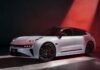
The Chinese EV market continues to evolve at lightning speed, with major tech companies increasingly entering the automotive industry. The latest contender to join the race is Huawei, teaming up with BAIC to introduce their all-new Stelato X4. This sleek mid-size electric sedan is expected to debut in China in the first quarter of 2024, with prices ranging from RMB 300,000 to RMB 400,000 (approximately $42,250 to $56,320).
Huawei’s Next Big Move: Introducing the Stelato X4
China’s automotive sector is undergoing a massive transformation as technology giants like Alibaba, Baidu, and Xiaomi venture into electric vehicle production. Huawei, long known for its cutting-edge hardware and software, is now channeling its expertise into the EV market through strategic partnerships with local automakers.
Its collaboration with BAIC has given rise to Stelato, a new sub-brand focused on smart, high-performance electric vehicles. The Stelato X4 will be the brand’s first production model, showcasing Huawei’s ambition to redefine connected mobility.

First Look: Stelato X4 Design and Exterior Features
Recent spy shots of the Stelato X4 taken during road tests in China reveal a stylish, futuristic design that mirrors Huawei’s Luxeed S7 and Aito M9 models.
Key design highlights include:
- Slim LED headlights and a single light bar at the rear
- A trapezoidal air intake on the front bumper
- Camera-based side mirrors replacing traditional ones
- Retractable door handles for improved aerodynamics
- A LiDAR sensor mounted on the roof for advanced autonomous driving capabilities
Even in heavy camouflage, the Stelato X4 exudes a sense of sophistication and cutting-edge design aimed squarely at premium EV buyers.
Powertrain and Performance Expectations
While Huawei and BAIC have yet to reveal official specifications, industry insiders expect the Stelato X4 to share its electric powertrain technology with the Luxeed S7, which features a 375 kW dual-motor AWD system.
If true, this would position the Stelato X4 as a direct rival to models from NIO, XPeng, and Tesla, combining high performance with Huawei’s intelligent vehicle systems.
Inside the Cabin: Smart Tech Meets Minimalist Luxury
The Stelato X4 interior draws inspiration from the Luxeed S7, offering a blend of modern aesthetics and high-end functionality. Highlights include:
- A three-spoke steering wheel and column-mounted gear selector
- A floating central touchscreen display for infotainment
- Wireless charging pads and hidden storage compartments
- Touch-sensitive buttons replacing traditional door handles
- A Face-ID recognition sensor on the A-pillar for secure driver authentication
However, one surprising omission is Huawei’s signature AR-HUD (Augmented Reality Head-Up Display) — a 75-inch virtual image projection boasting 12,000 nits of brightness. Its absence in the Stelato X4 might disappoint some tech enthusiasts who expect the brand’s hallmark innovations.
Market Outlook: Can the Stelato X4 Compete with NIO, XPeng, and Tesla?
As the Stelato X4 prepares for its 2024 debut, it enters a fiercely competitive EV landscape dominated by established names like NIO, XPeng, and Tesla. Success will depend on Huawei and BAIC’s ability to balance pricing, performance, and technology integration — areas where Huawei’s software expertise could give them an edge.
If the Stelato X4 delivers on expectations, it could become one of the most compelling mid-size electric sedans in China’s growing smart EV segment.
The Stelato X4 represents a major step for Huawei and BAIC in their mission to reshape the future of mobility. With its sleek design, intelligent features, and strong performance potential, the X4 could emerge as a serious rival in China’s fast-moving electric vehicle market.
As we await its official launch, the Stelato X4 stands as a symbol of how technology and automotive innovation are converging to define the next era of transportation.