- Home
- Electric Vehicles
- Compare
- Hyundai Ioniq 6 N vs Xiaomi SU7 Ultra
Hyundai Ioniq 6 N vs Xiaomi SU7 Ultra
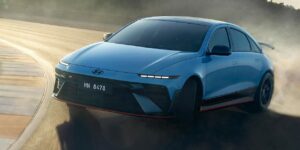
The Hyundai Ioniq 6 N and Xiaomi SU7 Ultra target the same niche. Both sit in the high-performance EV sedan segment. Buyers want speed, sharp handling, and daily usability. Hyundai leans on track-ready tuning and brand motorsport roots. Xiaomi pushes extreme power and tech-focused appeal.
Range differs due to performance focus. The Ioniq 6 N is expected to deliver moderate real-world range due to aggressive tuning. The SU7 Ultra prioritizes output, so range drops further under hard driving. Charging favors Hyundai with its 800V platform, enabling faster DC charging sessions. Xiaomi offers fast charging too, but its real-world charging curve under heavy battery load still faces scrutiny.
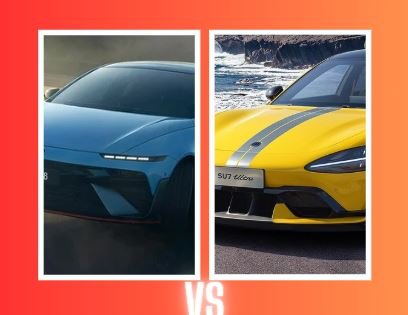
Pricing places the Ioniq 6 N below the SU7 Ultra. Hyundai aims for a wider performance audience. Xiaomi positions the SU7 Ultra as a flagship halo product with higher cost. Availability favors Hyundai in global markets, while Xiaomi remains China-focused. This comparison helps you decide between balanced performance and extreme specs.
Within Hyundai Motor Company, alternatives include the Hyundai Ioniq 5 N and standard Hyundai Ioniq 6. Key rivals for the Ioniq 6 N include the Tesla Model 3 Performance and BMW i4 M50. From Xiaomi, the Xiaomi SU7 sits below the Ultra. SU7 Ultra rivals include the Porsche Taycan Turbo GT and Tesla Model S Plaid.
The Hyundai Ioniq 6 N offers strong track handling, fast 800V charging, and better global support, but range drops under aggressive driving and interior tech feels less advanced than newer rivals. The Xiaomi SU7 Ultra delivers extreme acceleration, high-end cabin tech, and standout design, but limited global availability and high pricing reduce accessibility.
Quick verdict: pick the Ioniq 6 N for balanced performance and usability. Pick the SU7 Ultra for maximum speed and tech focus.
Related EV Comparisons
- BMW i7 vs Xiaomi SU7 Ultra
- Chevrolet Equinox EV vs Hyundai Ioniq 5
- Mercedes CLA vs Xiaomi SU7
- Volvo EX40 vs Hyundai Ioniq 9
- Xiaomi YU7 vs Xiaomi SU7

MODEL
LAUNCH
| Announced | 2025, July 10 2024, October 29 |
| Status | Coming soon. Expected release 2025 Coming soon. Expected release 2025, March |
PERFORMANCE
| Power | AWD 650 hp (478 kW) AWD 1548 hp (1139 kW) |
| Torque | 568 lb-ft (770 Nm) |
| Acceleration The acceleration numbers are an easy way to compare car performance. We list either time from 0 to 100 km/h or time from 0 to 60mph, depending on which number(s) the manufacturers provide. The lower the acceleration time, the higher performance the car is. | 3.2 sec 0-62 mph 2 sec 0-62 mph |
| Max Speed | 160 mph (257 km/h) 217 mph (350 km/h) |
BATTERY
| Capacity | 84 kWh total 93.7 kWh total |
| Tech | Liquid-cooled (800V type) Liquid-cooled (800V type) |
| Range | 391 mi CLTC |
| Recuperation | 4 levels, with steering wheel paddles Yes |
| Heat Pump | |
| AC Charging | Type 2 11 kW Type 2 |
| DC Charging |
CCS 350 kW max, 10-80% in 18 min
CCS, 10-80% in 11 min |
| Others |
Vehicle to load (V2L) 230V electrical outlet (3.6 KW max) |
BODY
| Type | 4 door sedan, 5 seats 4 door sedan, 5 seats |
| Platform | E-GMP Modena |
| Dimensions | 194.3 x 76.4 x 58.9 in (4935 x 1940 x 1495 mm) 201.4 x 77.6 x 57.7 in (5115 x 1970 x 1465 mm) |
| Drag Co-Efficient | 0.27 Cd |
| Wheelbase |
116.7 in (2965 mm)
118.1 in (3000 mm) |
| Suspension | Stroke sensing ECS (Electronically Controlled Suspension) dampers Adaptive Air suspension, dual-chamber air springs and high-performance continuous damping control |
| Wheels | R20 R21 |
| Frunk/Bonnet | No No |
| Towing | EU: 1653 lb unbraked, 3307 lb braked |
DISPLAYS
| Centre | 12.3" touchscreen 16.1" touchscreen |
| Driver's Display | 12.3" 7.1 |
| Head-Up | Yes, projector type Yes |
COMFORT
| Seats | Heated and ventilated front seats, heated rear seats Heated and ventilated front seats |
| Roof | Panoramic glass roof No glass roof |
| Parking Aids | Front and rear sensors, 360 camera, front and reversing camera, Remote Smart Parking Assist 2 Front and rear sensors, 360 camera, reversing camera, Automatic Parking Assistance System |
| Connectivity | Android Auto and Apple CarPlay |
SAFETY
| Airbags | 7 airbags: side, front and rear, including head airbag system Front, side, rear, head airbag system |
| Driving Aids | Front and corner radars, cameras. Highway Driving Assist II, Forward Collision Warning, Autonomous Emergency Braking with Pedestrian and Cyclist Recognition, Blind Spot Collision-Avoidance Assist, Rear Cross-Traffic Collision-Avoidance Assist, Lane Keeping Assist, Safe Exit Assist, High Beam Assist, Intelligent Speed Limit Assist, Driver Attention Warning 1 LiDAR, 3 mmWave radars, 11 cameras, 12 sensors. Forward/Rear/Lateral Collision Prevention, Lane Centering, Lane Change Assist, Lane Departure Warning, Emergency braking with pedestrian and cyclist monitoring, High beam Assist, Blind Spot Alert, Door Open Warning |
| Self Driving | Autonomous driving system |
Note


|
Disclaimer Note
We can not guarantee that the information on this page is 100% correct