
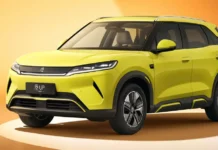
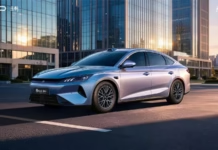

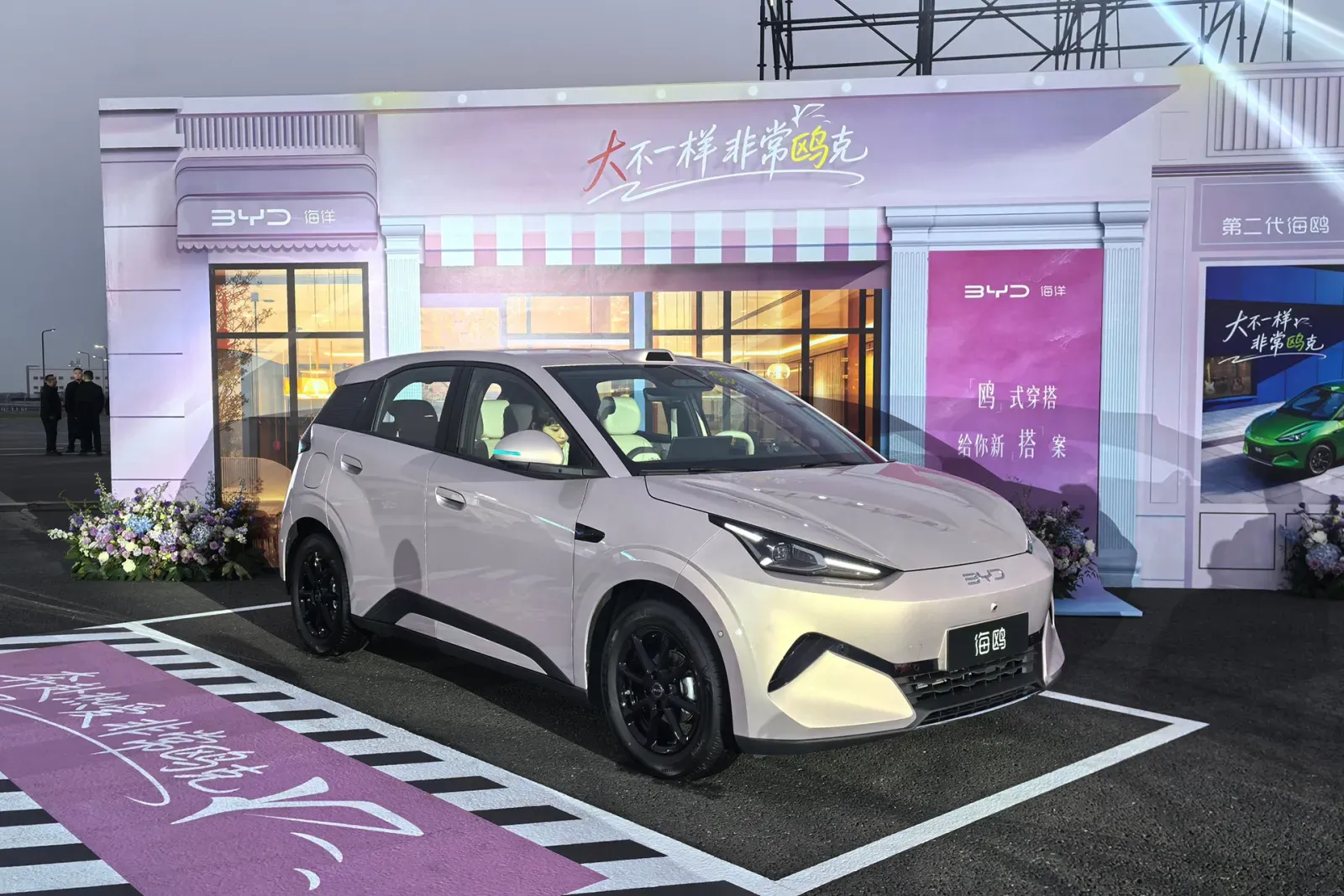
BYD launched the second-generation Seagull in China on Tuesday, Oct. 20, starting at 65,900 yuan ($9,800). That is 4,000 yuan less than the outgoing model, even though the car is bigger. It now seats five, drives the rear wheels, and offers flash charging on its higher trims and an optional LiDAR.
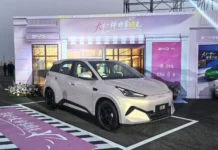
BYD unveiled the car at the Zhengzhou International Circuit in Henan province and showed five versions, topping out at 99,900 yuan ($14,800). Pre-orders had opened on Oct. 9 without prices, said Zhang Zhuo, general manager of BYD’s Ocean Network sales division.
Price and trims
| Trim | Price (yuan) | ≈ USD | Battery | CLTC range | Motor | Flash charging |
|---|---|---|---|---|---|---|
| Vitality | 65,900 | $9,800 | 30.1 kWh | 320 km | 85 kW | No |
| Freedom | 72,900 | $10,800 | 30.1 kWh | 320 km | 85 kW | No |
| Comfort | 75,900 | $11,300 | 39.2 kWh | 420 km | 95 kW | Yes |
| Flying | 82,900 | $12,300 | 39.2 kWh | 420 km | 95 kW | Yes |
| Smart | 99,900 | $14,800 | 39.2 kWh | 420 km | 95 kW | Yes |
A limited-time trade-in offer takes 3,000 yuan off each version, so prices run from 62,900 to 96,900 yuan ($9,300 to $14,400).
The 2026 Seagull started at 69,900 yuan when it launched in May. The original, launched in April 2023, cost 73,800 yuan, so the entry price has now fallen 7,900 yuan in three years.
Bigger body, five seats, rear-wheel drive
The dimensions come from a filing in the 409th batch of new-product notices from China’s Ministry of Industry and Information Technology (MIIT).
| Dimension | Outgoing Seagull | New Seagull | Change |
|---|---|---|---|
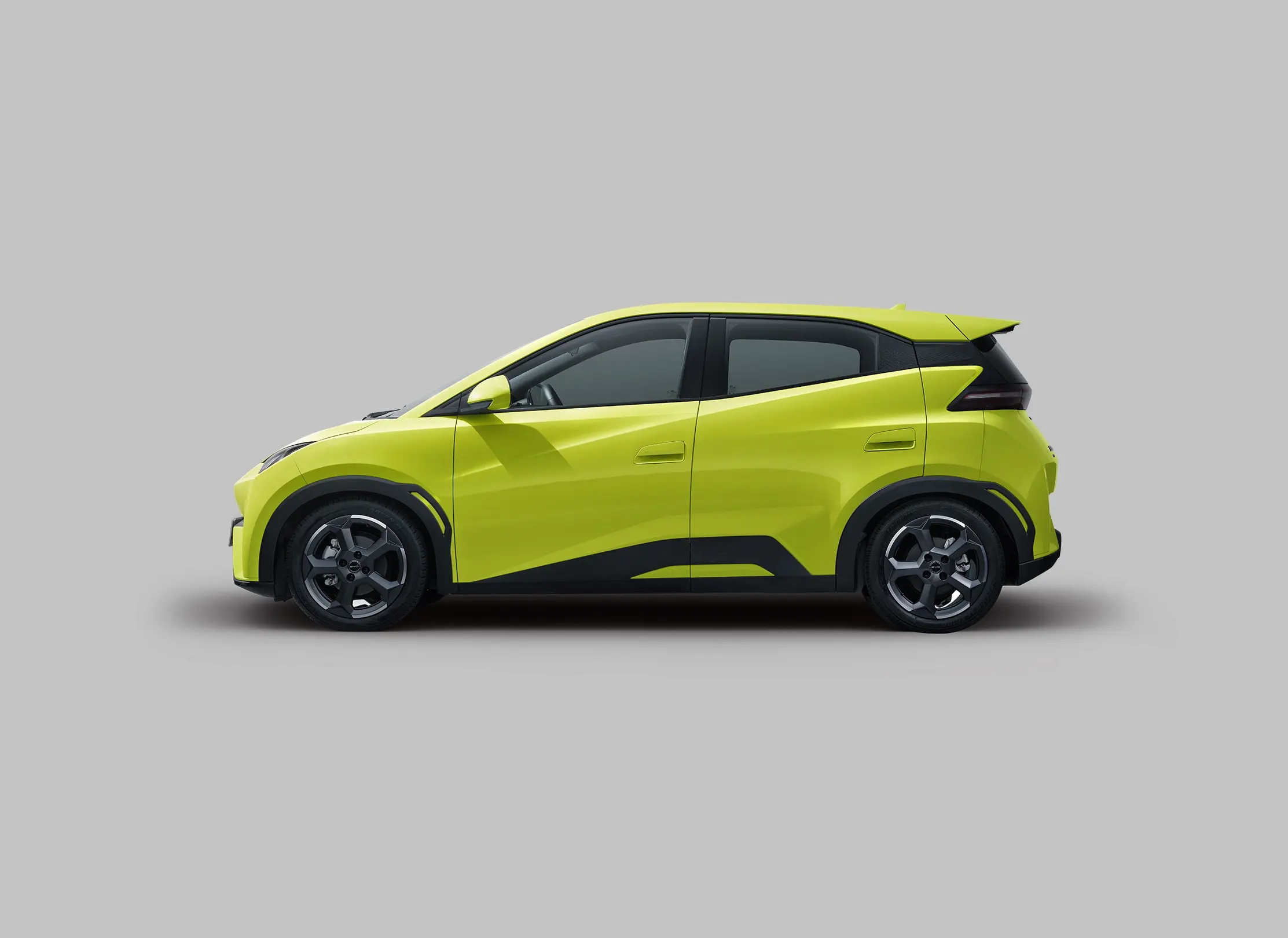
| Length | 3,780 mm | 4,205 mm | +425 mm |
| Width | 1,715 mm | 1,810 mm | +95 mm |
| Height | 1,540 mm | 1,570 mm | +30 mm |
| Wheelbase | 2,500 mm | 2,650 mm | +150 mm |
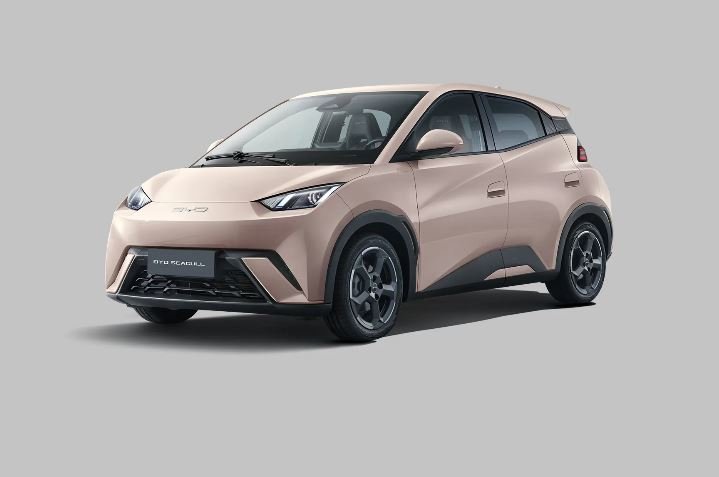
The new Seagull is longer than the BYD Dolphin (4,125 to 4,150 mm), although the Dolphin still has the longer wheelbase at 2,700 mm. Its closest rival on size is the Geely Xingyuan, which is 4,135 mm long on the same 2,650 mm wheelbase.
The extra length buys a fifth seat and a 94-liter front trunk. Rear cargo space runs from 380 to 1,380 liters with the seats folded. BYD also moved the drive to the rear wheels and swapped the torsion-beam rear suspension for an independent multi-link setup.
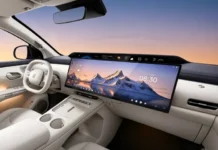
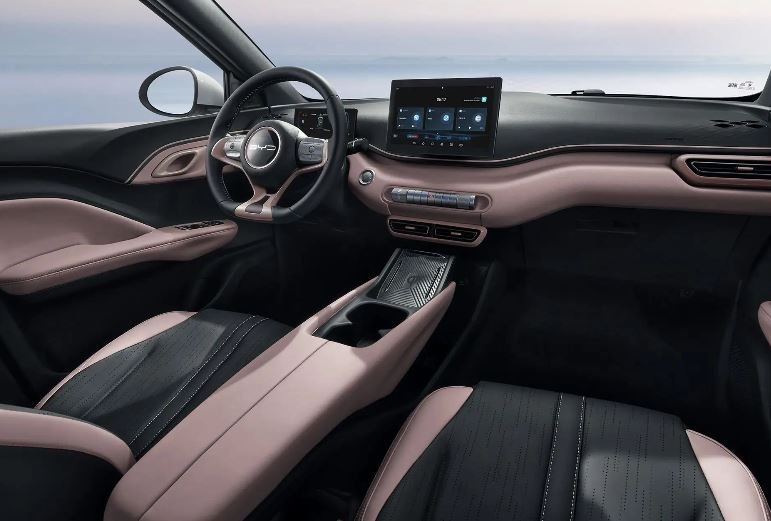
Inside, the separate instrument display is gone. A 15.6-inch center screen runs BYD’s DiLink 150 system. Reported extras include power-adjustable front seats and a massage function for the driver’s seat.
Motor and performance
The MIIT filing lists a permanent magnet synchronous motor from Zhengzhou BYD Automobile. On the 420 km versions it peaks at 95 kW (about 127 hp) and the car tops out at 150 km/h. The 320 km versions use an 85 kW motor. The old Seagull made 55 kW and topped out at 130 km/h.
Battery and flash charging
Autohome lists a 30.1 kWh pack for the 320 km versions and a 39.2 kWh pack for the 420 km versions. The 2026 model had 30.08 and 38.88 kWh. The MIIT filing shows lithium iron phosphate cells from BYD’s FinDreams battery unit, and curb weights of 1,180 kg and 1,255 kg for the two versions filed. Reported WLTP-equivalent ranges are about 259 km and 340 km.
The three 420 km versions support flash charging. At BYD’s dedicated stations they can go from 10% to 70% in five minutes, and to 97% in about nine. The system builds on the second-generation Blade Battery that BYD introduced on March 5, 2026. The Seagull is BYD’s cheapest car with the feature.
Zhang said buyers of these versions get 12 months of free flash charging with no cap on electricity, for non-commercial use. Buyers of the two 320 km versions get a 7 kW home charger instead, installed free within two years of delivery.
BYD said it had built 12,165 flash-charging stations by launch day and wants 20,000 by the end of the year. It passed 10,000 on Aug. 28, so hitting the target means opening roughly 80 stations a day from here.
Driver assistance and optional LiDAR
God’s Eye C is standard on every version. Higher-spec trims can add a LiDAR sensor and God’s Eye B (also called DiPilot 300), which handles highway and city navigation and automated parking. BYD says it will cover losses from accidents caused by its smart parking feature, and for one year its city navigation feature.
Why the Seagull matters to BYD
BYD sold 38,650 Seagulls in September, up 11.75% from 34,586 a year earlier. That made it the second-best-selling model among Chinese brands in China, behind the Geely Xingyuan at 60,871.
The year as a whole looks much worse. Nine-month sales were 265,901, down 33.2% from 398,200. That is 50.2% of the 529,537 the car sold in all of 2025. In 2024, its first full year on sale, it sold 479,294.
It also counts for less inside BYD than it used to:
- In September the Seagull was 14.2% of BYD’s 273,143 battery-electric passenger cars and 8.5% of its 456,713 total passenger cars.
- Over the first nine months it was 16.3% of BYD’s battery-electric sales, down from 24.8% a year earlier. In 2025 it was 23.5% of 2,256,714 units.
- BYD sold 1,629,957 battery-electric cars in that period, up 1.5%. Leave out the Seagull and the figure rises 12.9% to 1,364,056.
- Plug-in hybrid sales fell 10.2% to 1,448,587.
- Total passenger-car sales fell 4.4% to about 3.08 million. September alone rose 16.2% from 393,060, helped by a 33.2% jump in fully electric sales.
BYD’s home market is weaker. Its domestic retail sales fell 28.9% from a year earlier to 246,816 in September, according to China Passenger Car Association data. It still led the ranking with a 22.8% share of China’s new energy vehicle retail market.
Will it come to Europe?
BYD hasn’t said whether the new Seagull will be sold outside China. The first-generation car is sold in Europe as the Dolphin Surf, and the larger model is widely expected to follow under the same name.