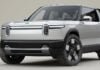
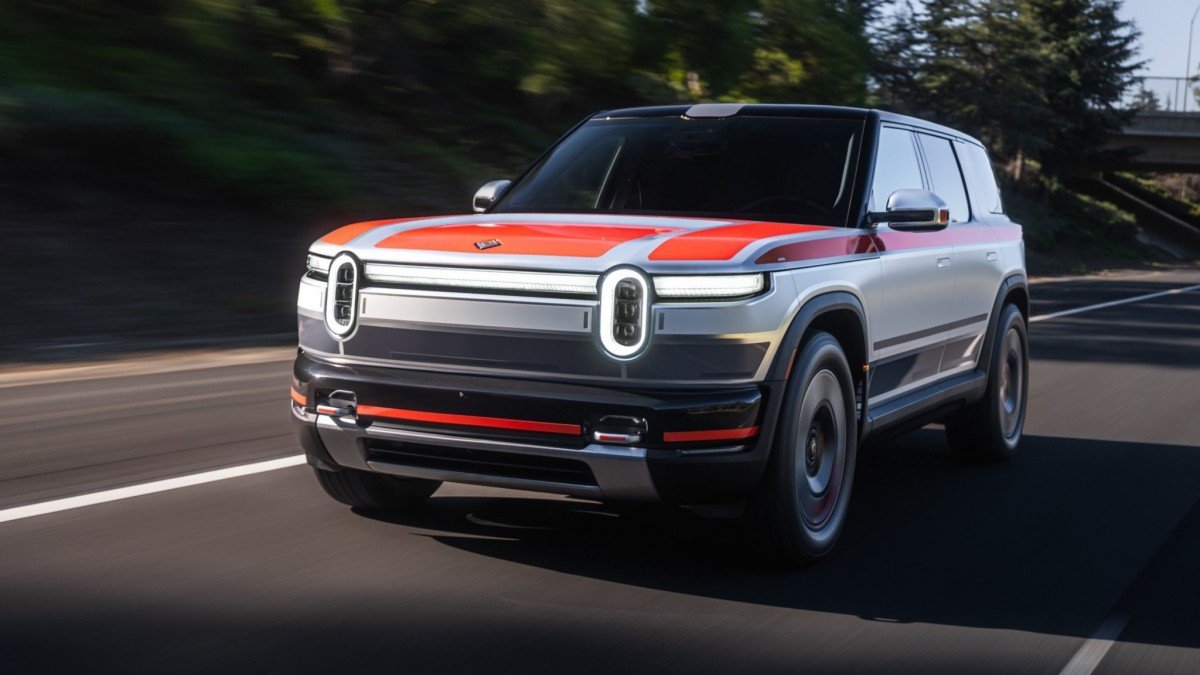
Rivian has introduced its most accessible vehicle yet, the Rivian R2. The midsize electric SUV marks a shift for Rivian, a brand previously focused on premium-priced models. The R2 aims at buyers seeking a practical EV without flagship-level pricing.
Design and Size Overview
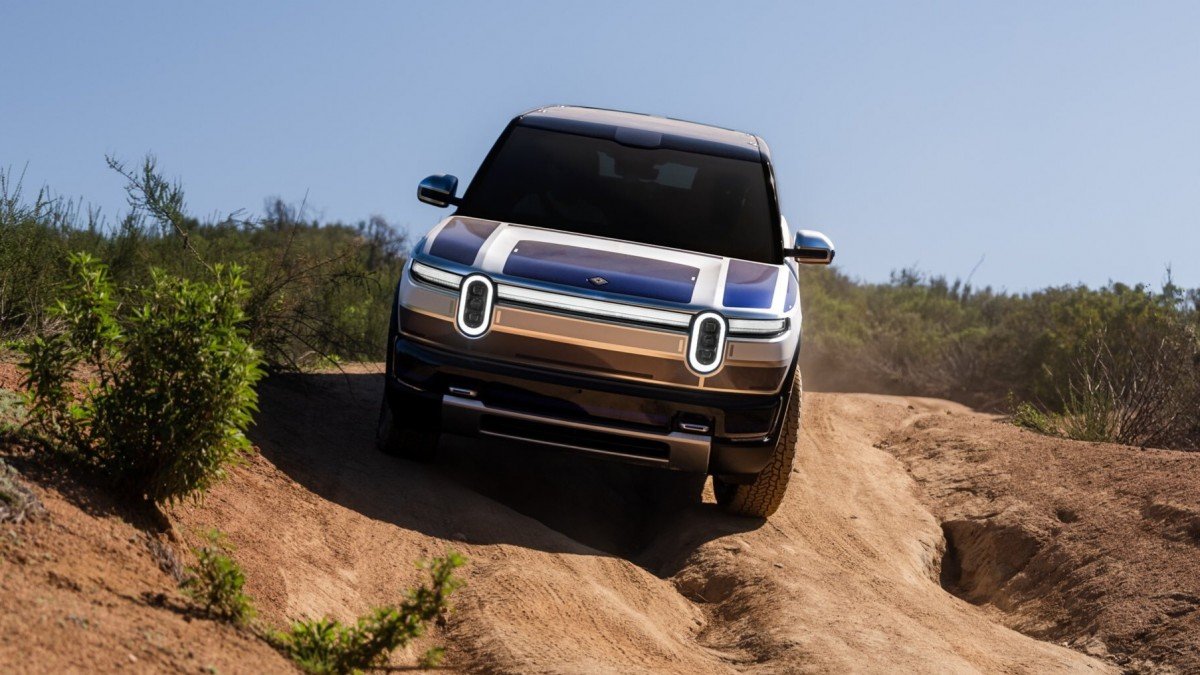
The Rivian R2 follows the design language of the Rivian R1S but in a smaller footprint. Length measures about 4.71 meters. The dimensions place it close to the Tesla Model Y. The reduced size improves urban usability and parking convenience while retaining Rivian’s rugged styling.
Pricing Strategy
Rivian projects a starting price near 45,000 dollars. This positions the R2 well below Rivian’s earlier vehicles, which often exceed 75,000 dollars. Early production models scheduled for 2026 will likely carry higher trims and pricing.
Performance Figures
The prototype shown at the event featured dual motors.
Key figures
• 656 horsepower
• 826 Nm torque
• 0 to 60 mph in 3.6 seconds
These numbers place the R2 among quicker midsize electric SUVs despite its family-oriented positioning.
Battery and Driving Range
The test vehicle used an 87.4 kWh battery pack. Rivian estimates roughly 300 miles of range. This level suits daily commuting and longer weekend trips without frequent charging stops.
Charging Capability
The R2 operates on a 400V electrical architecture.
Charging estimate
• 10 percent to 80 percent in about 30 minutes
While some competitors adopt 800V systems, this charging time remains competitive for typical use cases.
Interior and Controls
The cabin departs from traditional layouts. Physical buttons are largely absent. Drivers interact through a central touchscreen and steering wheel scroll controls known as Halo Wheels.
Control functions include
• Media
• Climate settings
• Drive modes
This approach prioritizes software-driven flexibility and updates.
Off-Road and Ride Characteristics
Despite cost-focused simplifications, the R2 maintains off-road capability.
Notable attributes
• Nearly 25 cm ground clearance
• All-Terrain drive mode
The lighter structure and lower stance improve highway stability compared to the Rivian R1S.
Engineering and Cost Reduction
Rivian redesigned core systems to lower manufacturing complexity.
Efficiency measures
• Approximately 4 miles less wiring
• About half the component count
Production will take place at Rivian’s facility in Normal, Illinois. Fewer parts and reduced wiring support faster assembly and lower production costs.
Market Positioning
The Rivian R2 enters a competitive midsize EV segment. Its pricing, performance, and SUV styling differentiate it from many crossover-focused rivals. Deliveries are planned for the first half of 2026. Early reservation interest indicates strong demand.
Related EV
- Tesla Semi Specs, Charging, Range, and New Pricing
- 2027 Toyota Highlander EV: Range, Specs, Charging
- Mazda 6e UK Launch: Stylish EV with 348-Mile Range
- Mercedes-Benz CLA 250: 71 kWh Battery, 418-Mile Range
- 2027 Toyota Highlander EV Confirmed as Three-Row BEV