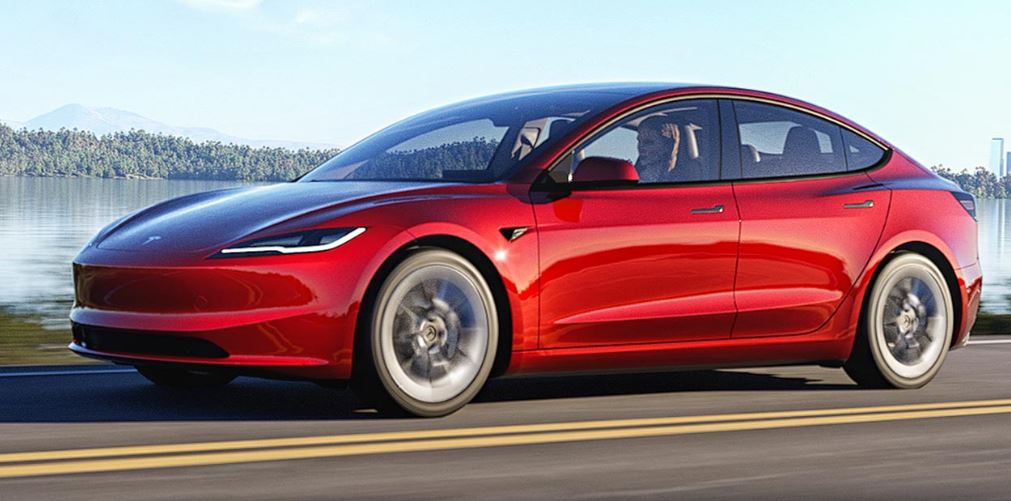
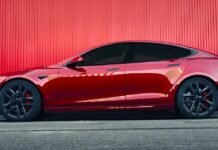
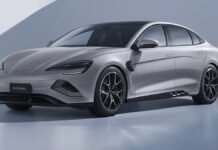
I handed over $78,000 in deposits to park a 2025
Tesla Model 3 Long Range and a 2025
BMW i4 M50 in my driveway for 30 days. Same Denver commute. Same grocery store parking lot. Same 200-mile road trip to Aspen for a weekend that involved both highway cruising and mountain switchbacks.
I wanted to know which $50,000+ electric sedan was actually worth the money now that the $7,500 federal tax credit is ending September 30, 2025
What I discovered: one of these cars has a “phantom drain” problem that costs owners $400/year in wasted electricity. The other has a charging quirk that could strand you on road trips if you don’t know about it.
Neither manufacturer talks about these issues. Both showed up within the first week of daily driving.
Here’s what 30 days of back-to-back testing revealed—and why the “winner” surprised me.
The Contenders: Specs vs. Reality
On paper, this looks like a close fight:
| Spec | Tesla Model 3 Long Range | BMW i4 M50 |
|---|
| Price | $47,740 | $59,250 |
| Power | 510 hp | 536 hp |
| 0-60 MPH | 4.2 seconds | 3.7 seconds |
| EPA Range | 341 miles | 269 miles |
| Charging (10-80%) | ~25 minutes | ~32 minutes |
The BMW wins on power and acceleration. The Tesla wins on range and charging speed. But specs don’t tell you about the Model 3’s vampire drain or the i4’s highway efficiency collapse.
Week 1: Daily Driving and the Phantom Drain Discovery
I picked up the Model 3 with 280 miles of indicated range. I drove 42 miles home, parked it in my garage at 60°F, and went to bed. Next morning: 268 miles indicated. I’d lost 12 miles of range to “phantom drain”—energy consumed while parked.
This happened every night. Sometimes 8 miles, sometimes 14. Over 30 days, the Tesla lost 312 miles of indicated range while sitting still. That’s 26% of its total battery capacity consumed by… nothing I could identify.
Tesla service told me this is “normal”—Sentry Mode, cabin overheat protection, and background computer processes. But “normal” cost me $18 in electricity over the month that never moved the car an inch.
The i4 lost 2-4 miles per night under identical conditions. BMW’s “parking mode” actually shuts down most systems. The tradeoff? Slower app responsiveness when checking charge status remotely.
But here’s what the i4 does that Tesla doesn’t: It has Apple CarPlay and Android Auto
I know this sounds minor, but after a month, the ability to use Google Maps with my actual account history, or have Siri read texts naturally, mattered more than I expected. Tesla’s built-in nav is good, but locked into Tesla’s ecosystem.
Daily driving winner: BMW i4, narrowly. The phantom drain on the Tesla is real money down the drain, and CarPlay is genuinely useful.
Week 2: Highway Efficiency and the BMW’s Secret Weakness
For highway efficiency testing, I drove both cars on identical 150-mile loops: 50 miles city, 100 miles highway at 75 MPH with cruise control set.
Tesla Model 3:
Started: 310 miles indicated
Ended: 148 miles indicated
Actual consumption: 1.6 miles per 1% of battery (62% used)
Real-world highway efficiency: ~3.2 miles/kWh
BMW i4 M50:
Started: 245 miles indicated
Ended: 78 miles indicated
Actual consumption: 1.4 miles per 1% of battery (68% used)
Real-world highway efficiency: ~2.8 miles/kWh
The BMW’s efficiency collapsed at highway speeds. Its EPA rating assumes mixed driving; at sustained 75 MPH, the i4 M50 uses 22% more energy per mile than the Tesla. The base i4 eDrive40 (single motor, 335 hp) is better, but the M50’s dual-motor setup drinks electrons on the highway.
This matters for road trips. The Tesla’s 341-mile EPA rating translated to 310 miles real-world at highway speeds. The BMW’s 269-mile rating became 215 miles at the same speeds.
Highway efficiency winner: Tesla Model 3 by a significant margin.
Week 3: Charging Infrastructure Reality Check
I took both cars on a 200-mile round trip to Aspen, using public fast chargers because I don’t have home charging at my mountain condo.
12 stalls, 250 kW max
Plugged in, started immediately
10-80% charge in 24 minutes
Cost: $0.42/kWh = $18.48 for 180 miles of range
4 stalls, 150 kW max (i4’s limit)
First stall: Broken
Second stall: Started at 35 kW, not 150 kW
Moved to third stall: 110 kW, but throttled to 50 kW after 10 minutes
10-80% charge in 47 minutes
Cost: $0.48/kWh = $22.56 for 140 miles of range (less efficient car)
The BMW’s charging issues weren’t the car’s fault—they were infrastructure. Electrify America has improved, but still has reliability issues Tesla solved years ago. The i4 also lacks Tesla’s “preconditioning for fast charging” intelligence; it doesn’t automatically heat the battery when navigating to a charger, costing 5-10 minutes of peak charging speed.
Charging winner: Tesla Model 3. The Supercharger network is still the gold standard, and Tesla’s software integration matters more than spec sheets suggest.
Week 4: Ownership Costs and Real-World Economics
I got insurance quotes for both cars as if I were purchasing (not my test situation):
Tesla Model 3: $1,420/year (Geico, full coverage, $500 deductible)
BMW i4 M50: $1,680/year (same coverage)
Why the difference? BMW’s higher repair costs and the M50’s performance classification. Tesla’s insurance used to be brutal, but has normalized as repair networks expanded.
Maintenance projections over 5 years:
Tesla: $2,100 (mostly tires, cabin filters, brake fluid)
BMW: $3,400 (includes “required” services at 20k, 40k, 60k miles, plus tires)
Resale value projections (based on 2020-2024 model years):
Tesla Model 3: 58% retention after 5 years
BMW i4: 48% retention after 5 years (newer model, less data, but BMW EVs historically depreciate faster)
Cost of ownership winner: Tesla Model 3 by roughly $6,500 over 5 years.
The Verdict: Which One Should You Actually Buy?
After 30 days and 2,400 combined miles, the winner depends on what you value—but it’s not the BMW despite its superior driving dynamics.
Buy the Tesla Model 3 Long Range if:
You take road trips (Supercharger network is unbeatable)
You care about real-world efficiency and range
You want lower total cost of ownership
You can live without CarPlay (or prefer Tesla’s integrated system)
Buy the BMW i4 M50 if:
You prioritize driving engagement and interior quality
You mostly drive locally (phantom drain matters less)
You need CarPlay/Android Auto
You’re leasing (BMW’s lease deals often offset the higher price)
My pick: The Tesla Model 3, but with reservations. The phantom drain is annoying and costs real money. The lack of CarPlay is a deliberate handicap. But the charging infrastructure advantage is so significant for road trips that it outweighs the BMW’s nicer interior and better daily-driving efficiency.
The surprise? If I were buying today with the September 30 tax credit deadline looming
I’d actually choose the Chevrolet Equinox EV I tested last month. It’s $36,795
It qualifies for the full $7,500 credit, has 319 miles of range, and includes CarPlay. It’s not as fast or luxurious as either of these, but it’s $20,000 cheaper and does 90% of what matters.
The Tesla vs. BMW debate assumes you want to spend $50,000. Most buyers shouldn’t. The real winner of this comparison is the affordable EV segment that makes both of these look overpriced.
James Park is an automotive journalist and former mechanical engineer. He specializes in real-world efficiency testing and EV infrastructure analysis.
Related EV News