- Home
- Electric Vehicles
- Compare
- Xiaomi SU7 vs Tesla Model 3
Xiaomi SU7 vs Tesla Model 3
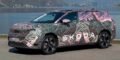
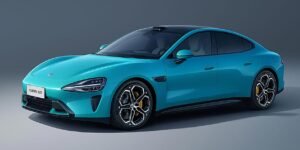
The Xiaomi SU7 is a C-class luxury electric sedan representing the smartphone manufacturer’s entry into the EV market, built on the Modena platform and positioned as a technology-forward alternative for buyers embedded in the Xiaomi ecosystem
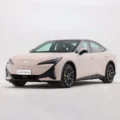
The Tesla Model 3 is an established compact executive sedan that has served as the global benchmark for mass-market electric vehicles since 2017, targeting driving enthusiasts and buyers prioritizing proven infrastructure and resale value
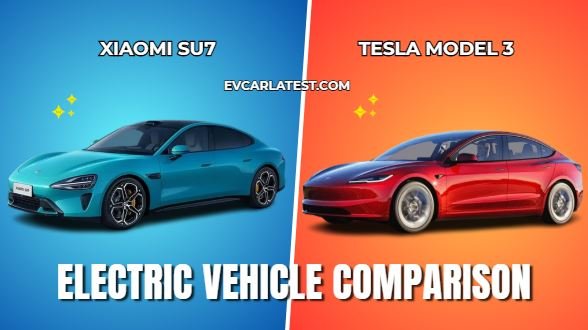
Both vehicles serve tech-savvy professionals seeking zero-emission daily transport, though the SU7 appeals to those wanting feature-rich value while the Model 3 attracts buyers focused on driving dynamics and brand maturity.
Range figures favor the SU7 on paper, with the base RWD variant delivering 700 km CLTC and the Max version reaching 800 km CLTC, while the Model 3 offers between 513 km and 629 km under WLTP testing depending on whether you choose the RWD, Long Range, or Performance variant
Charging capabilities diverge significantly: the SU7 utilizes 800V architecture supporting up to 300 kW DC fast charging (10-80% in approximately 25 minutes), whereas the Model 3 RWD peaks at 170 kW DC and the Long Range at 250 kW DC
Real-world efficiency remains higher for the Tesla, with the Model 3 demonstrating more consistent range delivery and lower energy consumption per kilometer driven
In the Chinese domestic market, the SU7 starts at CNY 215,900 (approximately $30,000 USD) for the Standard range, undercutting the Model 3’s starting price of roughly $39,990 USD or $54,900 AUD in markets like Australia
The SU7 currently sells exclusively in China with expansion plans developing, while the Model 3 maintains global availability across North America, Europe, and Asia-Pacific regions with established service networks
This comparison assists buyers determining whether to prioritize value and feature content with a newer domestic brand or invest in proven global infrastructure and resale stability.
Xiaomi currently offers only the SU7 line (Standard, Pro, Max, and Ultra variants), with YU7 an additional models in their EV portfolio.
Tesla’s lineup includes the Model S, Model X, Model Y, Cybertruck, and Semi alongside the Model 3, providing clear upgrade pathways within the ecosystem
Direct rivals to the SU7 include the BYD Seal, NIO ET5, and Xpeng P7, while the Model 3 competes with the Hyundai Ioniq 6, Polestar 2, and BMW i4
Xiaomi SU7 Pros: The cabin offers superior feature content including standard seat ventilation, a refrigerated center console, and rear passenger entertainment screens that Tesla lacks
Xiaomi Pilot provides highway and urban navigation-assist capabilities at no additional cost whereas Tesla charges for Enhanced Autopilot and Full Self-Driving
The HyperOS ecosystem delivers seamless integration with Xiaomi smart home devices, allowing voice control of household functions from the vehicle
Xiaomi SU7 Cons: The infotainment interface suffers from usability issues including poor menu contrast and non-intuitive climate controls that require voice commands to operate efficiently
Regenerative braking calibration feels less refined than Tesla’s system, creating stronger deceleration when lifting off the accelerator that disrupts smooth urban driving
Tesla Model 3 Pros: Driving dynamics remain class-leading with precise throttle response, intuitive brake feel, and connected steering that delivers superior driver engagement
The Supercharger network provides reliable long-distance travel infrastructure globally with seamless payment integration and consistent high-speed charging availability
Over-the-air software updates continuously improve vehicle functionality years after purchase, while the minimalist interface prioritizes driving information accessibility
Tesla Model 3 Cons: The suspension transmits significant road harshness and noise into the cabin, creating discomfort on rough surfaces that the SU7’s air suspension filters more effectively
Basic Autopilot requires expensive upgrades to match the SU7’s standard advanced driver assistance capabilities, and features like seat ventilation remain absent from the base configuration
QUICK VERDICT: The Tesla Model 3 remains the superior choice for drivers prioritizing handling precision, global charging infrastructure, and established resale value, while the Xiaomi SU7 delivers better feature-per-dollar value, superior smart home integration, and more generous standard equipment for buyers comfortable with domestic Chinese market limitations and first-generation product risks.
- Lucid Air vs Tesla Model S
- Tesla Model 3 vs BMW i4
- Hyundai Ioniq 6 N vs Xiaomi SU7 Ultra
- Tesla Model X vs Audi Q8 e-tron
- Tesla Model X vs Tesla Cybertruck
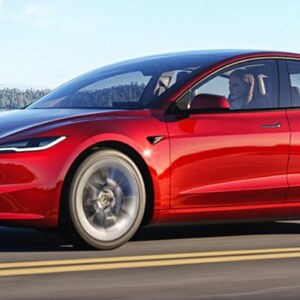
MODEL
| Models |
Xiaomi SU7 Xiaomi SU7 Pro Xiaomi SU7 Max Tesla Model 3 Standard Range Tesla Model 3 Long Range RWD Tesla Model 3 Long Range Tesla Model 3 Performance |
LAUNCH
| Announced |
2023, December 28
2023, September 01 - Tesla Model 3 Standard Range 2024, July 11 - Tesla Model 3 Long Range RWD 2023, September 01 - Tesla Model 3 Long Range 2024, April 23 - Tesla Model 3 Performance |
| Status |
Available to order. Released 2024, March
Available to order. Released 2023, October - Tesla Model 3 Standard Range Available to order. Released 2024, July - Tesla Model 3 Long Range RWD Available to order. Released 2023, October - Tesla Model 3 Long Range Available to order. Released 2024, April - Tesla Model 3 Performance |
| Country of origin | China United States |
| Base Price |
€ 28,500 - Xiaomi SU7 € 32,450 - Xiaomi SU7 Pro € 39,600 - Xiaomi SU7 Max € 43,000 - Tesla Model 3 Standard Range $ 42,500 - Tesla Model 3 Long Range RWD $ 47,500 € 52,000 - Tesla Model 3 Long Range $ 53,000 € 58,500 £ 60,000 - Tesla Model 3 Performance |
PERFORMANCE
| Power |
RWD 299 hp (220 kW) - Xiaomi SU7 RWD 299 hp (220 kW) - Xiaomi SU7 Pro AWD 673 hp (495 kW) - Xiaomi SU7 Max RWD 283 hp (208 kW) - Tesla Model 3 Standard Range RWD -Tesla Model 3 Long Range RWD AWD 498 hp (366 kW) - Tesla Model 3 Long Range AWD 625 hp (460 kW) - Tesla Model 3 Performance |
| Torque |
400 Nm (295 lb-ft) - Xiaomi SU7 400 Nm (295 lb-ft) - Xiaomi SU7 Pro 838 Nm (618 lb-ft) - Xiaomi SU7 Max 450 Nm (332 lb-ft) - Tesla Model 3 Standard Range 493 Nm (364 lb-ft) - Tesla Model 3 Long Range 741 Nm (547 lb-ft) - Tesla Model 3 Performance |
| Acceleration The acceleration numbers are an easy way to compare car performance. We list either time from 0 to 100 km/h or time from 0 to 60mph, depending on which number(s) the manufacturers provide. The lower the acceleration time, the higher performance the car is. |
5.3 sec 0-62 mph - Xiaomi SU7 5.7 sec 0-62 mph - Xiaomi SU7 Pro 2.8 sec 0-62 mph - Xiaomi SU7 Max 5.8 sec 0-60 mph (6.1 sec 0-62 mph) - Tesla Model 3 Standard Range 4.9 sec 0-60 mph - Tesla Model 3 Long Range RWD 4.2 sec 0-60 mph (4.4 sec 0-62 mph) - Tesla Model 3 Long Range 2.9 sec 0-60 mph (3.1 sec 0-62 mph) - Tesla Model 3 Performance |
| Max Speed |
130 mph (210 km/h) - Xiaomi SU7 130 mph (210 km/h) - Xiaomi SU7 Pro 165 mph (265 km/h) - Xiaomi SU7 Max 125 mph (201 km/h) - Tesla Model 3 Standard Range 125 mph (201 km/h) - Tesla Model 3 Long Range RWD 125 mph (201 km/h) - Tesla Model 3 Long Range 163 mph (262 km/h) - Tesla Model 3 Performance |
| transmission | Single-speed Single-speed |
BATTERY
| Capacity |
73.6 kWh total - Xiaomi SU7 94.3 kWh total - Xiaomi SU7 Pro 101 kWh total - Xiaomi SU7 Max 57.3 kWh usable, 60 kWh total -Tesla Model 3 Standard Range 78 kWh total - Tesla Model 3 Long Range RWD 78 kWh total - Tesla Model 3 Long Range 78 kWh total - Tesla Model 3 Performance |
| Tech |
Li-ion LFP battery (400V type) - Xiaomi SU7 Li-ion (400V type) - Xiaomi SU7 Pro Li-NMC battery (800V type) - Xiaomi SU7 Max Liquid-cooled Li-ion 360V LFP battery - Tesla Model 3 Standard Range Liquid-cooled Li-Ion NCM (400V type) - Tesla Model 3 Long Range RWD Liquid-cooled Li-Ion NCM (400V type) - Tesla Model 3 Long Range Liquid-cooled Li-ion NCM (400V type) - Tesla Model 3 Performance |
| Range |
435 mi CLTC - Xiaomi SU7 516 mi CLTC - Xiaomi SU7 Pro 497 mi CLTC - Xiaomi SU7 Max 272 mi EPA (319 mi WLTP) - Tesla Model 3 Standard Range 436 mi WLTP (363 mi EPA) - Tesla Model 3 Long Range RWD 421 mi WLTP (342 mi EPA) - Tesla Model 3 Long Range 328 mi WLTP (296 mi EPA) - Tesla Model 3 Performance |
| Consumption |
212 Wh/mi WLTP - Tesla Model 3 Standard Range 225 Wh/mi WLTP (260 Wh/mi EPA) - Tesla Model 3 Long Range 269 Wh/mi WLTP - Tesla Model 3 Performance |
| Recuperation | Yes 1 level, no coasting, no regen when pedal braking |
| Heat Pump | |
| AC Charging |
Type 2
Type 2 11 kW, 0-100% in 7 hours 33 min - Tesla Model 3 Standard Range Type 2 11 kW, 0-100% in 8 hours 15 min - Tesla Model 3 Long Range RWD Type 2 11 kW, 0-100% in 8 hours 15 min - Tesla Model 3 Long Range Type 2 11 kW - Tesla Model 3 Performance |
| DC Charging |
CCS, 10-80% in 25 min - Xiaomi SU7 CCS, 10-80% in 30 min - Xiaomi SU7 Pro CCS, 10-80% in 19 min - Xiaomi SU7 Max Supercharger V3 170 kW max -Tesla Model 3 Standard Range CCS 170 kW max Supercharger V3 250 kW max - Tesla Model 3 Long Range RWD CCS 250 kW max Supercharger V3 250 kW max - Tesla Model 3 Long Range CCS 250 kW max Supercharger V3 250 kW max - Tesla Model 3 Performance CCS 250 kW max |
| Others |
V2L 3.5kW V2V 6.6kW |
BODY
| Type | 4 door sedan, 5 seats 4 door sedan, 5 seats |
| Platform | Modena |
| Dimensions | 4997 x 1963 x 1455 mm (196.7 x 77.3 x 57.3 in) 4720 x 1933 x 1441 mm (185.8 x 76.1 x 56.7 in) |
| Drag Co-Efficient | 0.195 Cd 0.219 Cd |
| Wheelbase | 3000 mm (118.1 in) 2875 mm (113.2 in) |
| Clearance | 138 mm (5.4 in) |
| Weight |
EU: 1980 kg unladen - Xiaomi SU7 EU: 2205 kg unladen - Xiaomi SU7 Max EU: 1765 kg unladen -Tesla Model 3 Standard Range EU: 1822 kg unladen - Tesla Model 3 Long Range RWD EU: 1828 kg unladen, 2263 kg gross - Tesla Model 3 Long Range EU: 1929 kg unladen, 2271 kg gross - Tesla Model 3 Performance |
| Suspension | Adaptive Air suspension, front double wishbone rear 5 link independent, variable damping shock absorber Front double wishbone-type coil spring, rear multi-link |
| Wheels | R19, R20 R18, R19 |
| Trunk/Boot |
EU: 517 l - Xiaomi SU7 EU: 517 l - Xiaomi SU7 Pro EU: 493 l - Xiaomi SU7 Max EU: 682 l - Tesla Model 3 Standard Range EU: 594 l - Tesla Model 3 Long Range RWD EU: 594 l - Tesla Model 3 Long Range EU: 594 l - Tesla Model 3 Performance |
| Frunk/Bonnet | 105 l 88 l |
| Towing | Yes EU: 1000 kg unbraked |
DISPLAYS
| Centre | 16.1" touchscreen 15.4" touchscreen |
| Driver's Display | 7.1" No |
| Head-Up | Yes No |
| Others |
8" rear passengers touchscreen display |
COMFORT
| Seats | Heated and ventilated front seats Heated and ventilated/cooled front seats, heated rear seats |
| Roof | Panoramic glass sunroof All-glass roof |
| Parking Aids | Front and rear sensors, 360 camera, reversing camera, Automatic Parking Assistance System Front, side, rear cameras, Parking Assist |
| Others | 360˚ acoustic glass |
SAFETY
| Airbags | Front, side, rear, head airbag system 8 airbags: front, side, rear, head airbag system, front seats knee airbags |
| Driving Aids | 1 LiDAR, up to 3 mmWave radars, cameras (2x 8MP front, 4x 3MP side, 4x 3MP panoramic, 1x 3MP rear), 12 sensors. Forward/Rear/Lateral Collision Prevention, Lane Centering, Lane Change Assist, Lane Departure Warning, Emergency braking with pedestrian and cyclist monitoring, High beam Assist, Blind Spot Alert, Door Open Warning, Traffic light reminder 3 front, 2 side and 3 rear cameras (up to 250m object detection). Automatic Emergency Braking, Dynamic Brake Lights, Lane Assist, Collision Avoidance Assist, Speed Assist, Lane Departure Avoidance, Traffic Light and Stop Sign Control |
| Self Driving | Autonomous driving system Autopilot with full Self-Driving capability |
Note
| Others |
Steel-Aluminum Alloy body (51000 Nm/degree torsional stiffness)
02 October 2024: Model 3 Standard Range is discontinued in USA 10 January 2024: Initial release price 38,990 USD 01 September 2023: Initial release price 42,990 EUR |
| disclaimer | We can not guarantee that the information on this page is 100% correct We can not guarantee that the information on this page is 100% correct. |

|
Disclaimer Note
We can not guarantee that the information on this page is 100% correct