EVs still report more problems than gas cars in 2026 — but the gap has narrowed sharply, and a growing group of models now matches or beats the average combustion vehicle. That’s the headline from combining three of this year’s largest owner studies: J.D. Power’s EVX Ownership Study, Consumer Reports’ Annual Auto Reliability Survey, and Which?’s owner survey — together covering more than 10,000 EV owners plus a broader dataset of roughly 380,000 vehicles overall. Below, we break down exactly where EVs are improving, which brands are pulling ahead, where the remaining problems cluster, and what it means if you’re weighing an EV purchase this year.
Quick Summary
| Takeaway | What the data shows |
|---|---|
| The reliability gap is shrinking | EVs went from ~79–80% more reported problems than gas cars (2023–2025) to roughly 20–42% more in 2026, depending on methodology |
| Software, not hardware, is the main culprit | Infotainment and electrical/software glitches dominate complaints; battery and motor hardware now outperform body and software systems |
| Platform maturity matters most | Hyundai/Kia’s E-GMP platform and Tesla’s Model 3/Y lead reliability rankings; newer platforms (Rivian, Lucid, GM’s Ultium-based EVs) rank lowest |
| Owner satisfaction is at a record high | J.D. Power’s 2026 EVX study found overall BEV owner satisfaction at its highest level since the study began in 2021, even where reliability scores lag |
| Battery degradation is not the risk people assume | Fewer than 0.2% of EVs need a warranty battery replacement; most retain roughly 90% capacity even past 100,000 miles |
Why “10,000 Owners” Is a Composite, Not One Poll
There’s no single, universal EV reliability score, and it’s worth being upfront about that before citing any numbers. Different organizations survey different owners over different timeframes using different definitions of “problem”:
- J.D. Power’s 2026 EVX Ownership Study surveyed 5,741 owners of 2025–2026 model-year BEVs and PHEVs on first-year ownership experience.
- J.D. Power’s 2026 Vehicle Dependability Study (VDS) measures problems per 100 vehicles (PP100) after three years of ownership, industry-wide.
- Consumer Reports’ 2026 Annual Auto Reliability Survey drew on roughly 380,000 vehicles across the 2000–2025 model years (plus some early 2026 models), with EVs analyzed as a subset.
- Which?’s owner survey (April 2026) covered more than 4,000 EV owners in the UK, focused heavily on real-world battery degradation.
Add the J.D. Power and Which? owner counts together and you land north of 10,000 individual EV owners surveyed this year — which is the real story behind the headline, and a more honest framing than any single outlet claiming to have “surveyed 10,000 owners” itself. Treat brand-to-brand comparisons cautiously: a model can score well on one metric (say, CR’s predicted-reliability index) and only average on another (J.D. Power’s PP100 dependability score), because the two are answering different questions.
The Reliability Gap Is Narrowing — But Slowly
The clearest trend across 2026 data is direction, not destination. Consumer Reports found EVs and plug-in hybrids had about 80% more reported problems than gas-only cars in its most recent full-year analysis, continuing a pattern that stretches back to 2023. Other 2026 trackers show the gap closing faster: some reporting outlets pegged the difference at roughly 42% by 2025 and around 20% using J.D. Power’s PP100 (problems-per-100-vehicles) methodology, where EVs averaged 237 PP100 after three years of ownership versus 198 PP100 for gas vehicles — a gap of 39 problems per 100 vehicles.
The takeaway isn’t that EVs have caught up. It’s that the trajectory is consistently improving year over year, and the industry-wide reliability conversation has shifted from “are EVs reliable at all” to “which EVs and which model years are worth the risk.”
Where the Problems Actually Cluster
EVs cut out most traditional mechanical failure points — no timing belt, no transmission, no exhaust or oil system — which should, in theory, make them simpler to maintain. In practice, 2026 data shows the complaints have shifted rather than disappeared:
- Software and infotainment are now the single largest problem category industry-wide, not just for EVs. J.D. Power’s 2026 Dependability Study found infotainment complaints outnumbered the next-largest category (exteriors) by more than two to one.
- Charging systems and ICCUs (integrated charging control units) are a recurring theme for several Korean-platform vehicles, including recall-related ICCU software errors.
- Electrical and body/interior fit issues remain common on newer, first-generation platforms.
- Battery and motor hardware, by contrast, have proven comparatively solid — the drivetrain itself is rarely the source of an EV’s reliability complaints.
Platform Age Is the Strongest Predictor
Across nearly every 2026 dataset, one pattern holds: vehicles built on platforms with three-plus years of production history reliably outperform brand-new architectures, regardless of automaker. Buying a model-year-three-or-later EV has consistently been lower-risk than buying a model-year-one vehicle from any brand, including established ones entering the EV space for the first time.
Brand and Model Performance in 2026
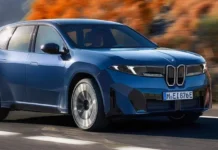
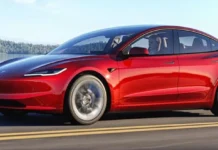
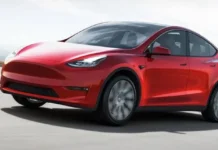
Leading the pack: Hyundai and Kia’s shared E-GMP platform (Ioniq 5, EV6, and the three-row EV9) continues to post above-average reliability scores across both Consumer Reports and J.D. Power data, helped by a mature platform and a 10-year/100,000-mile powertrain warranty for original owners. Tesla has also climbed the rankings — moving up several spots in overall brand reliability — with the Model Y earning above-average predicted reliability in Consumer Reports’ 2026 survey. BMW’s i4 and i5 also land in above-average territory.
Lagging behind: Newer manufacturers without years of production history to iron out issues — notably Rivian and Lucid — continue to post the weakest reliability scores, despite Rivian owners reporting unusually high satisfaction with the driving experience itself. That satisfaction/reliability split is one of the more interesting findings in this year’s data: a brand can score poorly on defects while still topping owner-satisfaction indexes. Several GM Ultium-based EVs and some Genesis and Hyundai models with ICCU-related recalls also post below-average predicted reliability for 2026.
Battery Health: The Fear Doesn’t Match the Data
Battery degradation remains the most-asked reliability question from prospective buyers, and it’s also the area where 2026 data is most reassuring. Which?’s April 2026 survey found EVs registered in 2024–2025 retained around 97% of original range, while even 2018–2019 models averaged roughly 94% retained capacity. Across the board, warranty claims for full battery pack replacement affect fewer than 0.2% of EVs, and most packs are tracking toward roughly 90% capacity retention even past 100,000 miles. Degradation, in other words, is gradual and predictable rather than the cliff-edge failure some buyers still expect.
2026 EV Reliability Comparison
| Model / Platform | Reliability Signal (2026 data) | Main Reported Issues | Warranty (Powertrain) |
|---|---|---|---|
| Hyundai Ioniq 5 / Kia EV6 (E-GMP) | Above average | Occasional ICCU/software recalls | 10yr / 100,000 mi (original owner) |
| Tesla Model Y / Model 3 | Above average, improving | Service access varies by region | 8yr / 120,000–150,000 mi (battery) |
| BMW i4 / i5 | Above average | Minor electrical/software | 8yr / 100,000 mi (battery) |
| Kia EV9 | Strong first-year data | Limited data (new model) | 10yr / 100,000 mi (original owner) |
| Ford Mustang Mach-E | Improved to average (2024+) | Charging system, software (earlier years) | 8yr / 100,000 mi (battery) |
| Chevrolet Equinox EV / Blazer EV | Mixed — average to below average | Software/electronics, climate control | 8yr / 100,000 mi (battery) |
| Genesis GV60 | Below average | ICCU software (recall-linked) | 10yr / 100,000 mi (original owner) |
| Rivian R1T / R1S | Below average reliability, high owner satisfaction | Electrical, climate system, multiple active recalls | 8yr / 120,000–175,000 mi (battery, varies by pack) |
Warranty terms vary by market and are subject to change; confirm current terms directly with the manufacturer before purchase.
Bottom Line
EVs in 2026 are more reliable than they’ve ever been, and the trend line is unmistakably positive — but “EV reliability” still isn’t one number, and the brand you choose matters more than the powertrain type itself. Owners on mature, multi-year platforms like Hyundai/Kia’s E-GMP and Tesla’s Model 3/Y report meaningfully fewer problems than owners on first- or second-generation platforms like Rivian’s or GM’s newest Ultium-based models. If reliability is your top purchase priority, favor a model that’s at least in its third production year over a brand-new platform, regardless of how compelling the specs sheet looks.
Sources: J.D. Power 2026 U.S. Electric Vehicle Experience (EVX) Ownership Study; J.D. Power 2026 U.S. Vehicle Dependability Study; Consumer Reports 2026 Annual Auto Reliability Survey; Which? EV Owner Survey, April 2026.