When you lift your foot off the accelerator in an electric car, the motor doesn’t just coast — it reverses its job. Instead of converting electricity into motion, it starts converting motion back into electricity. That recovered energy goes straight to the battery. It’s called regenerative braking, and on a typical EV, it accounts for 15–30% of total range on real-world driving cycles.
That’s not marketing. It’s physics. A BYD Atto 3 driving Lagos traffic recovers meaningful charge every time it slows for a roundabout. A Zeekr 001 on a Nairobi highway captures energy on every downhill stretch. The technology is why stop-start city driving actually favours EVs over long highway runs — the opposite of what most people expect.
Below, this post covers exactly how regen braking works, what numbers to expect, how African traffic patterns interact with the system, and which EVs do it best.
Quick Summary Box
| What You Need to Know | Detail |
|---|---|
| How it works | The electric motor runs in reverse — as a generator — when you decelerate |
| Range recovered | 15–30% in city driving; up to 70% in heavy stop-start traffic |
| One-pedal driving | High regen setting lets you slow almost to a stop without touching the brake pedal |
| Best regen systems | BYD (e-Platform 3.0), Zeekr, NIO, Hyundai/Kia (i-Pedal) |
| African relevance | Lagos and Nairobi stop-start traffic maximises regen gains better than highway driving |
How Regenerative Braking Works
The Basic Physics
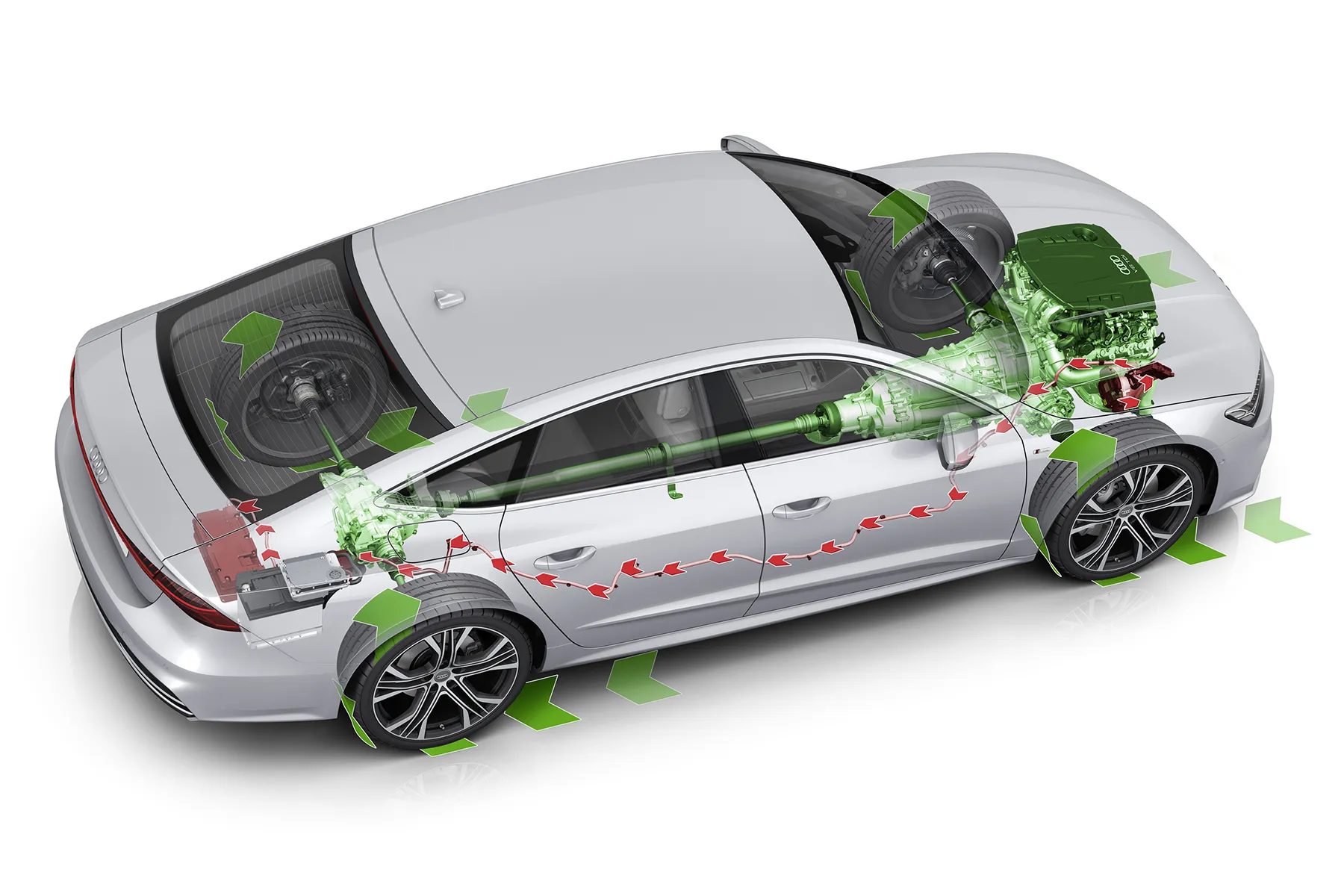
A conventional petrol car wastes kinetic energy as heat every time you brake. Disc pads clamp, friction happens, heat dissipates into the air. That energy is gone.
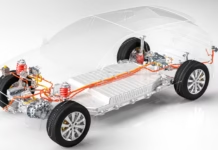
An electric motor is reversible. When it drives the wheels, electricity in → motion out. When the wheels drive the motor (during deceleration), motion in → electricity out. The motor becomes a generator. The electricity produced gets fed back to the battery through the inverter.
This is regenerative braking. No exotic science. No extra components. The same motor doing two jobs.
The Role of the Inverter
The inverter is the gatekeeper. When you accelerate, it converts DC from the battery to AC for the motor. When you decelerate with regen active, it converts AC from the motor back to DC for the battery. The quality and speed of this conversion affects how much energy you actually recover versus how much gets lost as heat in the system.
Higher-end inverters — BYD’s SiC (silicon carbide) units, for example — handle this conversion more efficiently than older IGBT-based designs. The difference is measurable: SiC inverters typically run at 95–97% efficiency versus 90–93% for conventional IGBT units.
Friction Brakes vs. Regen Brakes
Modern EVs use what engineers call “brake blending.” Regen handles light-to-moderate deceleration. The friction brakes (your physical disc-and-pad setup) kick in for hard stops, emergencies, or when the battery is already full and can’t accept more charge.
The control system decides the split in milliseconds. You press the brake pedal, the software calculates how much regen force is needed, applies it, and supplements with friction braking only if regen isn’t enough. From the driver’s seat, this feels seamless — there’s no noticeable transition between the two systems.
One edge case worth knowing: when the battery is at 100% or very close, regen braking is reduced or disabled because there’s nowhere for the recovered energy to go. This is why many EVs show slightly reduced regen on a full charge. BYD manages this with its Cell-to-Pack architecture, which has a wider usable SOC window, but the behaviour is still present at the extremes.
Regen Levels and One-Pedal Driving
Regen Settings Explained
Most EVs offer multiple regen levels — usually Low, Medium, High, and sometimes Auto or Adaptive. Some also offer a paddle-controlled setting (most common on Hyundai, Kia, and some Chinese EVs).
- Low regen: Similar to engine braking in a petrol car. You still need the brake pedal to stop.
- Medium regen: Noticeable deceleration on lift-off. Comfortable for highway driving.
- High regen / one-pedal mode: Aggressive deceleration on lift-off. In heavy traffic, you can largely drive with a single pedal — accelerator controls both speeding up and slowing down. The car comes to a near-complete or full stop without touching the brake pedal.
Not every driver likes high regen. Passengers sometimes find the sudden deceleration uncomfortable. On highways, it can feel jerky. Most experienced EV drivers end up using high regen in city traffic and switching to low or medium on open roads.
One-Pedal Driving: Which EVs Support It
| EV Model | One-Pedal Mode | Regen to Full Stop | Paddle Regen |
|---|---|---|---|
| BYD Atto 3 | Yes | Yes | No |
| BYD Seal | Yes | Yes | No |
| Hyundai Ioniq 5 | Yes (i-Pedal) | Yes | Yes (4 levels) |
| Kia EV6 | Yes (i-Pedal) | Yes | Yes (4 levels) |
| Tesla Model 3 | Yes | Yes (recent updates) | No |
| NIO ET5 | Yes | Yes | No |
| Zeekr 001 | Yes | Yes | No |
| MG4 Electric | Yes | Yes | No |
| Leapmotor C10 | Yes | Partial | No |
| Xiaomi SU7 | Yes | Yes | No |
Sources: manufacturer specs. Confirmed for current production variants as of mid-2025.
How Much Range Does Regen Actually Add?
This is where numbers are frequently overstated in marketing materials, so it’s worth being specific.
Real-World Data
The EPA and various third-party testers have measured regen contributions across multiple drive cycles:
- City driving (stop-start): Regen contributes 15–30% of total energy used back to the battery. On a 300km WLTP range car, that’s 45–90km of effectively “free” range per full charge cycle.
- Highway driving (70+ km/h, minimal braking): Regen contribution drops to under 5%. The car barely decelerates unless you actively brake.
- Hilly terrain (descents): Regen can partially or fully offset the energy cost of climbing. Some EV manufacturers report up to 70% recovery on certain mountain routes.
Lagos/Nairobi Traffic: A Real-World Advantage
Stop-start urban traffic — the kind found in Lagos Island, Nairobi CBD, or Johannesburg’s N1 at rush hour — is almost ideal for regen braking. Frequent low-speed deceleration is where the system earns its keep.
An EV rated at, say, 400km WLTP under European test conditions will likely see that number drop in Nigerian heat and highway driving. But in pure city use in Lagos, regen partially offsets the range penalty from heat, AC load, and traffic — more than it would on a European motorway. This is an underreported advantage for African urban EV users.
Regen Braking Across Different EV Architectures
Single-Motor vs. Dual-Motor Regen
In a single-motor EV, regen typically applies only to the driven axle. A front-wheel-drive car like the BYD Dolphin can only regen through the front wheels. This limits total recoverable energy but is fine for most use cases.
Dual-motor AWD vehicles can regen through both axles simultaneously. This adds recoverable energy and also improves stability under hard regen (less tendency to nose-dive or lose traction). The NIO ES6, Zeekr 001 AWD, and Tesla Model Y Long Range all benefit from this.
400V vs. 800V Architecture
Higher-voltage architectures (800V, used in the Hyundai Ioniq 6, Kia EV6, and Porsche Taycan) handle regen more efficiently. Less heat is generated during conversion, which means more of the recovered energy actually reaches the battery. At 400V, some energy is lost as heat in the cables and inverter during the regen-to-charge conversion. At 800V, the same current at double the voltage means lower current draw — less resistive loss.
The practical difference in regen recovery between 400V and 800V isn’t massive (we’re talking a few percentage points of efficiency), but it does mean 800V cars recover slightly more energy per braking event.
Comparison: Regen Systems Across Popular EVs in Africa
| EV | Architecture | Regen Power (kW) | One-Pedal | Regen Levels | Standout Feature |
|---|---|---|---|---|---|
| BYD Atto 3 | 400V, FWD | ~80 kW | Yes | 3 | Wide SOC regen window |
| BYD Seal (AWD) | 400V, AWD | ~150 kW (est.) | Yes | 3 | Dual-motor regen stability |
| MG4 Electric | 400V, RWD | ~115 kW | Yes | 3 | Strong single-pedal feel |
| Hyundai Ioniq 5 | 800V, RWD/AWD | ~107 kW | Yes (i-Pedal) | 4 (paddles) | Most tunable regen system |
| Kia EV6 GT | 800V, AWD | ~150 kW | Yes | 4 (paddles) | High-regen performance feel |
| Tesla Model 3 RWD | 400V, RWD | ~60 kW | Yes | 2 (auto/off) | Clean, intuitive default |
| NIO ET5 | 400V, AWD | ~140 kW (est.) | Yes | 3 + Sport | Adaptive regen in Sport mode |
| Zeekr 001 AWD | 400V, AWD | ~160 kW (est.) | Yes | 3 | Best regen on descents |
Note: Regen kW figures for Chinese models are estimated from motor spec data where not officially published. Unconfirmed figures marked (est.).
Does Regen Braking Replace Brake Pads?
Not entirely, but it does extend their life significantly. Most EV owners report brake pads lasting 100,000–150,000 km or more — two to three times longer than on a comparable petrol car — because friction braking is only used for hard stops and emergencies.
In markets where brake pad replacement is expensive or parts are hard to source — a genuine concern for EV owners in Nigeria and Kenya — this is a real ownership advantage. Lower friction brake wear also means less brake dust, which matters for wheel cleanliness and (marginally) for air quality.
Bottom Line Verdict
Regenerative braking is one of the reasons EVs work better in city traffic than most people expect, not worse. The energy recovery in stop-start driving is real, the range benefit is measurable, and the reduced brake wear has genuine cost implications for African owners. If you’re choosing between EV options and regen matters to you — because you drive in Lagos, Nairobi, or Johannesburg CBD daily — prioritise models with one-pedal capability and paddle-adjustable regen levels. The Hyundai Ioniq 5, Kia EV6, and BYD Seal give you the most control. The MG4 Electric offers strong one-pedal driving at a lower price.
Related EV News
- EV Battery Degradation: How Much Range Will You Lose Over Time?
- What Is a Solid State Battery and Why It Could Change EVs Forever
- Do EV batteries fail after 5 years