The Short Answer
Global electric vehicle sales reached 20.7 million units in 2025 — the first year EVs broke the one-in-four new car threshold worldwide. In 2026, the IEA projects that number climbs to 23 million units, equal to 28% of all cars sold globally. That headline figure is real. But dig one level deeper and the story gets complicated fast: China and the United States are softening while Europe is surging, Africa is accelerating from a very low base, and battery prices just dropped to around $105 per kWh — their lowest point in history. Below, you get the full data set, region by region, with context for what it actually means if you’re buying, importing, or investing in EVs from Nigeria, Kenya, or South Africa.
Quick Summary: Key EV Statistics for 2026
| Metric | Figure | Source |
|---|---|---|
| Global EV sales forecast (2026) | 23 million units / 28% market share | IEA Global EV Outlook 2026 |
| Global EV sales (full-year 2025) | 20.7 million units | IEA / BNEF |
| China NEV market share (2025) | ~55% of all domestic car sales | CAAM |
| Europe EV growth (Q1 2026) | +27% year-on-year | Benchmark Mineral Intelligence |
| Africa EV sales (2025) | ~25,000 units (up from ~4,000 in 2023) | IEA Global EV Outlook 2026 |
| Average battery pack price (2026 forecast) | ~$105/kWh | BloombergNEF |
| Kenya EV registrations growth (2022–2025) | +2,700% | EV24 Africa |
| Nigeria public charging stations (late 2025) | 12 nationwide | EV24 Africa |
Key takeaways:
- 1 in 4 new cars sold globally in 2025 was electric
- Europe is the fastest-growing major EV market in 2026
- Africa hit 25,000 EV sales in 2025, up from just 4,000 two years earlier
- Battery prices have fallen over 93% since 2010
- Nigeria’s EV market is real but constrained by infrastructure, not demand
Global EV Market: The 2026 Headline Numbers
The EV market isn’t collapsing, stalling, or booming uniformly. It’s splitting.
Global electric car sales are expected to grow to 23 million in 2026, representing 28% of total car sales. In 2025, sales grew 20% globally to exceed 20 million — meaning one in four new cars sold was electric.
That two-year run is real progress. But the latest forecasts point to a more cautious phase of electrification, shaped by policy shifts, trade tensions, and softer vehicle demand in some regions. Regional divergence is widening.
In plain terms: China is plateauing at extraordinary volume, Europe is the 2026 growth story, and North America is adjusting to life without federal tax credits.
Global Q1 2026: A Messy Picture
Global EV sales reached 4 million in Q1 2026, down 3% year over year. March helped soften the drop, with 1.75 million EVs sold globally — up 66% from February and 3% higher than March 2025.
That rebound masks a wider story. In Europe, Q1 sales were up close to 30% year-on-year. Countries in Asia Pacific excluding China saw year-on-year sales growth of 80%, and sales across Latin America were up by 75%. In March 2026, around 30 countries saw record-breaking monthly sales, and a further 60 countries recorded year-on-year sales growth.
The global average is dragged down by China and the US. The real momentum is elsewhere.
China: Still Dominant, But Slowing
China remains the world’s largest EV market by volume, and nothing else comes close.
China’s 2025 new energy vehicle sales reached 16.49 million units on a wholesale basis, up 28.2% year-on-year. NEVs accounted for 47.9% of China’s total vehicle sales — nearly half the domestic market.
In 2026, preliminary April data shows monthly electric car sales in China grew to a record high of over 60% of total car sales, even if year-to-date electric car sales remained lower than in 2025.
The explanation for that contradiction: a temporary suspension of the trade-in subsidy scheme at the start of the year hit January and February numbers hard. Once those numbers are baked into the annual total, China’s year-on-year comparison looks weaker than the underlying market actually is.
For Africa, China’s dominance matters for a specific reason: Chinese OEMs — BYD, Chery, GAC, SAIC — are the primary source of affordable EVs arriving on African shores through grey-market import channels. If Chinese production stays high and export pressure builds (partly because of trade tariffs in Europe and the US), that creates a window for more competitive pricing on models like the BYD Seagull and Chery iCar in African markets.
Europe: The 2026 Growth Story
Europe is currently outperforming every other major market.
Europe was the standout performer in Q1 2026, with EV sales reaching 1.2 million units, up 27% year-on-year. March was especially strong, with the region surpassing 500,000 monthly EV sales for the first time. Sales rose 72% month-on-month and 37% year-on-year in March, supported by renewed subsidy programs and higher petrol prices.
France saw EV sales jump 69% year-on-year in March as motorists reacted to fuel supply concerns and panic buying at petrol stations. Italy, Spain, Belgium, Austria, and Finland also posted record BEV sales.
Europe saw the strongest growth among major EV markets in 2025, with electric car sales rising by more than 30% to reach 28% of total sales, following an increase in the stringency of the EU’s CO2 standards for cars.
The EU’s CO2 regulations are the primary driver — automakers face financial penalties for missing fleet average targets, so they are actively discounting EVs to move volume. That subsidy-by-another-name is doing what direct government incentives did in 2021–2023.
North America: Working Through a Difficult Year
Q1 2026 North American EV sales were down 27% compared to the same quarter last year, with the US down 27% and Canada down 25%.
The cause is straightforward: the US federal EV tax credit was eliminated at the end of Q3 2025. That removed up to $7,500 from the effective purchase price of qualifying vehicles overnight. Despite subdued sales, the US market had over 100,000 sales in March 2026 — the highest monthly figure since the tax credits were eliminated.
The US situation has almost no direct bearing on African buyers. What it does affect is the used EV supply chain and the competitive pressure on Chinese automakers to find alternative export markets — including Africa.
Battery Prices: The Stat That Changes Everything
This is the number with the most long-term relevance for African affordability.
Average battery prices declined by 8% in 2025, supported by continued improvements in manufacturing efficiency, advances in battery chemistries, and intensifying global market competition.
BloombergNEF forecasts a further 3% drop in 2026 to roughly $105 per kWh average. Since 2010, battery prices have fallen over 93% — from approximately $1,500/kWh to $108/kWh in 2025.
Falling prices stem from a glut of manufacturing capacity in China, intensifying competition, and the industry’s shift to cheaper lithium iron phosphate (LFP) technology.
The $100/kWh threshold has long been cited as the point at which EVs reach cost parity with petrol vehicles without subsidies. At $105/kWh and falling, that moment is now technically at hand in manufacturing cost terms — even if import duties, grey-market margins, and infrastructure costs delay the impact for Nigerian, Kenyan, and South African consumers.
For context: a 40 kWh battery pack (common in compact city EVs like the BYD Atto 2 or Chery iCar 03) now costs roughly $4,200 to manufacture at pack level — compared to around $60,000 a decade ago.
Africa EV Market Statistics 2026
This is where the global headline numbers stop being useful and the real work begins.
Continental Overview
Africa’s EV market remains relatively small but is expanding. Electric car sales across the continent increased from around 4,000 units in 2023 to nearly 25,000 units in 2025.
Egypt, Morocco, and South Africa together account for nearly 70% of regional EV sales, while countries including Ethiopia, Mauritius, Rwanda, and Nigeria have also recorded progress.
Africa’s EV market was valued at $0.45 billion in 2025 and is forecast to reach $4.2 billion by 2030 — a roughly 9x increase in five years.
As of 2025, at least 30,000 electric vehicles are active across the continent, with two- and three-wheelers growing at approximately 38% year-over-year.
Nigeria
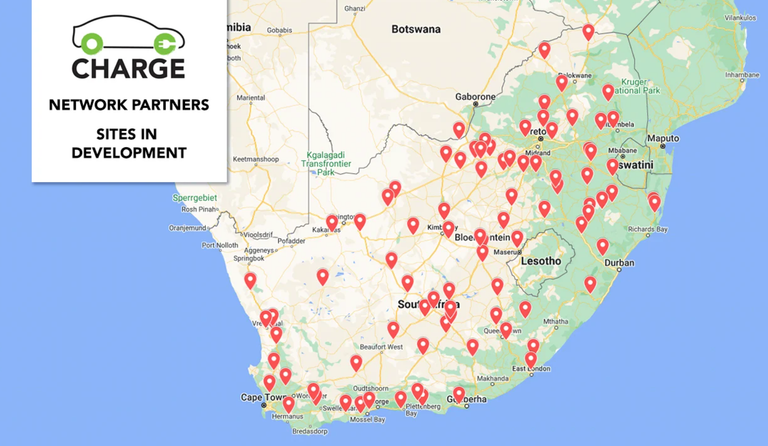
EVs now make up 0.5–1% of Nigeria’s vehicles, with Lagos and Abuja seeing the most growth, especially in commercial fleets. Nigeria’s electricity grid operates at just 30% capacity, with only 55% of the population connected. Only 12 public charging stations existed nationwide as of late 2025. EV prices start at around ₦24 million ($16,000) — well beyond most buyers.
In January 2026, LUG West Africa announced plans to install over 250 EV charging points across Lagos by the end of 2026. The Electric Vehicle Transition and Green Mobility Bill, 2025 set a legislative framework for the country’s EV future.
The fuel subsidy removal in 2023 changed the equation for Nigerian EV economics permanently. Petrol at market prices makes the running-cost comparison between EVs and ICE vehicles far closer than it was two years ago — particularly for high-mileage commercial operators.
Kenya
Kenya’s EV registrations surged 2,700% from just 1,378 units in 2022 to a projected 39,324 by 2025. This places Kenya as the clear leader in East Africa’s EV market. The growth is concentrated in electric two-wheelers and commercial three-wheelers — the boda boda replacement market — rather than passenger cars, but the infrastructure and policy groundwork is being laid for the next wave.
South Africa
South Africa’s EV market in 2025 showed mixed results. Battery electric vehicle sales dropped 17%, slipping from 1,231 units in 2024 to 1,018 units in 2025. The decline reflects a financing access problem more than a demand problem — demand for EV financing surged but affordability barriers remain the main obstacle.
Regional EV Market Comparison Table
| Region | 2025 EV Sales | Market Share | 2026 Trend | Primary Driver |
|---|---|---|---|---|
| China | ~16.5M NEVs | ~55% | Flat/slight decline (YTD Q1) | Domestic competition, export pressure |
| Europe | ~4M | ~28% | +27–30% YoY | CO2 regulations, fuel price spikes |
| United States | ~1.2M | ~10% | -27% (Q1) | Tax credit removal |
| Asia Pacific (ex-China) | N/A | N/A | +80% YoY (Q1) | Affordable Chinese imports |
| Latin America | N/A | N/A | +75% YoY (Q1) | Price parity, fuel costs |
| Africa (total) | ~25,000 | <1% | Accelerating | Policy, 2/3-wheelers, solar charging |
| Nigeria | <1,000 est. | 0.5–1% of fleet | Early growth phase | Fuel subsidy removal, commercial fleets |
| Kenya | ~39,000 (all types) | Growing | Strong | Tax breaks, 2-wheeler dominance |
| South Africa | ~1,018 (BEV only) | <1% | Mixed | Financing gap, import costs |
Battery Maker Market Share: Q1 2026
CATL maintained its dominance in the global EV battery market in Q1 2026 with a 40.7% overall share, up from 38.5% a year earlier. Total global EV battery usage reached 244.6 GWh in Q1, up 9.1% year-on-year.
BYD, which ranks second globally, saw its market share slide to 13.7% in Q1 2026, down from 16.2% a year earlier, partly due to sluggish domestic sales in China.
For African buyers, CATL’s dominance matters because it supplies batteries to almost every Chinese OEM selling affordable EVs into the continent — BYD, SAIC, GAC, NIO, Chery, and others. The health of CATL’s supply chain is directly connected to the availability and pricing of grey-market imports.
What These Numbers Mean for African Buyers
The global statistics paint a picture of a market moving fast. The African statistics paint a picture of a market that hasn’t started its main chapter yet.
Three things need to happen for Africa’s 25,000 unit figure to become 250,000:
1. Charging infrastructure must scale. Nigeria’s 12 public chargers is not a fleet — it’s a pilot. LUG West Africa’s 250-station Lagos plan is the kind of private-sector commitment that can change the calculus for commercial operators. Watch this space through 2026.
2. Financing must reach buyers. South Africa’s decline despite rising demand interest is a warning. EV prices starting at ₦24 million in Nigeria are not competitive with a fairly priced used Toyota Corolla. Pay-as-you-drive and battery-as-a-service models — already working in Kenya’s two-wheeler market — are the likely path.
3. Affordable models need formal distribution. The BYD Seagull, Chery iCar series, and Leapmotor C10 are all priced at or below $15,000 at source. Until any of these have authorised assembly or distribution in Nigeria, Kenya, or South Africa, grey-market importing remains the default — with all the warranty and parts uncertainty that creates.
For grey-market import guidance on specific models, the EV Import Guide for Nigeria covers what you need to know on duties, charging compatibility, and CLTC vs. WLTP range adjustments.
Bottom Line Verdict
The global EV market is not in crisis — it’s in a regional reset. The headline number (23 million units in 2026, 28% of all new cars) is real and significant. But the growth is uneven: Europe is the engine, China is pausing, the US is contracting, and Africa is at the beginning of a trajectory that will look dramatic in five years. Battery prices at $105/kWh are the single most important structural stat — they confirm that the cost barrier to affordable EVs is a solvable problem, not a permanent one. For Nigerian, Kenyan, and South African buyers, the question is no longer whether EVs will be viable. It’s whether the infrastructure and financing arrive before the affordable Chinese models do.
Related EV News
- Is It Worth Buying an Electric Car in 2026?
- What Is a Solid State Battery and Why It Could Change EVs Forever
- 10 EV myths people still believe


![The Complete Guide to Electric Vehicles [Free PDF Download]](https://evcarlatest.com/wp-content/uploads/2026/06/MG-07-4-1-218x150.webp "The Complete Guide to Electric Vehicles [Free PDF Download]")