The Contenders: Japan’s 2026 Electric Hatchback Landscape
While Europe chases premium SUVs and America obsesses over cyber-trucks, Japan is perfecting the electric hatchback formula. From Suzuki’s retro-futuristic concept to Nissan’s multi-pronged Leaf strategy, these five models represent the full spectrum of JDM electrification.
Whether you’re hunting for a kei-car-compliant city runner or a long-range commuter, this lineup proves Tokyo hasn’t surrendered the hatchback market to European competitors.
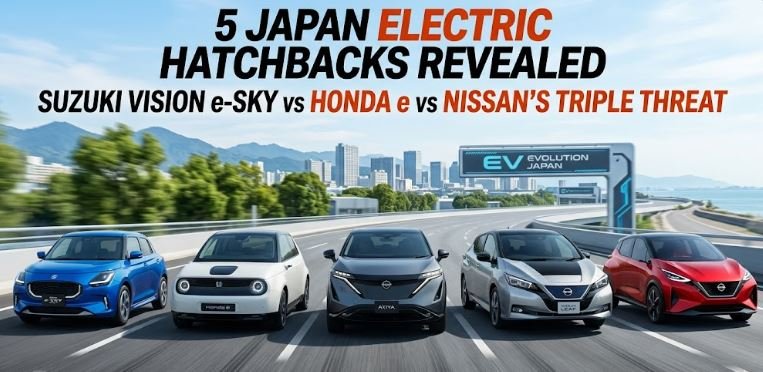
1. Suzuki Vision e-Sky – The Retro Revolution Coming 2026
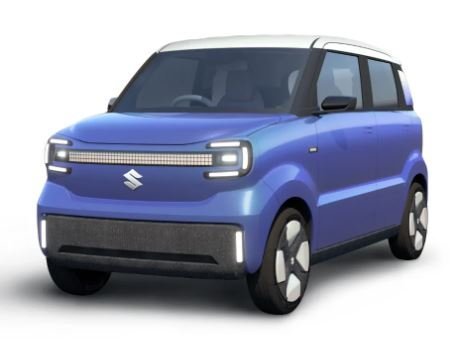
The Suzuki Vision e-Sky isn’t just another concept—it’s Suzuki’s declaration that the future of kei cars is electric. Revealed at the 2025 Tokyo Mobility Show and confirmed for production in late 2026, this hatchback channels the spirit of the 1980s Suzuki Cervo while packing next-gen battery tech.
Key Specifications (Projected):
- Platform: Heartect-e dedicated EV architecture
- Battery: 40kWh lithium-ion (solid-state optional in 2027)
- Range: 320 km (199 miles) WLTP
- Power: 60kW (80 hp) rear-mounted motor
- 0-100 km/h: 9.2 seconds
- Price (Japan): ¥2.8 million (~$18,500 USD)
- Unique Selling Point: Kei-car dimensions with global car refinement
Why It Matters: At just 3,395mm long, the Vision e-Sky fits Japan’s lucrative kei car tax bracket while offering DC fast charging—a first for Suzuki’s EV lineup. The bronze two-tone paint and round LED headlights are already trending on Japanese social media, signaling strong pre-order potential.
⚡ EV Cluster Analysis: If Suzuki hits the sub-¥3 million price point, this becomes the cheapest highway-capable EV in Japan. Perfect for urban importers in London, Paris, or Sydney looking for compact zero-emission runabouts.
2. Honda e – The Design Icon Bows Out (But Still Matters)
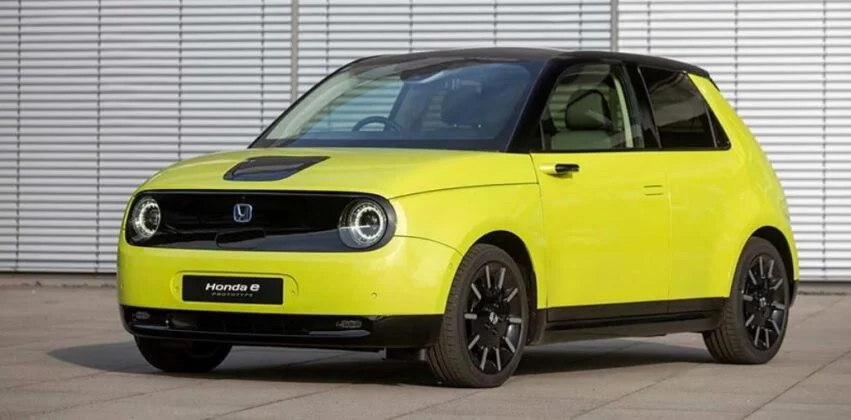
Yes, the Honda e ended production in late 2024. No, we haven’t stopped talking about it. With used prices stabilizing and Honda’s e:Ny1 failing to capture the same cultural zeitgeist, the original Honda e remains the most sought-after Japanese electric hatchback on the secondary market.
Current Market Status (2026):
- Production Status: Discontinued (2020-2024)
- Battery: 35.5kWh (Standard) / 38.5kWh (Advance)
- Range: 220 km (137 miles) WLTP
- Used Price (Japan): ¥2.1-2.8 million ($14,000-$18,500 USD)
- Used Price (Export): £18,000-24,000 (UK) | €22,000-28,000 (EU)
- Fast Charging: 100kW DC (0-80% in 30 min)
The Verdict: Buy it for the side-camera mirrors, the walnut dashboard, and the RWD handling dynamics. Skip it if you need more than 200km of range. For city dwellers in Tokyo or London, this remains the ultimate style statement—just don’t expect OTA updates forever.
3. Nissan Micra EV – The Renault Revival
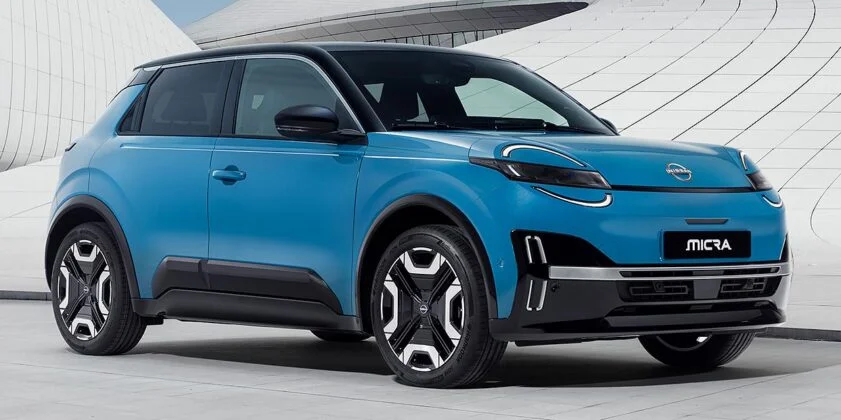
The Nissan Micra EV (known as the March in Japan) marks the triumphant return of Nissan’s iconic supermini—this time with zero emissions. Built on the Renault-Nissan AmpR Small platform (shared with the Renault 5), this isn’t just a rebadge; it’s a Nissan-engineered thermal efficiency masterclass.
Confirmed Specs (Production Model):
- Platform: AmpR Small (CMF-B EV)
- Battery Options: 40kWh (Standard) / 52kWh (Long Range)
- Range: 310 km / 410 km WLTP
- Power: 90kW (120 hp) front motor
- Charging: 100kW DC max
- Price (Japan): ¥3.2-3.9 million ($21,000-$25,700 USD)
- Release Date: Q3 2026 (Japan), Q4 2026 (Europe)
Why It’s Different: Unlike the Renault 5’s retro aesthetic, the Micra EV embraces Nissan’s “Timeless Japanese Futurism” design language. The “Squared Circl” LED signature and floating roof C-pillar distinguish it from European siblings.
Import Note: Australian buyers take note—the Micra EV will be the first JDM-spec EV under $30k AUD when grey imports begin in 2027.
4. Nissan Leaf 2025 – The Mid-Cycle Revolution
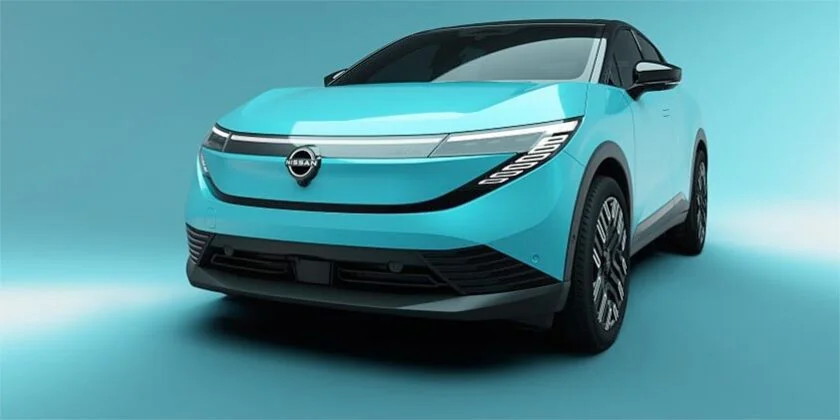
Nissan’s “split strategy” is confusing but clever. The Leaf 2025 (also known as the Leaf+ or e+ in some markets) represents the current generation’s final evolution before the CMF-EV platform successor arrives in 2027.
2025 Model Year Updates:
- Battery: 60kWh (up from 40kWh/62kWh)
- Range: 385 km (239 miles) WLTP
- Power: 160kW (214 hp) – Genuinely quick
- Charging: 130kW DC (10-80% in 38 min)
- Key Feature: Vehicle-to-Grid (V2G) standard in Japan
- Price: ¥4.5-5.2 million ($29,600-$34,200 USD)
The Hook: This is the last Leaf built on the original 2010 platform architecture—making it either the most refined version of a proven formula or a lame duck before the 2027 revolution. For buyers needing proven reliability over cutting-edge platform tech, the 2025 Leaf is the safe bet.
5. Nissan Leaf (Standard) – The Budget King
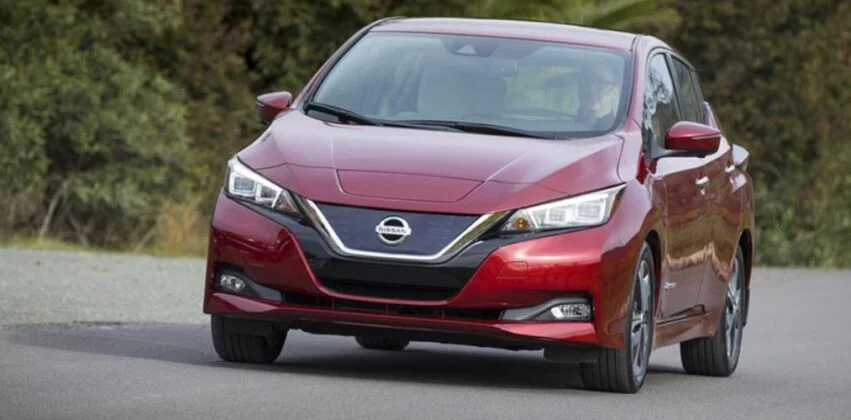
The base Nissan Leaf (40kWh) refuses to die—and that’s good news for budget buyers. While the 2025 model grabs headlines, the standard Leaf continues as the entry point to Nissan’s EV lineup, now heavily incentivized for fleet sales and rental companies.
2026 Standard Leaf Specs:
- Battery: 40kWh
- Range: 270 km (168 miles) WLTP
- Power: 110kW (147 hp)
- Price (After Subsidies): ¥2.99 million ($19,700 USD)
- Best For: Daily commutes under 100km, rideshare drivers, corporate fleets
CTR-Optimized Insight: At under ¥3 million with Japan’s 2026 EV subsidies, this is the cheapest new EV from a major manufacturer in the Japanese market. The depreciation curve has flattened, making used 2023-2024 models exceptional value at ¥1.8-2.2 million.
Buyer’s Guide: Which Japan Electric Hatchback Wins?
🏆 Best Value: Nissan Leaf (Standard)
If you need a reliable electric commuter today and don’t suffer from range anxiety, the base Leaf under ¥3 million is unbeatable. Proven thermal management, ubiquitous charging support, and Nissan’s dealer network make this the rational choice.
🏆 Best Range: Nissan Micra EV (52kWh)
410km of range in a sub-4-meter package is witchcraft. The Micra EV’s efficiency (7.8 km/kWh) beats Tesla’s Model 3 RWD. For Tokyo-to-Osaka highway runs without charging anxiety, this is your weapon.
🏆 Best Urban Runabout: Suzuki Vision e-Sky
Kei car parking privileges in Tokyo + EV tax breaks + that adorable face. If 80% of your driving is within city limits, wait for the Suzuki. The turning radius (4.2m) is tighter than a London taxi.
🏆 Best for Enthusiasts: Honda e (Used)
Rear-wheel drive, 50:50 weight distribution, and interior design that shames cars costing 3x more. Buy now before depreciation reverses as collectors realize this was Honda’s last truly fun EV.
FAQ Schema Section
Is the Suzuki Vision e-Sky available for import?
Not yet. The Suzuki Vision e-Sky enters production in Q4 2026 for the Japanese market. Export models for the UK and Australia are expected in 2027. As a kei car, it may face homologation challenges in markets without L7e quadricycle equivalence.
What’s the difference between the Nissan Leaf and Leaf 2025?
The standard Leaf features a 40kWh battery and 110kW motor, targeting budget buyers. The 2025 Leaf upgrades to 60kWh, 160kW output, and includes standard Vehicle-to-Grid (V2G) capability in Japan. Think of them as “commuter” vs “premium commuter” variants.
Why did Honda discontinue the Honda e?
Poor sales due to limited range (220km) and high price (¥4.5 million+) in a market demanding 400km+ ranges. Honda replaced it with the e:Ny1 SUV, though enthusiasts consider the original e superior in design and driving dynamics.
The Verdict: Japan’s Electric Hatchback Moment
From the Suzuki Vision e-Sky’s kei car innovation to Nissan’s dual-Leaf strategy, Japan’s electric hatchback segment offers something the West has forgotten: right-sized efficiency. You don’t need 100kWh batteries and 2.5-ton curb weights for daily driving.
The Play: Buy a used Honda e now for weekend fun, pre-order the Suzuki Vision e-Sky for city duty, or grab a subsidized Leaf if you need a car tomorrow. The Micra EV waits for those needing maximum range in minimum space.
Related EV Clusters
- Chinese Electric Hatchback Wars: 17 Game-Changing Models Dominating 2026 From $5,000 to $30,000
- BMW EV Comparisons: Sedans and SUVs vs Top Rivals
- Xpeng EV Comparisons 2026: MONA, G6, G9, P5, P7
- Chinese Electric SUVs $70,000–$90,000 for 2026 Buyers
- Chinese Electric SUVs $50K–$70K in 2026 (Full List)