- Electric Vehicles
- Suzuki
- Suzuki Vision e-Sky
Suzuki Vision e-Sky
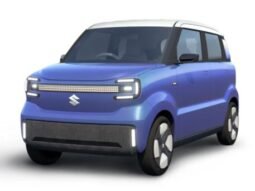

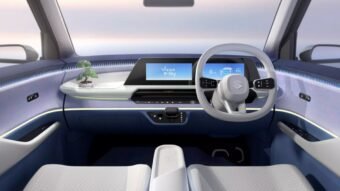

- Drive Type: FWD
- Type: 5-door compact hatchback (kei-class EV)
- Self Driving: None
- Airbags: Yes
PROS
- Compact kei-class size perfect for urban driving and tight spaces
- Affordable entry-level EV expected, ideal for first-time electric buyers
- Futuristic design with C-shaped LED lights and modern styling
- Spacious interior thanks to tall-boy design and smart packaging
- Dual digital screens for driver and infotainment display
- Lightweight build enhances energy efficiency and city maneuverability
- Up to 168 miles of range, sufficient for daily commuting
- Simple, minimalistic interior with high-tech features
- Easy to park and drive in crowded cities
- Environmentally friendly, zero tailpipe emissions
CONS
- Limited range compared to larger EVs (not ideal for long trips)
- Performance details unknown (power and torque not yet revealed)
- Likely modest acceleration, focused on economy over speed
- Small cargo space due to compact dimensions
- No fast-charging specs confirmed yet
- Concept features like the dashboard plant unlikely in production
- Limited global availability (initially Japan-only)
- No self-driving or advanced driver assistance confirmed so far
Suzuki has confirmed that the Vision e-Sky — a born-electric kei car concept revealed at the Japan Mobility Show 2025 — will enter production in FY2026. It is Suzuki’s entry-level EV, positioned below the e-Vitara crossover and designed specifically for urban commuting within Japan’s kei car regulations. The five-door hatchback uses a front-wheel-drive layout and measures 3,395mm long, 1,475mm wide, and 1,625mm tall — compact enough to slot into Japan’s tightest parking spots while still offering a dual-screen cabin that looks close to production-ready.
How Far Can the Suzuki Vision e-Sky Go on One Charge?
Suzuki claims a range of over 270 km per charge. The applicable test cycle — whether WLTC or the older JC08 — has not been specified, so direct comparisons with rivals should be made with caution. Battery capacity and motor output figures are also unconfirmed. Charging compatibility covers standard household outlets and quick-charge systems, but AC onboard rates and DC peak charging speeds have not been disclosed. All powertrain figures should be treated as unconfirmed until Suzuki releases production specifications ahead of the FY2026 launch.
For reference: the Nissan Sakura, the current benchmark kei EV in Japan, runs a 20 kWh battery with 180 km of WLTC range and supports 50 kW DC fast charging. If the Vision e-Sky delivers a genuine 270 km on WLTC, it would be a meaningful step up in real-world usability.
What Is the Suzuki Vision e-Sky Price?
No pricing has been announced. The Nissan Sakura starts at approximately ¥2.33 million (around $15,500 USD / ₦24.8 million NGN at current parallel market rates), which gives the clearest reference point for where the Vision e-Sky is likely to land. Suzuki has historically priced slightly below Nissan in the kei segment, so an opening price of ¥2.0–2.2 million is plausible — but speculative at this stage. For African buyers, the Vision e-Sky would enter through grey-market import channels, adding freight, clearing, and duty costs to any base price.
Suzuki Vision e-Sky vs Nissan Sakura and Dacia Spring
The Vision e-Sky’s two closest rivals reflect where Suzuki is aiming. The Nissan Sakura is the direct Japan-market competitor — same segment, same buyer, established and already on sale. The Dacia Spring occupies a parallel position in Europe as the cheapest EV in its market, and several publications have already flagged the Vision e-Sky as a potential Spring rival if Suzuki pursues a European launch. Within Suzuki’s own range, it sits below the e-Vitara in size and likely in price, and alongside the e Every Concept, an electric kei van targeting commercial users.
Who Is the Suzuki Vision e-Sky For?
City commuters and urban households doing short, predictable daily distances. This is not a motorway car or a family road-trip vehicle — the kei dimensions make that obvious. The target buyer wants something easy to park, cheap to run, and practical enough for school runs and grocery trips without the size or cost of a full-sized EV. A Maruti Suzuki-badged version built on a localised K-EV platform is also reportedly under development for India, potentially arriving in 2026–27, which would broaden the concept’s relevance across Asia.
Suzuki Vision e-Sky Images


Full Electric Vehicle Specifications
MODEL
| Available Trims / Variants | Suzuki Vision e-Sky (Concept Electric Hatchback) |
LAUNCH
| Reveal Date | October 2025 (Japan Mobility Show) |
| Availability Status | Concept, production model expected in 2026 |
| Country of origin | Japan |
BATTERY
| Battery Capacity | 20–25 kWh |
| Battery Chemistry | Lithium-ion |
| Range (WLTP/CLTC/EPA) | Up to 168 miles (270 km) WLTP |
| Heat Pump | |
| AC Charging (Max kW) | Estimated 6–8 hours |
| DC Charging (Max kW) | Likely supports fast charging up to 30–40 kW |
| Additional Notes | Compact battery for affordability and low weight |
PERFORMANCE
| Power Output (kW / hp) | single motor, front-wheel drive |
BODY
| Body Style | 5-door compact hatchback (kei-class EV) |
| Platform / Architecture | Suzuki kei car architecture (modified for EV) |
| Dimensions (L×W×H mm) | 3,395 mm (L) × 1,475 mm (W) × 1,625 mm (H) |
| Wheelbase (mm) | Approx. 2,400 mm |
| Wheel Size (inches) | Aerodynamic EV-style alloy wheels |
| Trunk/Boot Capacity (L) | Compact rear storage |
| Additional Notes | Boxy “tall boy” design for maximum cabin space |
SAFETY
| Airbags (count) | front and side airbags |
| Driver Assistance (ADAS) | Lane assist, auto emergency braking |
COMFORT
| Seating Capacity | 4–5 seats, two-tone interior |
| Roof Type | Slightly tapering roofline with tall design |
| Bluetooth / Wi-Fi | Wireless charging, digital infotainment, smart UI |
| Parking Aids | Rear camera, likely parking sensors |
| Additional Notes | Minimal physical buttons, floating center console, concept-only dashboard plant |
DISPLAYS
| Centre Screen (inches) | 12-inch infotainment touchscreen |
| Driver's Display (inches) | 12-inch digital instrument cluster |
| Additional Notes | Integrated wireless smartphone charging pad |
LIGHTING
INFOTAINMENT & AUDIO
TECHNOLOGY
OWNERSHIP
Note
| Additional Notes |
The Suzuki Vision e-Sky previews Suzuki’s first fully electric kei car. Production launch is planned for 2026 in Japan, focusing on urban efficiency, affordability, and practicality. |
User Reviews
Disclaimer Note
Specifications sourced from manufacturer data and may reflect WLTP, CLTC, or EPA test conditions. Import prices in your local are estimates based on grey-market landing costs and exclude duties, clearing fees, and local taxes. Figures are subject to change without notice. Always verify with your local importer before purchase. We can not guarantee that the information on this page is 100% correct