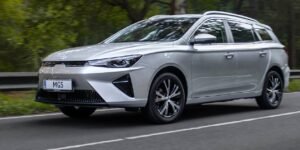
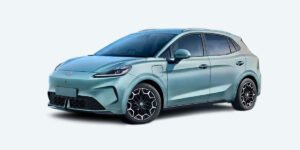
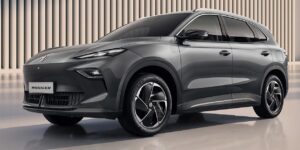
The MG MG4 and Volkswagen ID.3 Neo are both five-door compact electric hatchbacks targeting everyday buyers who want practical range, sensible pricing, and modern technology in a familiar body style. The MG4 is a Chinese-built EV from SAIC that has steadily expanded across Europe, South Africa, and parts of Asia since 2022, built for value-driven buyers who want competitive specs without paying a premium badge price. The ID.3 Neo is Volkswagen’s most significant update to its compact EV flagship, celebrating its world premiere in April 2026 with a new name, redesigned interior, and expanded battery lineup — making this comparison timely for buyers deciding between a proven affordable option and a freshly relaunched European benchmark.
Range & Charging
The 2026 MG4 Premium Long Range uses a 64 kWh LFP battery delivering 280 miles (451 km) of WLTP range, while the Extended Range variant stretches that to 338 miles (544 km) with a 77 kWh NMC pack. Real-world range in mixed conditions typically runs 10–15% below WLTP. DC fast charging peaks at 154 kW on the Long Range, enabling a 10–80% charge in approximately 25 minutes; AC charging runs at 11 kW across all variants.

The ID.3 launches with three battery sizes — 50, 58, and 79 kWh — delivering WLTP ranges of up to 630 km (391 miles) in the top configuration. The 50 and 58 kWh versions support up to 105 kW DC charging, while the 79 kWh version charges at up to 183 kW. AC charging is 11 kW across the lineup. A 10–80% session on the top variant takes approximately 26–30 minutes at a compatible fast charger.
Price, Availability & Market Fit
The 2026 MG4 UK pricing starts at £23,495 for the Urban entry variant and £29,995 for the Premium Long Range, with the Extended Range at £32,995 and the XPower at £33,995. MG has official dealership presence in South Africa, where it is one of the more accessible EV brands. The ID.3 starts from approximately £33,995 in the UK and €35,990 in Germany, with the Pro S expected around €44,990. European deliveries begin July 2026; no African market launch has been announced. This comparison answers a direct question for buyers in South Africa and Kenya: whether the MG4’s lower price and immediate availability justify choosing it over the ID.3 Neo’s longer range and revised premium interior.
Ecosystem & Rival Context
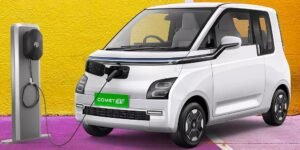
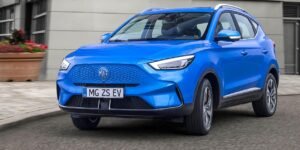
MG buyers should also consider the MG ZS EV for a more SUV-oriented option, and the MG4 Urban as a lower-cost entry point. Volkswagen buyers have the ID.4 for more space and the ID.Buzz for family versatility. Outside both brands, the Renault 4 E-Tech and BYD Atto 2 compete directly in the same segment at overlapping price points. The MG4 versus ID.3 Neo matchup remains the clearest because both are purpose-built RWD compact EVs on dedicated electric platforms, unlike front-wheel-drive alternatives that compromise on handling dynamics.
Pros & Cons
The MG4’s lower starting price makes it accessible to a wider range of buyers, particularly in markets like South Africa where import costs inflate final prices. Its LFP battery chemistry in the Long Range trim handles heat better and degrades more slowly in warmer climates — a practical advantage in African conditions. The 25-minute 10–80% charge on the Premium Long Range is competitive for its price class. On the downside, MG’s after-sales network outside South Africa remains limited, and the smaller 64 kWh battery puts the Long Range below the ID.3 Neo’s mid and top variants on total range.
The ID.3 Neo’s 79 kWh variant delivers up to 391 miles of WLTP range, placing it ahead of every MG4 variant in outright range. Physical buttons return for climate and key functions, replacing the widely criticized touch controls of the original — a meaningful improvement for daily usability. The 183 kW DC charging on the top variant is among the fastest in its class. Its weaknesses are pricing — it starts meaningfully higher than the MG4 — and the lack of confirmed availability in African markets at launch.
Quick Verdict
Choose the MG4 2026 if price, LFP battery durability in warm climates, and immediate availability in South Africa are your priorities. Choose the ID.3 Neo if longer range, faster charging on the top variant, and a significantly improved interior matter more. In markets where both are available, the ID.3 Neo offers more range for its money at the top trim; the MG4 offers more car at the bottom. For most African buyers currently, the MG4 is the practical choice.
As of mid-2026, the ID.3 Neo is only confirmed for European markets, with deliveries starting July 2026. South Africa and Nigeria have no announced launch date, meaning buyers would need grey-market importation with no local warranty support.
Yes — the MG4 Urban includes V2L as standard, allowing owners to power external electrical devices from the car’s battery. This feature is useful for running tools or appliances when away from mains power, and is increasingly common on this class of EV.
The MG4 Urban is a separate entry-level model on a different front-wheel-drive platform, with smaller batteries, lower range, and slower charging compared to the standard rear-wheel-drive MG4. The core MG4 Premium range uses a rear-wheel-drive layout, which gives it better handling balance.
The Neo introduces a redesigned interior with physical buttons restored, a 12.9-inch Innovision display, the updated MEB+ platform, and a top range of 391 miles WLTP — up from 342 miles on the outgoing model. VW also added V2L capability and an integrated app store to the infotainment system.
Related EV Comparisons
| |
| Price | $30,000.00 $33,000.00 |
| Our Rating | |
| Brand | MG VOLKSWAGEN |
| Category | Cars Cars |
| Models |
Standard Range Long Range XPower performance Volkswagen ID.3 Pure Volkswagen ID.3 Pro Volkswagen ID.3 Pro S Volkswagen ID.3 GTX Volkswagen ID.3 GTX Performance |
| Announced | 2025 update for 2026 model year September 2025 |
| Status | Production Production (2026 model year) |
| Country of origin | Britain Germany |
| Base Price |
$30,000
$33,000 (€28,370 / £24,840) - Volkswagen ID.3 Pure $37,000 - Volkswagen ID.3 Pro $42000 - Volkswagen ID.3 Pro S $56,000 - Volkswagen ID.3 GTX $56,000 - Volkswagen ID.3 GTX Performance |
| Power |
168 HP RWD Standard 201 HP RWD Long Range 429 HP AWD XPower 168 hp (125 kW), Rear-Wheel Drive - Volkswagen ID.3 Pure 204 hp (150 kW), Rear-Wheel Drive - Volkswagen ID.3 Pro 204 hp (150 kW), Rear-Wheel Drive - Volkswagen ID.3 Pro S 285 hp (210 kW), RWD - Volkswagen ID.3 GTX 326 hp (240 kW), RWD - Volkswagen ID.3 GTX Performance |
| Torque |
184 lb ft Standard 184 lb ft Long Range 443 lb ft XPower 310 Nm - Volkswagen ID.3 Pure 310 Nm -Volkswagen ID.3 Pro 310 Nm - Volkswagen ID.3 Pro S 545 Nm -Volkswagen ID.3 GTX 545 Nm - Volkswagen ID.3 GTX Performance |
| Acceleration The acceleration numbers are an easy way to compare car performance. We list either time from 0 to 100 km/h or time from 0 to 60mph, depending on which number(s) the manufacturers provide. The lower the acceleration time, the higher performance the car is. |
0 to 62 mph about 7.7 s Standard 0 to 62 mph about 7.0 s Long Range 0 to 62 mph about 3.8 s XPower 8.2 s - Volkswagen ID.3 Pure 7.6 s - Volkswagen ID.3 Pro 7.9 s - Volkswagen ID.3 Pro S 5.9 s - Volkswagen ID.3 GTX 5.6 s - Volkswagen ID.3 GTX Performance |
| Max Speed |
About 100 mph Standard About 112 mph XPower 160 km/h (99 mph) - Volkswagen ID.3 Pure 160 km/h (99 mph) -Volkswagen ID.3 Pro 160 km/h (99 mph) - Volkswagen ID.3 Pro S 180 km/h (112 mph) -Volkswagen ID.3 GTX 180 km/h (112 mph) - Volkswagen ID.3 GTX Performance |
| transmission | Single speed automatic |
| Capacity |
51 kWh 64 kWh 77 kWh 53.6 kWh (usable) - Volkswagen ID.3 Pure 58 kWh (usable) - Volkswagen ID.3 Pro 82 kWh (77 kWh usable) - Volkswagen ID.3 Pro S 79 kWh (usable) - Volkswagen ID.3 GTX 79 kWh (usable) - Volkswagen ID.3 GTX Performance |
| Tech |
Lithium iron phosphate for smaller pack Lithium NMC for larger pack LFP Battery - Volkswagen ID.3 Pure Lithium-ion (NMC) - Volkswagen ID.3 Pro Lithium-ion (NMC) - Volkswagen ID.3 Pro S Lithium-ion (NMC) - Volkswagen ID.3 GTX Lithium-ion (NMC) - Volkswagen ID.3 GTX Performance |
| Range |
About 218 mi Standard About 281 mi Long Range About 323 mi Extended 451 km CLTC (~280 mi WLTP est.) - Volkswagen ID.3 Pure 412–434 km (256–270 mi WLTP est.) - Volkswagen ID.3 Pro Up to 559 km (347 mi WLTP est.) - Volkswagen ID.3 Pro S Up to 604 km (375 mi) - Volkswagen ID.3 GTX Up to 604 km (375 mi) - Volkswagen ID.3 GTX Performance |
| Consumption |
15 to 17 kWh per 100 km
13.4 kWh/100 km - Volkswagen ID.3 Pure 15.3–16.2 kWh/100 km - Volkswagen ID.3 Pro 15.5 kWh/100 km - Volkswagen ID.3 Pro S 14.5–15.5 kWh/100 km - Volkswagen ID.3 GTX 14.5–15.5 kWh/100 km - Volkswagen ID.3 GTX Performance |
| Recuperation | Adjustable regenerative braking |
| Heat Pump | |
| AC Charging |
7 kW to 11 kW AC Full charge about 6 to 8 h 9.5 hrs (full) - Volkswagen ID.3 Pure 11 kW, ~6.5 hours (0–100%) - Volkswagen ID.3 Pro 11 kW (0-100% in ~7.5 h) - Volkswagen ID.3 Pro S 11 kW (0–100% ≈ 7.5 h) - Volkswagen ID.3 GTX 11 kW (0–100% ≈ 7.5 h) - Volkswagen ID.3 GTX Performance |
| DC Charging |
Up to about 135 kW DC 10 to 80 percent about 30 to 35 min 30–80% in ~48 min - Volkswagen ID.3 Pure Up to 145 kW, 10–80% in ~25 minutes - Volkswagen ID.3 Pro Up to 175 kW (10-80% in ~28 min) - Volkswagen ID.3 Pro S 185 kW (10–80% ≈ 26 min) - Volkswagen ID.3 GTX 185 kW (10–80% ≈ 26 min) - Volkswagen ID.3 GTX Performance |
| Others | Vehicle to load support on some trims 8 years / 160,000 km |
| Type | 5 door hatchback, 5 seats 5-door hatchback (5 seats) |
| Platform | MSP modular scalable platform VW MEB EV platform |
| Dimensions |
Length about 168.7 in Width about 72.8 in Height about 59.1 in (L × W × H): 4261 × 1778 × 1568 mm |
| Drag Co-Efficient | 0.27 Cd 0.27 Cd |
| Wheelbase | 106.3 in 2770 mm |
| Clearance | 5.9 in |
| Weight |
3,600 to 4,000 lb depending on battery
1845 kg - Volkswagen ID.3 Pure 1815 kg - Volkswagen ID.3 Pro 1,930 kg - Volkswagen ID.3 Pro S 1845 kg - Volkswagen ID.3 GTX 1845 kg - Volkswagen ID.3 GTX Performance |
| Suspension |
Front MacPherson strut Rear multi link |
| Wheels | 17 to 18 inch alloy wheels 18″ Aero wheels |
| Trunk/Boot | 12.9 cu ft 385 L |
| Towing | 500 kg small trailer |
| Others | Rear wheel drive base architecture |
| Centre | 10.25 inch touchscreen 12.9-inch infotainment touchscreen |
| Driver's Display | 7 inch digital cluster Digital cluster |
| Head-Up | Optional on higher trims |
| Others | Wireless software updates Ambient lighting, “ID.Light” interactive LED strip |
| Seats | Fabric or synthetic leather Cloth, 5-seater |
| Roof | Standard metal roof Standard (panoramic optional) |
| Parking Aids |
Rear camera Parking sensors USB-C ports, Wireless Apple CarPlay / Android Auto |
| Connectivity |
Apple CarPlay Android Auto Navigation Minimalist design, quality materials |
| Others |
Keyless entry Mobile app control 4-zone climatronic |
| Airbags |
Front airbags Side airbags Curtain airbags Standard full set |
| Driving Aids |
Adaptive cruise control Lane keep assist Automatic emergency braking AEB, lane assist, parking sensors |
| Self Driving | Level 2 driver assist Level 2 driver assistance (IQ.Drive, optional) |
| Crash Tests | 5 star rating in Euro NCAP testing 5 stars (Euro NCAP, previous model) |
| Others |
XPower version uses dual motor AWD performance setup.
LFP battery in China; NMC likely for Europe. Specifications vary by region. Ideal as an affordable entry EV with solid range and comfort. |
| disclaimer | We can not guarantee that the information on this page is 100% correct |
|
We can not guarantee that the information on this page is 100% correct