- Home
- Electric Vehicles
- Compare Electric Cars
- Volkswagen ID.3 Neo vs Opel Astra Electric
Volkswagen ID.3 Neo vs Opel Astra Electric
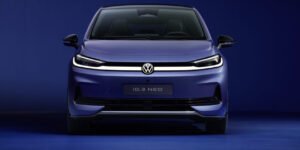
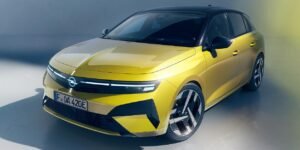
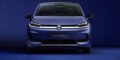
The Volkswagen ID.3 Neo is a refreshed compact hatchback built on VW’s MEB platform, targeting urban professionals who want German engineering in a practical five-door form. The Opel Astra Electric is a liftback from Stellantis’ European stable, aimed at buyers who want refined design with a full-EV drivetrain. With both appearing through grey-market imports across Nigeria, Kenya, and South Africa, the comparison is increasingly relevant for African buyers in 2025.
The ID.3 Neo offers 430 km WLTP range (77 kWh battery) — real-world estimates sit around 340–370 km. The Astra Electric delivers 416 km WLTP (54 kWh usable), with real-world performance closer to 320–350 km. On DC fast charging, the ID.3 Neo leads at 170 kW versus the Astra Electric’s 100 kW cap. The ID.3 completes a 10–80% charge in roughly 28 minutes; the Astra Electric takes 32–35 minutes.
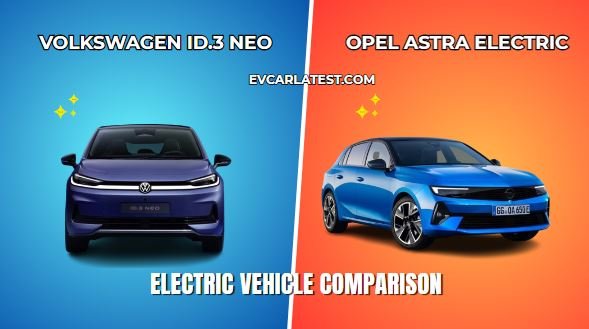
The ID.3 Neo starts at approximately €35,000 (~₦63M / ~$38,000); the Astra Electric opens near €40,000 (~₦72M / ~$43,000). Neither is sold through official dealerships in Nigeria or most of sub-Saharan Africa — grey-market imports from the UK and Europe are the primary route. If your priority is better range and faster charging given Nigeria’s sparse charging network, this comparison has a clear answer: the ID.3 Neo delivers more value per naira.
VW’s wider lineup includes the ID.4 and ID.7 for buyers needing more space. Opel’s EV family covers the Corsa Electric (smaller, more affordable) and Mokka Electric (compact crossover). The Peugeot e-308 and BMW i3 are worth noting at this segment — but the ID.3 Neo and Astra Electric edge them out on parts familiarity, which matters for grey-import buyers managing their own servicing.
ID.3 Neo — Its 170 kW DC fast charging meaningfully reduces downtime where charging infrastructure is limited. The 77 kWh battery gives a genuine range buffer that matters on longer inter-city drives in Nigeria or Kenya. VW’s MEB platform also has broader global parts availability, a practical advantage for grey-import owners. On the downside, cabin materials feel modest given the price point. The smaller 58 kWh entry trim’s range is tight for buyers outside major cities.
Astra Electric — Interior quality is noticeably more refined, rewarding buyers upgrading from a mid-range petrol car. Its lower kerb weight from the 54 kWh pack produces sharper, more confident handling. Stellantis platform sharing with Peugeot also widens potential service options. However, the 100 kW DC charging ceiling is a genuine limitation for anyone dependent on fast-charge sessions, and the higher starting price delivers less range for the spend.
Quick Verdict
Choose the ID.3 Neo if fast charging and range buffer are your priorities — the 77 kWh variant is the stronger choice for buyers operating outside dense urban grids. Choose the Astra Electric if interior quality and driving refinement matter more and your daily commute stays within 200 km. Both are grey-import vehicles in most of Africa, so verify local service access before deciding.
FAQ
Is the Volkswagen ID.3 Neo better than the Opel Astra Electric for long trips?
For longer routes, yes. The ID.3 Neo’s larger battery and 170 kW fast charging recover range faster at stops, which is a practical advantage where public chargers are widely spaced.
Which is cheaper to maintain, the ID.3 Neo or Astra Electric?
Running costs are similar — both skip oil changes and benefit from regenerative braking. The ID.3 Neo may have a slight edge in parts sourcing due to VW’s wider global distribution network.
Is the Opel Astra Electric available in Nigeria?
There is no official Opel distribution in Nigeria. The Astra Electric can be sourced through grey-market importers from the UK or Europe, but warranty support and spare parts availability remain limited.
Related EV Comparisons
- Volkswagen ID.3 Neo vs Hyundai Ioniq 6
- Volkswagen ID.3 Neo vs Peugeot e-308
- Volkswagen ID.3 Neo vs BYD Seal (Atto 4)
- Volkswagen ID.3 Neo vs Tesla Model 3 2025
- Volkswagen ID.3 Neo vs Cupra Born
| |
| Price | $39,000.00 |
| Our Rating | |
| Brand | VOLKSWAGEN Opel |
| Category | Electric Cars Electric Cars |
MODEL
| Available Trims / Variants |
Volkswagen ID.3 Neo 50 kWh Volkswagen ID.3 Neo 58 kWh Volkswagen ID.3 Neo 79 kWh |
PRICE & AVAILABILITY
| Availability Status | Coming soon. Expected release 2026, Q3 Coming soon. Expected release 2026, Q1 |
BATTERY & CHARGING
| Battery Capacity |
50 kWh usable - Volkswagen ID.3 Neo 50 kWh 58 kWh usable, 62 kWh total - Volkswagen ID.3 Neo 58 kWh 79 kWh usable, 82 kWh total - Volkswagen ID.3 Neo 79 kWh 58 kWh total |
| Range (WLTP/CLTC/EPA) |
259 mi WLTP - Volkswagen ID.3 Neo 50 kWh 307 mi WLTP - Volkswagen ID.3 Neo 58 kWh 391 mi WLTP - Volkswagen ID.3 Neo 79 kWh 282 mi WLTP |
| DC Charging (Max kW) |
CCS 105 kW, 10-80% in 29 min - Volkswagen ID.3 Neo 50 kWh CCS 105 kW, 10-80% in 29 min - Volkswagen ID.3 Neo 58 kWh CCS 183 kW, 10-80% in 26 min - Volkswagen ID.3 Neo 79 kWh CCS |
| AC Charging (Max kW) |
Type 2 7.2 kW Type 2 11 kW Type 2 11 kW |
| Energy Consumption | 240 Wh/mi WLTP |
PERFORMANCE
| Power Output (kW / hp) |
RWD 170 hp (125 kW) - Volkswagen ID.3 Neo 50 kWh RWD 190 hp (140 kW) - Volkswagen ID.3 Neo 58 kWh RWD 231 hp (170 kW) - Volkswagen ID.3 Neo 79 kWh FWD 156 hp (115 kW) |
| 0–100 km/h / 0-60 mph (seconds) The acceleration numbers are an easy way to compare car performance. We list either time from 0 to 100 km/h or time from 0 to 60mph, depending on which number(s) the manufacturers provide. The lower the acceleration time, the higher performance the car is. | 7.3 sec 0-62 mph 9.2 sec 0-62 mph |
| Torque (Nm) | 270 Nm (199 lb-ft) |
| Top Speed (km/h / mph) | 99 mph (160 km/h) 106 mph (170 km/h) |
BODY & DIMENSIONS
| Dimensions (L×W×H mm) | 4265 x 1809 x 1554 mm (167.9 x 71.2 x 61.2 in) 4374 x 1860 x 1470 mm (172.2 x 73.2 x 57.9 in) |
| Trunk/Boot Capacity (L) | EU: 385 l, 1267 l max |
| Body Style | 5 door hatchback, 4/5 seats 5 door hatchback, 5 seats |
| Frunk/Bonnet Capacity (L) | No No |
SAFETY & DRIVER ASSISTANCE
COMFORT & SEATING
| Seating Capacity | Heated front seats, massage Heated front seats |
DISPLAYS & CONNECTIVITY
| Centre Screen (inches) | 12.9" touchscreen 10" touchscreen |
| Driver's Display (inches) | 10.25" 10" |
| Head-Up Display (HUD) | Yes, with augmented reality Yes |
TECHNOLOGY
ADDITIONAL SPECS
Note

|
Disclaimer Note
Specifications sourced from manufacturer data and may reflect WLTP, CLTC, or EPA test conditions. Import prices in your local are estimates based on grey-market landing costs and exclude duties, clearing fees, and local taxes. Figures are subject to change without notice. Always verify with your local importer before purchase. We can not guarantee that the information on this page is 100% correct