- Home
- Electric Vehicles
- Compare
- Nissan Leaf vs Renault 4 E-Tech
Nissan Leaf vs Renault 4 E-Tech
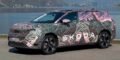
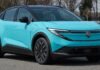
Nissan Leaf and Renault 4 E-Tech are compact electric hatchbacks designed for city and suburban driving. The Leaf targets buyers looking for a practical, well-established EV, while the Renault 4 E-Tech appeals to those seeking a retro-inspired, efficient city car.
The Leaf offers a range of up to 385 km depending on the battery version, whereas the Renault 4 E-Tech reaches around 320 km. Both support fast charging, but the Leaf charges slightly faster, reaching 80% in roughly 40 minutes, compared to about 45 minutes for the Renault 4 E-Tech.
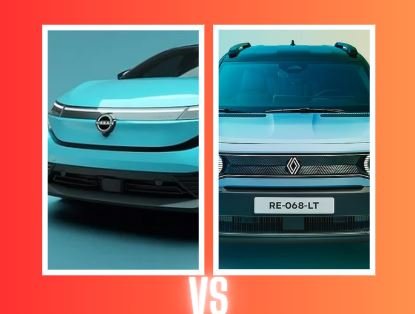
The Leaf is positioned at a mid-range price with broad global availability, while the Renault 4 E-Tech is generally more affordable but limited to certain European markets. This comparison helps you decide between a longer-range, established EV or a compact, design-focused option.
Other Nissan EVs include the Ariya and the upcoming Nissan Townstar EV, with rivals like the Kia Soul EV and Chevrolet Bolt EV. Renault’s lineup includes the Zoe and Megane E-Tech, with competitors such as the Peugeot e-208 and Honda e.
Nissan Leaf pros: established reliability, longer range, good charging speed. Cons: conventional styling, smaller cargo space. Renault 4 E-Tech pros: compact design, efficient range, retro styling. Cons: slower charging, limited market availability.
QUICK VERDICT; Leaf suits buyers prioritizing range and established EV support, while Renault 4 E-Tech fits city drivers seeking compact efficiency and unique design.
Related EV Comparisons
- Nissan Micra EV vs Nissan Ariya
- Nissan Leaf vs Kia EV4 hatchback
- Chevrolet Equinox EV vs Nissan Ariya
- Chevrolet Bolt EV vs Nissan Leaf
- Volvo EX30 vs Nissan Ariya


MODEL
| Models |
Nissan Leaf 52kWh Nissan Leaf 75kWh Renault 4 E-Tech 120 HP 40 kWh Renault 4 E-Tech 150 HP 52 kWh |
LAUNCH
| Announced | 2025, June 09 2024, October 14 |
| Status | Coming soon. Expected release 2025 Available to order. Released 2025, March |
| Country of origin | Japan France |
| Base Price |
€ 29,400 £ 24,000 - Renault 4 E-Tech 120 HP 40 kWh € 32,400 £ 28,000 - Renault 4 E-Tech 150 HP 52 kWh |
PERFORMANCE
| Power |
FWD 177 hp (130 kW) - Nissan Leaf 52kWh FWD 214 hp (160 kW) - Nissan Leaf 75kWh FWD 120 hp (90 kW) - Renault 4 E-Tech 120 HP 40 kWh FWD 150 hp (110 kW) - Renault 4 E-Tech 150 HP 52 kWh |
| Torque |
254 lb-ft (345 Nm) - Nissan Leaf 52kWh 355 Nm (261 lb-ft) - Nissan Leaf 75kWh 166 lb-ft (225 Nm) - Renault 4 E-Tech 120 HP 40 kWh 245 Nm (181 lb-ft) - Renault 4 E-Tech 150 HP 52 kWh |
| Acceleration The acceleration numbers are an easy way to compare car performance. We list either time from 0 to 100 km/h or time from 0 to 60mph, depending on which number(s) the manufacturers provide. The lower the acceleration time, the higher performance the car is. |
9.2 sec 0-62 mph - Renault 4 E-Tech 120 HP 40 kWh 8.2 sec 0-62 mph - Renault 4 E-Tech 150 HP 52 kWh |
| Max Speed | 99 mph (160 km/h) 93 mph (150 km/h) |
| transmission | Single-speed Single-speed |
BATTERY
| Capacity |
52.9 kWh total - Nissan Leaf 52kWh 75.1 kWh total - Nissan Leaf 75kWh 40 kWh usable - Renault 4 E-Tech 120 HP 40 kWh 52 kWh usable - Renault 4 E-Tech 150 HP 52 kWh |
| Tech | Liquid-cooled Li-ion Liquid-cooled Li-Ion NMC battery (400V type) |
| Range |
373 mi WLTP (303 mi EPA) - Nissan Leaf 75kWh 186 mi WLTP - Renault 4 E-Tech 120 HP 40 kWh 254 mi WLTP - Renault 4 E-Tech 150 HP 52 kWh |
| Consumption |
229 Wh/mi WLTP - Renault 4 E-Tech 120 HP 40 kWh 243 Wh/mi WLTP - Renault 4 E-Tech 150 HP 52 kWh |
| Recuperation | Yes Yes |
| Heat Pump | |
| AC Charging |
Type 2 Type 1 (USA only) Type 2 11 kW, 10-100% in 3 hours 30 min - Renault 4 E-Tech 120 HP 40 kWh Type 2 11 kW, 10-100% in 4 hours 30 min - Renault 4 E-Tech 150 HP 52 kWh |
| DC Charging |
CCS, 10-80% in 35 min - Nissan Leaf 52kWh CCS 150 kW (max), 10-80% in 35 min - Nissan Leaf 75kWh NACS (USA only) CCS 80 kW, 15-80% in 30 min - Renault 4 E-Tech 120 HP 40 kWh CCS 100 kW, 15-80% in 30 min - Renault 4 E-Tech 150 HP 52 kWh |
| Others |
Vehicle-to-Home (V2H), Vehicle-to-Grid (V2G), Vehicle-to-Load (V2L) 2x 120V outlets, 1500W max (USA only) V2L & V2G bi-directional charging (up to 3.7 kW) |
BODY
| Type | 5 door hatchback, 5 seats 5 door hatchback, 5 seats |
| Platform | CMF-EV AmpR Small |
| Dimensions | 171.3 x 71.3 x 61.0 in (4350 x 1810 x 1550 mm) 163.0 x 70.9 x 61.8 in (4140 x 1800 x 1570 mm) |
| Drag Co-Efficient | 0.25 Cd |
| Wheelbase | 105.9 in (2690 mm) 103.1 in (2620 mm) |
| Clearance | 7.1 in (181 mm) |
| Weight |
EU: 1794 kg unladen - Nissan Leaf 52kWh EU: 1982 kg unladen - Nissan Leaf 75kWh EU: 1510 kg unladen, 1895 kg gross - Renault 4 E-Tech 120 HP 40 kWh EU: 1562 kg unladen, 1980 kg gross - Renault 4 E-Tech 150 HP 52 kWh |
| Suspension | Front MacPherson struts, rear multi-link Front MacPherson struts, rear multi-link |
| Wheels | R18, R19 R18, R20 |
| Trunk/Boot | US: 14.8 ft³ (EU: 15.4 ft³) EU: 420 l, 1405 l max |
| Frunk/Bonnet | No No |
| Towing | No EU: 750 kg unbraked, 750 kg braked |
| Others | USA dimensions: 4405 x 1810 x 1557 mm |
DISPLAYS
| Centre | 12.3" or 14.3" touchscreen 10" touchscreen |
| Driver's Display | 12.3" or 14.3" 7" or 10.1" |
| Head-Up | No No |
COMFORT
| Seats |
Heated front seats, heated outer rear seats Heated front seats |
| Roof | Panoramic glass sunroof with variable light transmission (Polymer Dispersed Liquid Crystal technology) Fabric roof, tilt & slide |
| Parking Aids | Front and rear sensors, 360 camera, reversing camera, ProPilot autonomous parking Front and rear sensors, reversing camera, park assist |
| Connectivity | Android Auto and Apple CarPlay |
SAFETY
| Airbags | Side airbags, front and rear, including head airbag system Yes |
| Driving Aids | Front view camera and radar. Blind Spot Warning, Lane Departure Prevention, Lane Departure Warning, Rear Cross Traffic Alert, Driver Attention Alert, Automatic Emergency Braking with Pedestrian Detection, Intelligent Around View Monitor, High Beam Assist Front radar (unconfirmed), cameras. Active Driver Assist, High Beam Assist, Emergency Lane Keeping Assist, Lane Keeping Assist, Lane Departure Warning, Rear Automatic Emergency Braking, Occupant Safe Exit |
Note
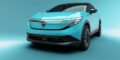
| Others | Nissan Leaf (third-generation) |

|
Disclaimer Note
We can not guarantee that the information on this page is 100% correct