- Home
- Electric Vehicles
- Compare
- Opel Mokka Electric vs BYD Seal U
Opel Mokka Electric vs BYD Seal U
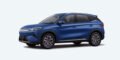
The Opel Mokka Electric and BYD Seal U sit in different size classes. The Mokka Electric is a compact SUV built for city driving and short daily trips. The Seal U is a larger mid-size SUV aimed at families and longer-distance use. Buyers choosing the Opel focus on compact size and efficiency. Buyers choosing the BYD want more space, power, and battery capacity.
Range and battery size create a clear gap. The Mokka Electric delivers around 400 km WLTP, while the Seal U reaches about 500 km depending on version. Charging also differs. The Mokka peaks at about 100 to 107 kW and reaches 10 to 80 percent in about 28 to 30 minutes. The Seal U supports up to about 140 kW but takes longer due to its larger battery, with 10 to 80 percent closer to 40 to 43 minutes.
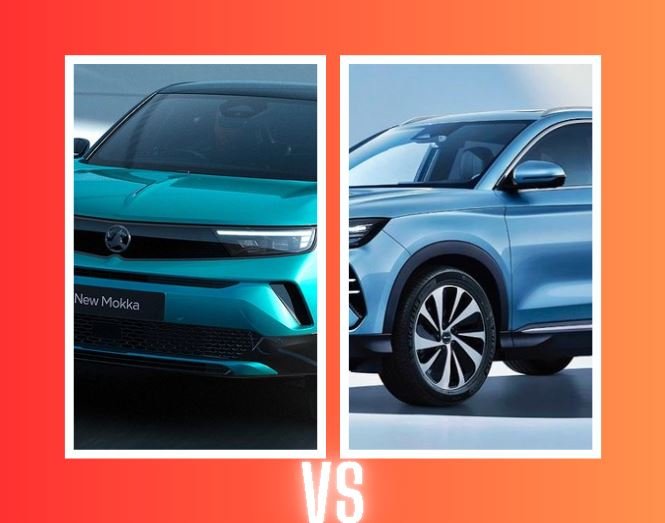
Pricing places the Mokka Electric in the lower compact EV bracket, while the Seal U sits higher due to size and battery capacity. The Mokka Electric is widely available across Europe. The Seal U is expanding across Europe and selected global markets as BYD grows its presence. This comparison helps you decide between a smaller, efficient SUV and a larger SUV with more range and interior space.
Within Opel lineup, the Mokka Electric sits alongside models like the Corsa Electric and Astra Electric, focused on compact mobility. Within BYD lineup, the Seal U sits with models like the Atto 3 and Seal sedan, targeting higher capacity EV buyers and family use.
The Mokka Electric offers compact size, better efficiency, and faster relative charging time, but has shorter range and less interior space; the Seal U offers longer range, more cabin space, and stronger power, but has slower full charging time and higher energy use.
QUICK VERDICT; Pick the Mokka Electric if you want a smaller SUV for city use with lower energy use. Pick the Seal U if you need more range, space, and a larger vehicle footprint.
Related EV Comparisons
- XPeng MONA M03 vs BYD Dolphin
- XPeng MONA M03 vs BYD Qin Plus EV
- BYD Atto 2 vs BYD Atto 3
- BYD Atto 2 vs BYD Dolphin
- Zeekr 7X vs BYD Sea Lion 7

MODEL
| Models |
BYD Seal U Comfort BYD Seal U Design |
LAUNCH
| Announced |
2024, October 23
2024, January 29 |
| Status |
Coming soon. Expected release 2024
Available to order. Released 2024, February |
| Country of origin | China |
| Base Price |
€ 36,750
€ 42,000 -BYD Seal U Comfort € 47,000 - BYD Seal U Design |
PERFORMANCE
| Power |
FWD 156 hp (115 kW)
FWD 218 hp (160 kW) |
| Torque |
192 lb-ft (260 Nm)
310 Nm (229 lb-ft) - BYD Seal U Comfort 330 Nm (243 lb-ft) - BYD Seal U Design |
| Acceleration The acceleration numbers are an easy way to compare car performance. We list either time from 0 to 100 km/h or time from 0 to 60mph, depending on which number(s) the manufacturers provide. The lower the acceleration time, the higher performance the car is. |
9 sec 0-62 mph
9.3 sec 0-62 mph - BYD Seal U Comfort 9.6 sec 0-62 mph - BYD Seal U Design |
| Max Speed |
93 mph (150 km/h)
109 mph (175 km/h) |
BATTERY
| Capacity |
50.8 kWh usable, 54 kWh total
71.8 kWh total - BYD Seal U Comfort 87 kWh total - BYD Seal U Design |
| Tech |
Liquid-cooled Li-ion (400V type)
Liquid-cooled Li-ion LFP battery (800V type) |
| Range |
261 mi WLTP
261 mi WLTP - BYD Seal U Comfort 311 mi WLTP - BYD Seal U Design |
| Consumption |
251 Wh/mi WLTP
320 Wh/mi WLTP - BYD Seal U Comfort 330 Wh/mi WLTP - BYD Seal U Design |
| Recuperation |
3 modes, with selector lever
Yes |
| Heat Pump | |
| AC Charging |
Type 2 11 kW
Type 2 11 kW, 0-100% in 7.5 hours - BYD Seal U Comfort Type 2 11 kW, 0-100% in 9.3 hours - BYD Seal U Design |
| DC Charging |
CCS 100 kW max, 20-80% in 26 min
CCS 115 kW, 30-80% in 27 min, 10-80% in 42 min -BYD Seal U Comfort CCS 140 kW, 30-80% in 28 min, 10-80% in 43 min - BYD Seal U Design |
| Others | Vehicle to load (V2L) - 3 kW max |
BODY
| Type | 5 door SUV, 5 seats 5 door SUV, 5 seats |
| Platform | PSA eCMP e-platform 3.0 |
| Dimensions | 163.4 x 70.5 x 60.4 in (4151 x 1790 x 1534 mm) 4785 x 1890 x 1668 mm (188.4 x 74.4 x 65.7 in) |
| Drag Co-Efficient | 0.32 Cd |
| Wheelbase | 100.7 in (2557 mm) 2765 mm (108.9 in) |
| Clearance |
150 mm (5.9 in) |
| Weight |
EU: 3560 lb unladen, 4442 lb gross
EU: 2020 kg unladen, 2430 kg gross - BYD Seal U Comfort EU: 2147 kg unladen, 2557 kg gross - BYD Seal U Design |
| Suspension |
Front MacPherson struts, torsion bar
Front MacPherson struts, rear multi-link |
| Wheels | R16, R17, R18 R19 |
| Trunk/Boot |
EU: 10.9 ft³, 37.4 ft³ max
EU: 552 l, 1440 l max |
| Frunk/Bonnet | No No |
| Towing |
No
EU: 750 kg unbraked, 1300 kg braked |
DISPLAYS
| Centre |
10" touchscreen
12.8" or 15.6" rotating touchscreen |
| Driver's Display |
10
12.3" |
| Head-Up | No Yes |
COMFORT
| Seats |
Heated front seats, massage (driver only)
Heated and ventilated front seats |
| Roof |
Panoramic glass roof
Panoramic glass roof, tilt & slide |
| Parking Aids |
Front and rear sensors, 180˚ reversing camera, semi-autonomous park assist
Front and rear sensors, 360 camera, reversing camera |
| Connectivity |
Wireless Android Auto and Apple CarPlay
Android Auto and Apple CarPlay |
SAFETY
| Airbags |
Side airbags, front and rear, including head airbag system
Front, side, rear, head airbag system, front seats knee airbags |
| Driving Aids |
Front/rear camera, front radar, Lane Keep Assist, Lane Departure Warning, camera/radar-based automatic emergency braking with pedestrian and bicycles recognition, Traffic Sign Recognition, Side Blind Spot Alert
4 radars, 1 camera, 12 sensors. Blind Spot Warning, High Beam Assist, Lane departure Warning, Emergency Lane Keep Assist, Front/Rear Cross Traffic Alert, Front/Rear Cross Traffic Brake, Traffic Sign Recognition, Automatic Emergency Braking System, Door Open Warning, Forward/Rear Collision Warning |
| Crash Tests |
NCAP 2023: 5 stars |
Note
| disclaimer | We can not guarantee that the information on this page is 100% correct |

|
Disclaimer Note
We can not guarantee that the information on this page is 100% correct