- Home
- Electric Vehicles
- Compare
- Xiaomi YU7 vs BYD Tang
Xiaomi YU7 vs BYD Tang
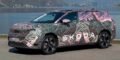
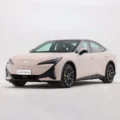
The Xiaomi YU7 and BYD Tang are midsize to large electric SUVs from Chinese brands. The YU7 targets tech-focused buyers who want long range and high performance. The Tang targets families who need three-row seating, practicality, and proven hardware.
Range differs in positioning. The YU7 leads with up to about 760 to 835 km CLTC depending on version, placing it near the top of the segment. The Tang EV delivers around 500 to 600 km CLTC depending on battery size, which fits daily and family use. Charging also differs. The YU7 uses an 800V platform with faster peak charging and shorter charge times. The Tang uses a lower voltage system with slower DC charging, focused on stability rather than peak speed.
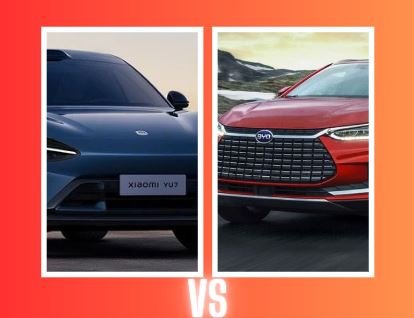
Price positioning shows overlap but with different value focus. The YU7 sits in the mid to upper range depending on trim, driven by performance and battery size. The Tang sits in a similar band but adds value through size and seating. Market availability differs. The Tang sells in multiple regions including China, Europe, and select global markets. The YU7 focuses on China first with gradual expansion. This comparison helps you decide between long-range performance and practical three-row usability.
Within Xiaomi’s lineup, the YU7 sits alongside the Xiaomi SU7 as the brand’s SUV offering. Within BYD’s lineup, the Tang sits above models like the BYD Atto 3 and below premium offerings like the BYD Han EV.
The YU7 delivers class-leading range, fast charging, and strong performance, but has limited global availability and no third-row option. The Tang offers three-row seating, wider availability, and proven reliability, but falls behind in charging speed and peak range.
Quick verdict; Pick YU7 for range and performance focus. Pick Tang for family space and broader availability.
Related EV Comparisons
- XPeng MONA M03 vs BYD Dolphin
- XPeng MONA M03 vs BYD Qin Plus EV
- Lynk & Co 02 vs BYD Sea Lion 7
- BYD Atto 2 vs BYD Atto 3
- BYD Atto 2 vs BYD Dolphin

MODEL
| Models |
Xiaomi YU7 Xiaomi YU7 Pro Xiaomi YU7 Max |
LAUNCH
| Announced |
2025, June 26
2024, January 26 |
| Status | Coming soon. Expected release 2025 Available to order. Released 2024, December |
| Country of origin | China China |
| Base Price |
€ 31,800 - Xiaomi YU7 € 35,100 - Xiaomi YU7 Pro € 41,400 - Xiaomi YU7 Max € 69,600 |
PERFORMANCE
| Power |
RWD 320 hp (235 kW) - Xiaomi YU7 AWD 496 hp (365 kW) - Xiaomi YU7 Pro AWD 690 hp (508 kW) - Xiaomi YU7 Max AWD 517 hp (380 kW) |
| Torque |
389 lb-ft (528 Nm) - Xiaomi YU7 690 Nm (509 lb-ft) - Xiaomi YU7 Pro 866 Nm (639 lb-ft) - Xiaomi YU7 Max 680 Nm (502 lb-ft) |
| Acceleration The acceleration numbers are an easy way to compare car performance. We list either time from 0 to 100 km/h or time from 0 to 60mph, depending on which number(s) the manufacturers provide. The lower the acceleration time, the higher performance the car is. |
5.9 sec 0-62 mph - Xiaomi YU7 4.3 sec 0-62 mph - Xiaomi YU7 Pro 4.9 sec 0-62 mph |
| Max Speed |
149 mph (240 km/h) - Xiaomi YU7 149 mph (240 km/h) - Xiaomi YU7 Pro 157 mph (253 km/h) - Xiaomi YU7 Max 112 mph (180 km/h) |
| transmission | Single-speed Single-speed |
BATTERY
| Capacity |
96.3 kWh total - Xiaomi YU7 96.3 kWh total - Xiaomi YU7 Pro 101.7 kWh total - Xiaomi YU7 Max 108 kWh total |
| Tech |
Li-ion LFP battery (800V type) - Xiaomi YU7 Li-ion LFP battery (800V type) - Xiaomi YU7 Pro Li-NMC battery (800V type) - Xiaomi YU7 Max Liquid-cooled Li-ion LFP battery |
| Range |
519 mi CLTC - Xiaomi YU7 478 mi CLTC - Xiaomi YU7 Pro 466 mi CLTC - Xiaomi YU7 Max 329 mi WLTP |
| Consumption | Consumption |
| Recuperation |
Yes
Yes |
| Heat Pump | |
| AC Charging |
Type 2
Type 2 11 kW |
| DC Charging |
CCS, 10-80% in 21 min - Xiaomi YU7 CCS, 10-80% in 21 min - Xiaomi YU7 Pro CCS, 10-80% in 12 min - Xiaomi YU7 Max CCS 190 kW |
| Others | Vehicle to load (V2L) |
BODY
| Type |
5 door, SUV, 5 seats
5 door SUV, 5/7 seats |
| Platform | e-platform 3.0 |
| Dimensions |
196.8 x 78.6 x 63.3 in (4999 x 1996 x 1608 mm)
4870 x 1950 x 1725 mm (191.7 x 76.8 x 67.9 in) |
| Drag Co-Efficient | 0.245 Cd 0.335 Cd |
| Wheelbase |
118.1 in (3000 mm)
2820 mm (111.0 in) |
| Clearance |
7.3 in (185 mm) - Xiaomi YU7 147 - 222 mm (5.8 - 8.7 in) - Xiaomi YU7 Pro 147 - 222 mm (5.8 - 8.7 in) - Xiaomi YU7 Max |
| Weight | EU: 2705 kg unladen, 3204 kg gross |
| Suspension |
Double-wishbone front, five-link rear, adaptive air suspension
Front MacPherson struts, rear multi-link, independent front and rear suspension |
| Wheels | R19, R20, R21 R20, R22 |
| Trunk/Boot |
EU: 23.9 ft³, 62.1 ft³ max
EU: 940 l, 1655 l max |
| Frunk/Bonnet | 5.0 ft³ No |
| Towing | Yes EU: 750 kg unbraked, 1500 kg braked |
DISPLAYS
| Centre |
16.1" touchscreen
12.8" rotating touchscreen |
| Driver's Display |
7.1"
12.3" |
| Head-Up | Yes No |
| Others |
6.7" rear center touchscreen, detachable 2x 12.5" rear passenger touchscreens, detachable |
COMFORT
| Seats |
Heated and ventilated front seats with massage, power recline heated rear seats
Heated and ventilated front seats |
| Roof |
Panoramic glass sunroof
Panoramic glass roof, tilt & slide |
| Parking Aids |
Front and rear sensors, 360 camera, reversing camera, Automatic Parking Assistance System
Front and rear sensors, 360 camera, reversing camera |
| Connectivity |
Android Auto and Apple CarPlay |
| Others | Three-zone climate control |
SAFETY
| Airbags |
7 airbags: front, side, rear, head airbag system
8 airbags: front, side, rear, 3rd row side, including head airbag system |
| Driving Aids |
1 LiDAR, 3 4D mmWave radars, 11 cameras, 12 sensors. Forward/Rear/Lateral Collision Prevention, Lane Centering, Lane Change Assist, Lane Departure Warning, Emergency braking with pedestrian and cyclist monitoring, High beam Assist, Blind Spot Alert, Door Open Warning
3 radars, 8 cameras, 12 sensors. Blind Spot Warning, High Beam Assist, Advanced Driver Assistance System, Lane departure Warning, Predictive Collision Warning, Automatic Emergency Braking, Traffic Sign Recognition |
| Self Driving | Autonomous driving system |
Note
| Others |
Armor-Cage Steel-Aluminum Hybrid Body (47610 Nm/degree torsional stiffness) Dedicated 4K video recording camera, rotatable |
| disclaimer | We can not guarantee that the information on this page is 100% correct |


|
Disclaimer Note
We can not guarantee that the information on this page is 100% correct