- Home
- Electric Vehicles
- Compare
- Xiaomi SU7 Ultra vs BYD Han
Xiaomi SU7 Ultra vs BYD Han
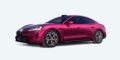
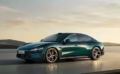
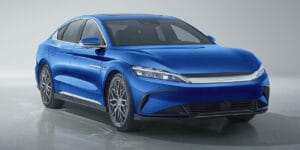
The Xiaomi SU7 Ultra and BYD Han are both battery‑electric four‑door cars aimed at buyers who want long‑range electric driving. The SU7 Ultra targets buyers who value extreme performance and advanced tech in a premium electric sedan. The Han targets buyers who want a mainstream luxury EV with strong range and established reliability in the full‑size segment.
Range and charging profiles differ between them. The SU7 Ultra claims around 630 km of range on the Chinese CLTC cycle, which translates to roughly 475 – 505 km under more realistic WLTP metrics, and supports very high peak DC charging rates that can take the battery from low to about 80 % in around 11 minutes under ideal conditions. The Han EV’s range falls in the 500‑– 550 km bracket depending on variant and testing cycle, and supports fast DC charging at typical industry speeds rather than the extreme peaks shown on paper for the SU7 Ultra.
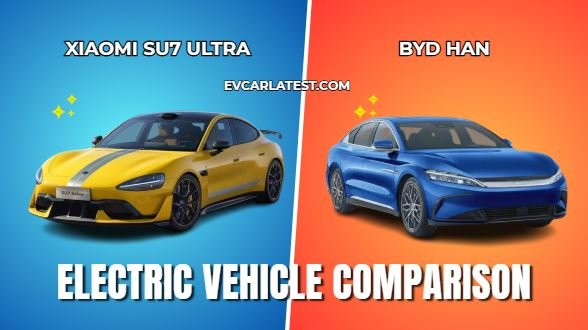
Price positioning sets them apart. The SU7 Ultra sits in the upper bracket of Chinese EV pricing for performance sedans with base pricing around the equivalent of mid‑$70k in China and expected premium positioning in export markets. The BYD Han has a broader set of trims and has been offered from lower price points in its segment, often under typical premium EV pricing and with broad availability in China and expanding markets. This comparison helps you choose between a high‑output performance‑oriented EV and a well‑rounded electric sedan with solid range and wider sales footprint.
Other EVs in each brand’s lineups broaden options. Xiaomi also sells other SU7 variants and will expand into SUVs and additional body styles as its EV range grows. BYD’s lineup includes other Dynasty Series EVs such as the BYD Seal and the newer Han L and upcoming larger models like the Han 9 and SUVs in the Tang family.
SU7 Ultra pros: very high peak power output; fast peak DC charging under ideal conditions; refined performance tech. SU7 Ultra cons: real‑world range lower than CLTC numbers; charging peak depends on compatible infrastructure. Han pros: established range around 500+ km; widely available variants and trims; solid mix of performance and comfort. Han cons: charging speeds not as high as 800 V tier competitors; top trims not as powerful as high‑end performance EVs.
QUICK VERDICT; Choose SU7 Ultra for performance focus and cutting‑edge charging capability. Choose BYD Han for balanced range, comfort, and broader variant choice.
Related EV Comparsions
- XPeng MONA M03 vs BYD Dolphin
- XPeng MONA M03 vs BYD Qin Plus EV
- BYD Atto 2 vs BYD Atto 3
- BYD Atto 2 vs BYD Dolphin
- Xiaomi YU7 vs Zeekr 7X
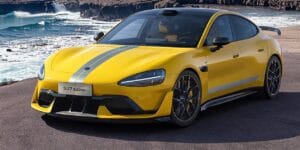
MODEL
LAUNCH
| Announced | 2024, October 29 2022, September 28 |
| Status | Coming soon. Expected release 2025, March Available to order. Released 2022, Q4 |
| Base Price | € 72,000 |
PERFORMANCE
| Power | AWD 1548 hp (1139 kW) AWD 509 hp (380 kW) |
| Torque | 516 lb-ft (700 Nm) |
| Acceleration The acceleration numbers are an easy way to compare car performance. We list either time from 0 to 100 km/h or time from 0 to 60mph, depending on which number(s) the manufacturers provide. The lower the acceleration time, the higher performance the car is. | 2 sec 0-62 mph 3.9 sec 0-62 mph |
| Max Speed | 217 mph (350 km/h) 112 mph (180 km/h) |
BATTERY
| Capacity | 93.7 kWh total 85.4 kWh total |
| Tech | Liquid-cooled (800V type) Liquid-cooled Li-ion LFP battery |
| Range | 391 mi CLTC 324 mi WLTP |
| Recuperation | Yes Yes |
| Heat Pump | |
| AC Charging |
Type 2
Type 2 7 kW Type 2 11 kW |
| DC Charging |
CCS, 10-80% in 11 min CCS 150 kW, 30-80% in 30 min Vehicle to load (V2L) |
BODY
| Type | 4 door sedan, 5 seats 4 door sedan, 5 seats |
| Platform | Modena e-platform 3.0 |
| Dimensions | 201.4 x 77.6 x 57.7 in (5115 x 1970 x 1465 mm) 196.7 x 75.2 x 58.9 in (4995 x 1910 x 1495 mm) |
| Drag Co-Efficient | 0.233 Cd |
| Wheelbase |
118.1 in (3000 mm) 115.0 in (2920 mm) |
| Clearance | 5.1 in (130 mm) |
| Weight | EU: 4960 lb unladen |
| Suspension | Adaptive Air suspension, dual-chamber air springs and high-performance continuous damping control Front MacPherson struts, rear multi-link |
| Wheels | R21 R19 |
| Trunk/Boot | EU: 14.5 ft³ |
| Frunk/Bonnet | No No |
| Towing | No |
DISPLAYS
| Centre | 16.1" touchscreen 15.6" rotating touchscreen |
| Driver's Display | 7.1 12.3" |
| Head-Up | Yes Yes, projector type |
COMFORT
| Seats | Heated and ventilated front seats Heated and ventilated front seats |
| Roof | No glass roof Panoramic glass roof |
| Parking Aids | Front and rear sensors, 360 camera, reversing camera, Automatic Parking Assistance System Front and rear sensors, 360 camera, reversing camera |
| Connectivity | Android Auto and Apple CarPlay |
| Others | Multifunctional pad in the rear seat armrest |
SAFETY
| Airbags | Front, side, rear, head airbag system 11 airbags: front, side, rear, including head airbag system |
| Driving Aids | 1 LiDAR, 3 mmWave radars, 11 cameras, 12 sensors. Forward/Rear/Lateral Collision Prevention, Lane Centering, Lane Change Assist, Lane Departure Warning, Emergency braking with pedestrian and cyclist monitoring, High beam Assist, Blind Spot Alert, Door Open Warning Multiple radars, 6 cameras, 12 sensors. Blind Spot Warning, High Beam Assist, Advanced Driver Assistance System, Lane departure Warning, Predictive Collision Warning, Automatic Emergency Braking, Traffic Sign Recognition |
| Self Driving | Autonomous driving system |
Note
| Others | For European market |
|
Disclaimer Note
We can not guarantee that the information on this page is 100% correct