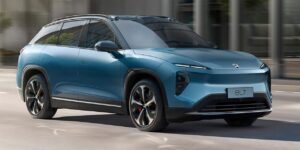
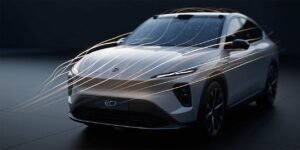
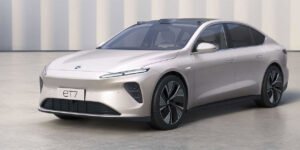
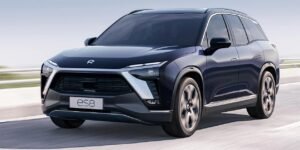
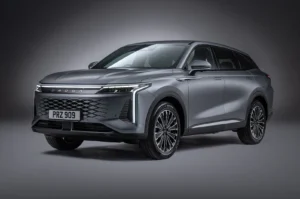
The Onvo L60 and the Tesla Model Y are both mid-size electric SUVs competing in the mainstream crossover segment. The L60 is built by Onvo, a sub-brand launched by NIO in 2024 specifically to target more affordable price points than NIO’s main lineup, with the L60 as its first model. The Model Y is Tesla’s globally best-selling electric vehicle and the dominant nameplate in China’s mid-size electric SUV segment. Both vehicles target the same core buyer in China — families and urban professionals looking for a five-seat electric crossover with strong range, modern software, and daily practicality at a mainstream rather than premium price point. The L60 is designed specifically to position itself as a direct alternative to the Model Y for buyers who want NIO’s battery swap capability without paying NIO’s full model pricing.

The Onvo L60 is rated at approximately 555 km CLTC on the standard 60 kWh battery and up to 730 km CLTC on the 85 kWh long range pack. Through NIO’s battery swap network, the L60 can also access a 100 kWh pack with claimed range beyond 800 km CLTC under that configuration. The Tesla Model Y Long Range RWD is rated at approximately 688 km CLTC in its China specification, with the all-wheel drive version sitting around 600 km CLTC. Range figures are competitive between the two on equivalent battery configurations. On charging, the L60 supports up to 240 kW DC fast charging on conventional infrastructure, matching the ceiling available to NIO’s main lineup. The Model Y charges at up to 250 kW on Tesla’s V3 Superchargers in China. Peak charging speeds are nearly identical. The decisive hardware difference is the L60’s battery swap compatibility through NIO’s Power Swap stations, which exchanges a depleted battery for a full one in approximately five minutes — a capability the Model Y does not offer in any configuration.
The Onvo L60 starts at approximately RMB 149,900 in China under the standard ownership model, with a battery-as-a-service subscription option that lowers the upfront vehicle price further by separating the battery cost into a monthly fee. The Tesla Model Y starts at around RMB 249,900 in China for the rear-wheel drive version, sitting RMB 100,000 above the L60 at entry level. That is a substantial gap for buyers operating within a defined budget ceiling. Both vehicles are sold in China through direct sales channels, with Tesla operating its own stores and Onvo building out its own separate retail and service network distinct from NIO’s existing infrastructure. The L60 is currently a China-only product with no confirmed international launch timeline. The Model Y is available globally. This page helps buyers in China decide whether the L60’s significantly lower price and battery swap access are sufficient reasons to choose it over the Model Y’s established software ecosystem, global brand presence, and Supercharger network.
Onvo is a sub-brand under NIO, whose main lineup includes the ET5, ET5 Touring, ET7, ES6, ES7, EC6, EL6, and EL8, with NIO positioning Onvo as an independent brand targeting a different buyer segment at lower price points. Tesla’s current lineup alongside the Model Y includes the Model 3, Model S, Model X, and Cybertruck. Outside these two brands, the primary rivals in this segment in China are the BYD Song Plus EV, which competes on price and BYD’s established domestic dealer network, and the Li Auto L6, which takes a different approach as an extended-range electric vehicle but targets a comparable family SUV buyer at a similar price point.
The Onvo L60’s three main strengths are its starting price which undercuts the Model Y by approximately RMB 100,000 at entry level, making it one of the most aggressive value propositions in the mid-size electric SUV segment in China, its battery swap compatibility through NIO’s Power Swap network which removes charging wait times entirely for buyers near swap station coverage, and its long range CLTC figures on the 85 kWh pack which are competitive with the Model Y’s China specification on equivalent configurations. Its two weaknesses are its brand newness as a first-generation product from a sub-brand with no established track record, which introduces more ownership uncertainty than a vehicle from a brand with years of production history, and its current China-only availability which limits its relevance entirely to domestic buyers with no cross-market utility. The Tesla Model Y’s three main strengths are its access to Tesla’s Supercharger network in China, which covers a wide geographic area and delivers consistent fast-charging reliability across long-distance routes, its mature over-the-air software platform refined over multiple years of production updates, and its established resale value in China, which has historically held better than many domestic competitors in the same price tier. Its two weaknesses are its starting price in China, which at RMB 249,900 places it significantly above the L60 for a comparable five-seat electric crossover, and its interior material quality, which remains a consistent point of criticism from Chinese buyers who find domestic rivals including the L60 offering more premium cabin finishes at lower price points.
Quick Verdict: The L60 makes a direct and deliberate challenge to the Model Y on price, and the gap is large enough that it cannot be dismissed. For buyers in China who charge close to NIO swap infrastructure and want the lowest possible entry cost into a capable mid-size electric SUV, the L60 presents a strong case. The Model Y holds its ground on software maturity, Supercharger network reach, and resale predictability — factors that matter more over a full ownership cycle than the purchase price alone. Buyers prioritising upfront cost and battery swap convenience should look at the L60 first. Buyers who drive long distances across China regularly and want the security of an established charging network and proven ownership record have a stronger case for the Model Y.
Related EV Comparisons
| Models |
RWD (single motor) AWD (dual motor) Tesla Model Y Standard Range+ RWD 60kWh Tesla Model Y Long Range AWD 82kWh Tesla Model Y Long Range RWD Tesla Model Y Long Range RWD USA Tesla Model Y Performance |
| Announced |
September 2024
2022, August - Tesla Model Y Standard Range+ RWD 60kWh 2021 - Tesla Model Y Long Range AWD 82kWh 2024, April 11 - Tesla Model Y Long Range RWD 2024, May 06 - Tesla Model Y Long Range RWD USA 2019 - Tesla Model Y Performance |
| Status |
In production (China)
Available. Released 2022, August - Tesla Model Y Standard Range+ RWD 60kWh Available to order. Released 2021 - Tesla Model Y Long Range AWD 82kWh Available to order. Released 2024, April - Tesla Model Y Long Range RWD Available to order. Released 2024, May - Tesla Model Y Long Range RWD USA Available to order. Released 2020 - Tesla Model Y Performance |
| Country of origin | United States |
| Base Price |
$29,000+ (with battery) / $21,200 (with BaaS)
€ 45,000 £ 45,000 - Tesla Model Y Standard Range+ RWD 60kWh $ 48,000 € 52,500 £ 53,000 - Tesla Model Y Long Range AWD 82kWh € 49,000 - Tesla Model Y Long Range RWD $ 45,000 - Tesla Model Y Long Range RWD USA $ 51,500 € 58,500 £ 60,000 - Tesla Model Y Performance |
| Power |
322 hp (RWD) 456 hp (AWD) RWD 347 hp (255 kW) - Tesla Model Y Standard Range+ RWD 60kWh AWD 514 hp (378 kW) - Tesla Model Y Long Range AWD 82kWh RWD 347 hp (255 kW) - Tesla Model Y Long Range RWD RWD - Tesla Model Y Long Range RWD USA AWD 534 hp (393 kW) - Tesla Model Y Performance |
| Torque |
305 Nm (RWD) 440 Nm (AWD) RWD 347 hp (255 kW) - Tesla Model Y Long Range RWD |
| Acceleration The acceleration numbers are an easy way to compare car performance. We list either time from 0 to 100 km/h or time from 0 to 60mph, depending on which number(s) the manufacturers provide. The lower the acceleration time, the higher performance the car is. |
(0–100 km/h): 5.9 s (0–100 km/h): 4.6 s 6.6 sec 0-60 mph (6.9 sec 0-62 mph) - Tesla Model Y Standard Range+ RWD 60kWh 4.8 sec 0-60 mph (5 sec 0-62 mph) - Tesla Model Y Long Range AWD 82kWh 5.9 sec 0-62 mph - Tesla Model Y Long Range RWD 6.5 sec 0-60 mph - Tesla Model Y Long Range RWD USA 3.5 sec 0-60 mph (3.7 sec 0-62 mph) - Tesla Model Y Performance |
| Max Speed |
200–203 km/h
135 mph (217 km/h) - Tesla Model Y Standard Range+ RWD 60kWh 135 mph (217 km/h) - Tesla Model Y Long Range AWD 82kWh 135 mph (217 km/h) - Tesla Model Y Long Range RWD 135 mph (217 km/h) - Tesla Model Y Long Range RWD USA 155 mph (250 km/h) - Tesla Model Y Performance |
| transmission | Single-speed |
| Capacity |
60.6 kWh (LFP) / 85 kWh (NMC)
60 kWh total - Tesla Model Y Standard Range+ RWD 60kWh 75 kWh usable, 82 kWh total - Tesla Model Y Long Range AWD 82kWh 78.1 kWh total - Tesla Model Y Long Range RWD 76 kWh usable, 82 kWh total - Tesla Model Y Performance |
| Tech |
900 V
Liquid-cooled Li-ion 360V LFP battery - Tesla Model Y Standard Range+ RWD 60kWh Liquid-cooled Li-ion 360V - Tesla Model Y Long Range AWD 82kWh Liquid-cooled Li-ion NCM (400V type) - Tesla Model Y Long Range RWD Liquid-cooled (400V type) - Tesla Model Y Long Range RWD USA Liquid-cooled Li-ion 360V - Tesla Model Y Performance |
| Range |
345 mi (RWD, 85 kWh) / 435 mi (RWD, 85 kWh)
260 mi EPA (283 mi WLTP) - Tesla Model Y Standard Range+ RWD 60kWh 351 mi WLTP (310 mi EPA) - Tesla Model Y Long Range AWD 82kWh 373 mi WLTP - Tesla Model Y Long Range RWD 320 mi EPA - Tesla Model Y Long Range RWD USA 319 mi WLTP (279 mi EPA) - Tesla Model Y Performance |
| Consumption |
12 kWh/100 km
253 Wh/mi WLTP - Tesla Model Y Standard Range+ RWD 60kWh 272 Wh/mi WLTP (280 Wh/mi EPA) - Tesla Model Y Long Range AWD 82kWh 249 Wh/mi WLTP - Tesla Model Y Long Range RWD 249 Wh/mi WLTP - Tesla Model Y Long Range RWD USA 275 Wh/mi WLTP (280 Wh/mi EPA) - Tesla Model Y Performance |
| Recuperation | 2 levels, via driving modes, no regen when pedal braking |
| Heat Pump | |
| AC Charging |
11 kW, ~8–9 h full charge
Type 2 7.7 kW - Tesla Model Y Standard Range+ RWD 60kWh Type 2 11 kW, 0-100% in 7 hours 31 min - Tesla Model Y Long Range AWD 82kWh Type 2 11 kW -Tesla Model Y Long Range RWD Type 2 11 kW - Tesla Model Y Long Range RWD USA Type 2 11 kW, 0-100% in 7 hours 31 min - Tesla Model Y Performance |
| DC Charging |
30–80% in ~24 min
Supercharger V3 250 kW max, 10-80% in 30 min CCS 250 kW max, 10-80% in 30 min |
| Others | Supports battery swapping, Battery-as-a-Service option |
| Type | 5-door SUV, 5 seats 5 door, SUV, 5/7 seats |
| Platform | NIO NT 3.0 |
| Dimensions | 4,828 × 1,930 × 1,616 mm 4750 x 1920 x 1624 mm (187.0 x 75.6 x 63.9 in) |
| Drag Co-Efficient | 0.229 0.23 Cd |
| Wheelbase | 2,950 mm 2890 mm (113.8 in) |
| Clearance | 175 mm 167 mm (6.6 in) |
| Weight |
1,885–1,955 kg
EU: 1909 kg unladen - Tesla Model Y Standard Range+ RWD 60kWh EU: 2056 kg unladen - Tesla Model Y Long Range AWD 82kWh EU: 1959 kg unladen - Tesla Model Y Long Range RWD EU: 2072 kg unladen, 2591 kg gross - Tesla Model Y Performance |
| Suspension | Variable damping (FSD) in higher trims Front double wishbone-type coil spring, rear multi-link |
| Wheels | Alloy, 19-21 inch (varies by trim) R19, R20, R21 |
| Trunk/Boot | 495 L (up to 1,505 L with seats folded) EU: 854 l, 2041 l max |
| Frunk/Bonnet | 117 l |
| Towing | EU: 750 kg unbraked, 1600 kg braked |
| Centre | 17.2″ touchscreen (3K resolution) 15" touchscreeen |
| Driver's Display | uses Head-Up Display No |
| Head-Up | 13″ No |
| Others | Small display for passengers (in some trims) |
| Seats | 5, heated/ventilated, leather options Heated front seats, heated rear seats, heated third row seats |
| Roof | Panoramic glass roof All-glass roof |
| Parking Aids | 360° camera, sensors, auto parking (trim-dependent) 6 front and rear sensors, reversing camera, Parking Assist |
| Connectivity | USB-C ports, wireless charging, SkyOS infotainment |
| Others | Ambient lighting, optional 52 L under-floor fridge |
| Airbags | Front, side, curtain 8 airbags: front, side, rear, head airbag system, front seats knee airbags |
| Driving Aids | ADAS with NVIDIA Orin chip 3 front, 2 side, and 3 rear cameras, 6 front and 6 rear sensors (up to 250m object detection). Automatic Emergency Braking, Dynamic Brake Lights, Lane Assist, Collision Avoidance Assist, Speed Assist, Lane Departure Avoidance, Traffic Light, and Stop Sign Control |
| Self Driving | Advanced assist, not full autonomy Autopilot with full Self-Driving capability |
| Crash Tests | NCAP 2022: 5 stars, NHTSA 2020-2022: 5 stars |
| Others |
Available with Battery-as-a-Service (lower upfront price, monthly battery rental) Integrated with Nio battery swap network |
| disclaimer | We can not guarantee that the information on this page is 100% correct |
|
We can not guarantee that the information on this page is 100% correct