The short answer: Xpeng won 2025 on the stock market, NIO is winning on momentum heading into 2026, and Li Auto is fighting to get back in the race.
China’s EV war is the most intense automotive battle on the planet right now. NIO, Xpeng, and Li Auto — collectively nicknamed “Wei Xia Li” in China — are three homegrown giants spending billions to out-smart, out-sell, and out-tech each other. Xpeng’s stock surged 80% in 2025 while Li Auto’s fell 28%. NIO quietly delivered 326,000 vehicles in 2025, a 47% jump year-over-year, and just crossed 1 million cumulative deliveries in early 2026. The race is tight, the stakes are enormous, and the answer depends on what metric matters most to you. Read on — we’ve got the full breakdown.
⚡ Quick Summary Box — Key Takeaways
| Metric | NIO | Xpeng | Li Auto |
|---|---|---|---|
| 2025 Total Deliveries | 326,028 units (+46.9% YoY) | ~429,445 units (+155% YoY Q1–Q3 pace) | ~406,300 units (−19% YoY) |
| Stock Performance (2025) | +~25% | +80% | −28% |
| Key Strength | Premium brand + battery swap ecosystem | AI self-driving tech + aggressive pricing | Extended-range (EREV) SUV dominance |
| Main Weakness | Still loss-making; brand dilution risk | Volatile pricing; sedan-heavy lineup | Recall issues; slowest pivot to BEV |
| 2026 Outlook | Strong — multi-brand strategy paying off | Risky — needs SUV lineup to hit targets | Rebuilding — Li i6 and Livis are pivotal |
5 Things to Know Right Now:
- 🏆 Xpeng delivered the highest sales volume in 2025 and saw the biggest stock gains
- 🔋 NIO crossed 1 million cumulative deliveries in Q1 2026 — a major milestone
- 📉 Li Auto missed its 750,000-unit target badly, delivering only ~406,000 units
- 🤖 All three brands launched their own in-house AI chips in 2025
- 💰 China’s government extended EV trade-in subsidies (up to ¥20,000) through 2026
The Battlefield: Why This Rivalry Matters
China is the world’s largest EV market by a wide margin. In 2025, the “Wei Xia Li” trio sat right at the intersection of premium tech and mass-market ambition — each trying to become the Tesla (or better yet, the BMW) of Chinese electric vehicles. But BBA (BMW, Mercedes, Audi) sales in China collapsed back to 2017 levels, and domestic brands have been ruthlessly filling that gap.
The question isn’t just who sold the most cars. It’s who has the strategy, the tech, and the cash runway to still be standing in five years. Let’s look at each brand in detail.
NIO: The Premium Comeback Kid
Brand Strategy & Deliveries
NIO spent years being written off as too expensive and too loss-heavy. In 2025, it finally started proving the doubters wrong. Full-year deliveries hit 326,028 vehicles, up nearly 47% year-over-year, with four consecutive quarters of sequential delivery growth. By Q1 2026, NIO crossed 1,081,057 cumulative deliveries — a symbolic and commercial milestone.
The secret weapon? A multi-brand strategy. NIO now operates three sub-brands:
- NIO — premium flagship vehicles priced mostly above ¥300,000
- ONVO — family-oriented EVs (e.g., the L60 and L90) in the ¥150,000–¥280,000 range
- FIREFLY — compact, high-end small EVs
In Q4 2025 alone, NIO delivered 124,807 vehicles — a new quarterly record representing 71.7% year-over-year growth.
Flagship Model: NIO All-New ES8
The third-generation ES8 became one of the most talked-about launches of 2025. Starting at ¥416,800 (with battery), it hit 100,000 cumulative deliveries within just 215 days of launch — the fastest delivery ramp for any battery-electric vehicle priced above ¥400,000 in China’s history. Under NIO’s Battery-as-a-Service (BaaS) subscription plan, the effective entry price drops to ¥179,800, which dramatically expands the addressable market.
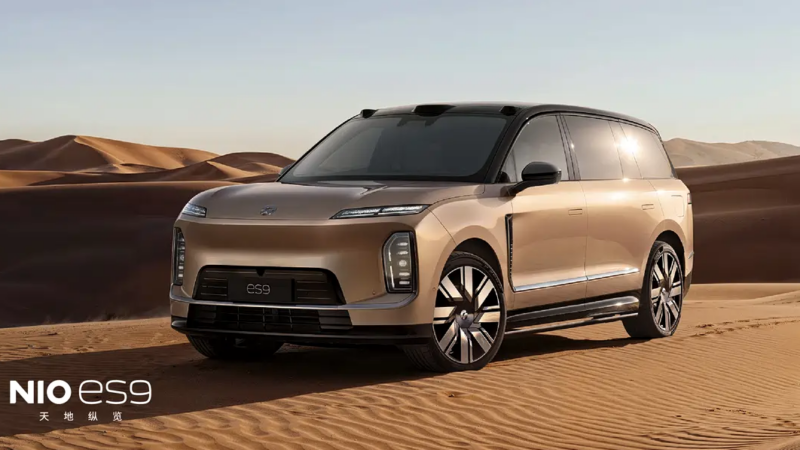
NIO’s ES8 held the No. 1 position in China’s large SUV segment — across all energy types — for three consecutive months, and the flagship ES9 commenced pre-sales in April 2026.
NIO’s Tech Edge: Battery Swap + Shenji Chip
NIO’s most defensible moat is its battery swap infrastructure — a network of stations where you can swap a depleted battery for a fully charged one in under 5 minutes. No other mainstream competitor has replicated this at scale.
On the AI side, NIO’s proprietary Shenji chip offers industry-leading memory bandwidth of 546 GB/s via a 512-bit LPDDR5X interface — on par with NVIDIA’s flagship Thor-X — giving its vehicles serious on-board AI computing power for next-generation autonomous driving features.
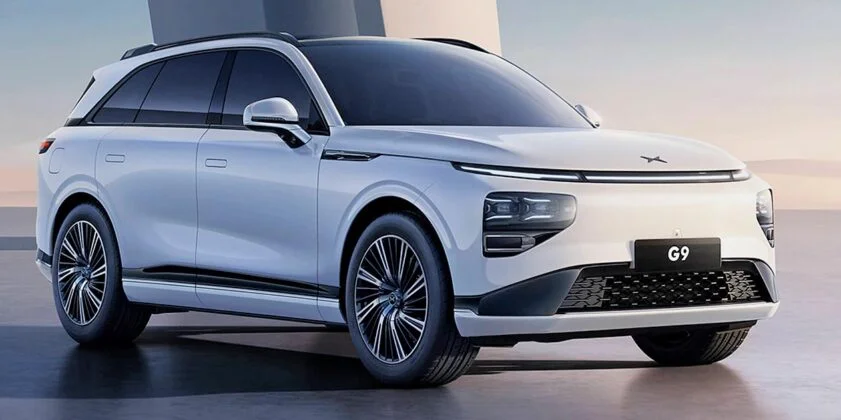
Xpeng: The Tech Disruptor With Momentum
Brand Strategy & Deliveries
Xpeng was the undisputed winner of 2025 by most financial metrics. Its stock climbed ~80% for the year, and its delivery growth was staggering — Q3 2025 alone saw 116,007 deliveries, up 149% year-over-year. Full-year deliveries reached approximately 429,445 units, making Xpeng the highest-volume player of the three.
Much of this growth was driven by the MONA M03, a mass-market sedan priced from just ¥110,000–¥140,000, which brought Xpeng into a price segment it had never previously contested. The strategy worked brilliantly in 2025, but it came at a cost: Xpeng’s average selling price (ASP) dropped from ¥204,200 to ¥159,200 — a cumulative 22% decline. Volume up, margins under pressure.
2026 Challenge: Pivoting to SUVs
Xpeng’s Achilles’ heel has been its sedan-heavy lineup. In a Chinese market where consumers strongly prefer SUVs, being known as a sedan brand is a strategic liability. The company has a full SUV push planned for 2026, including:
- GX — New flagship large SUV, launched in May 2026, starting from ¥179,800 (effective price ¥279,800 with battery). Directly competes with NIO’s ES8 and Li Auto’s i8.
- G02 — Full-size flagship SUV (in development)
- D02/D03 — Mid-size and compact SUVs from the MONA series
Xpeng is targeting 550,000–600,000 deliveries for full-year 2026. To hit even the low end, it needs to average ~57,000 units/month after a slow start (only 93,693 deliveries in the first four months of 2026, well behind last year’s pace).
Xpeng’s Tech Edge: XNGP & Turing Chip
Xpeng’s biggest differentiator has always been its XNGP full-scenario intelligent assisted driving system — considered by many analysts to be China’s most capable end-to-end neural network driving system currently in mass production. The in-house Turing AI chip, debuted in the G7, aligns with mainstream computing power trends and supports the next generation of ADAS features.
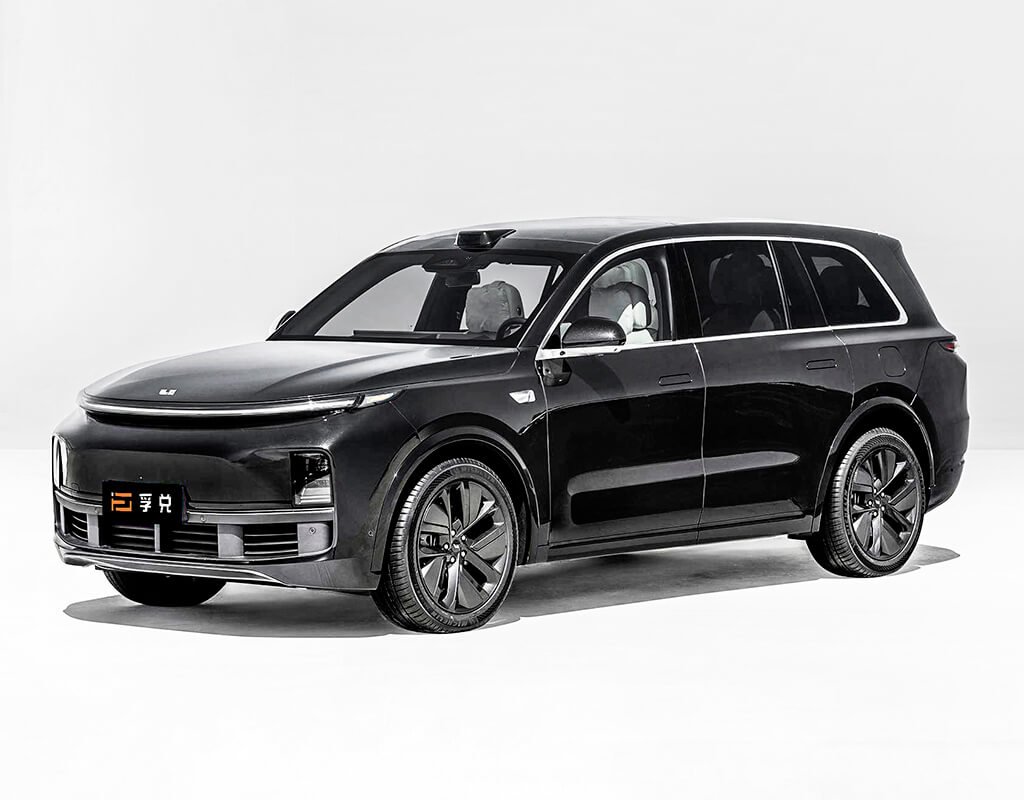
Li Auto: The EREV Giant Under Pressure
Brand Strategy & Deliveries
Li Auto had the most painful 2025 of the three. The company entered the year with an ambitious target of 750,000 deliveries — nearly the combined total of NIO and Xpeng at the time. It ended the year with just ~406,300 deliveries, down nearly 19% year-over-year and a massive miss on guidance.
What went wrong? Li Auto’s core business is Extended-Range Electric Vehicles (EREVs) — SUVs with a petrol generator that charges the battery on the go, eliminating range anxiety. This was a brilliant strategy from 2022 to 2024, when charging infrastructure was less mature. But as China’s charging network expanded and pure BEV range improved, the EREV advantage narrowed. Meanwhile, competitors like Huawei’s AITO and Geely’s Zeekr made serious inroads into Li Auto’s three-row family SUV segment.
Battery recalls and weak demand for older L-series models compounded the problem, resulting in Li Auto recording its sixth consecutive monthly delivery decline in November 2025.
Recovery Plan: i6, Livis, and the BEV Pivot
Li Auto’s recovery strategy is clear — accelerate the pivot to battery-electric vehicles and refresh its flagship lineup. Key moves:
- Li i6 — A new pure BEV compact SUV showing strong early growth
- L9 Livis — A heavily refreshed version of its flagship three-row SUV, featuring Li Auto’s self-developed Mach 100 chip (5nm, 1,280 TOPS per unit, 2,560 TOPS in the dual configuration), which actually surpasses both Xpeng’s Turing chip and Nvidia’s Thor-U chip in raw compute
The Livis is a genuine technological statement. Whether it translates into sales recovery in 2026 remains the critical question.
Head-to-Head Comparison Table
| Category | NIO (ES8 Flagship) | Xpeng (GX Flagship) | Li Auto (L9 Livis) |
|---|---|---|---|
| Drivetrain | Pure BEV | Pure BEV | Extended-Range (EREV) |
| Starting Price | ¥416,800 (incl. battery) / ¥179,800 (BaaS) | ¥179,800–¥279,800 | ~¥339,000+ |
| AI Chip | Shenji (546 GB/s BW) | Turing (Thor-U class) | Mach 100 (2,560 TOPS dual) |
| ADAS System | NIO Aquila / NIO Adam | XNGP End-to-End | NOA (Mach 100 powered) |
| Unique Feature | Battery Swap Network | Mass-market MONA lineup | Mobile Home cockpit philosophy |
| 2025 Deliveries | 326,028 (+47% YoY) | ~429,445 (+218% YTD Q1–Q3) | ~406,300 (−19% YoY) |
| Brand Tier | Ultra-Premium | Mass-to-Premium | Premium Family |
| Biggest Risk | Ongoing losses; brand dilution | ASP decline; slow 2026 start | Product-market fit shift from EREV |
| 2026 Target | Multi-brand volume expansion | 550,000–600,000 units | Recovery & BEV transition |
The Price War Reality
All three companies are caught in a brutal pricing environment. NIO slashed the ES8’s price by over ¥80,000–¥200,000 compared to previous generations. Xpeng’s ASP dropped 22%. Li Auto is fighting to hold margins as EREV rivals proliferate.
China’s government has helped buffer demand with trade-in subsidies extended through 2026 — up to ¥20,000 for consumers scrapping old vehicles to buy qualifying new energy vehicles. But subsidies can only do so much when three well-funded companies are all cutting prices simultaneously. The winner will ultimately be whoever builds the stronger brand premium and reduces dependency on discounts.
Bottom Line Verdict
Xpeng won the numbers game in 2025, but NIO is building the most durable long-term position. NIO’s multi-brand architecture, battery swap moat, and premium brand equity give it the best foundation for sustained profitability once the price war eventually cools. Xpeng is exciting and technologically aggressive but needs its 2026 SUV pivot to succeed urgently — its slow start to the year is a real concern. Li Auto, meanwhile, is a comeback story in the making: the Mach 100 chip and the Livis are genuinely impressive, but the company has a painful 2025 to recover from and a fundamental question to answer about whether EREV still has a future as China’s charging infrastructure matures.
If you’re buying stock: Xpeng has the highest growth momentum. If you’re buying a car: NIO offers the most premium experience; Xpeng offers the best tech-per-yuan; Li Auto is the family road-tripper.
Related EV Update
- Top EV Brands in the World 2026: Ranked by Sales
- Best Chinese EV Under $25,000 for African Import: 2026 Shortlist
- Electric Bike vs Electric Scooter: Which Is Right for You?
- Electric Car First-Time Buyer Guide (2026)
- Plug-in Hybrid vs Full Electric Car: Which to Buy in 2026?