




BYD Seal Design
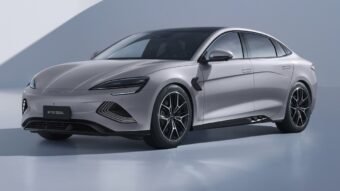
- Power Type: Battery electric (BEV)
- Body Type: Sedan
- PowerTrain: RWD
- Power Output: 308 hp
PROS
- Very good value: big 82.5 kWh battery and strong standard equipment at a low price
- Wide choice from a relaxed single-motor car to a 3.8 s all-wheel-drive car
- Safe and long-lasting: 5-star Euro NCAP, LFP Blade battery and a long warranty
CONS
- Charging is capped at 150 kW, which is slower than some rivals
- Firm ride on rough roads, and the regen controls are fiddly
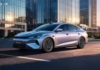
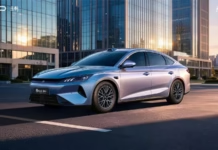
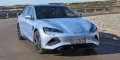
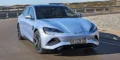
The BYD Seal Design is the entry trim of BYD’s electric executive saloon: four doors, rear-wheel drive, one rear motor, about 4.8 m long, with a 485-litre boot and a 72-litre front boot. It’s BYD’s flagship in the UK, where it launched in 2023 as the third model after the Atto 3 and Dolphin. The 2026 update added boot space, a driver monitoring system, new wheels and new colours. Design already comes with a panoramic roof, a 12-speaker sound system, a 15.6-inch screen and two wireless phone chargers.
The battery is an LFP Blade pack with 82.5 kWh usable (about 84 kWh gross), rated at 354 miles WLTP combined. The motor makes 308 bhp, and 0-62 mph takes about 5.9 seconds. AC charging is 11 kW three-phase, roughly 9 hours from empty to full. DC peaks at 150 kW, and 10-80% takes 36 to 37 minutes depending on the source. The sources agree on these numbers for the Design. Wikipedia gives 110 to 150 kW DC for the Seal range as a whole, so 150 kW applies to this battery only.
The Design costs £45,730 in the UK, and the all-wheel-drive Excellence costs £48,730. I didn’t check other markets. It suits someone who covers a lot of miles, perhaps in a company car, and wants range and standard kit more than fast charging. In BYD’s range it sits above the Atto 3, which uses the same e-Platform 3.0, and overlaps with the Seal U SUV (87 kWh, 311 miles WLTP). The Hyundai Ioniq 6 (220 kW) and BMW i4 (200 kW) both charge faster. The closest direct match is the rear-wheel-drive Tesla Model 3, which tops out at 170 kW. The Car Expert rates the Seal A (74%). Car’s Keith Adams thought the i4 drove better and the Ioniq 6 rode more comfortably. Evo’s Sam Jenkins warned that the driver aids could be a sticking point.
BYD Seal Design Images
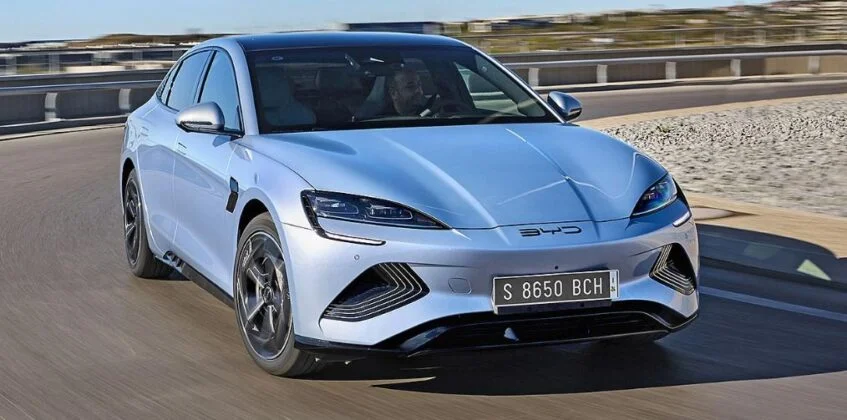
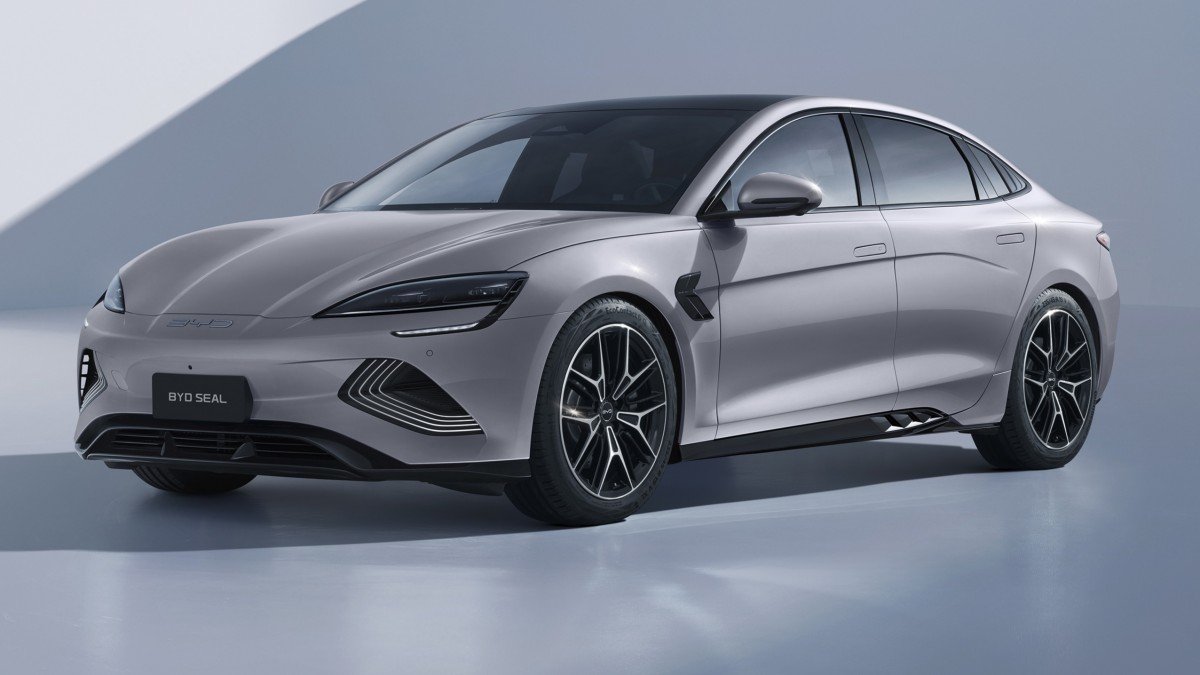
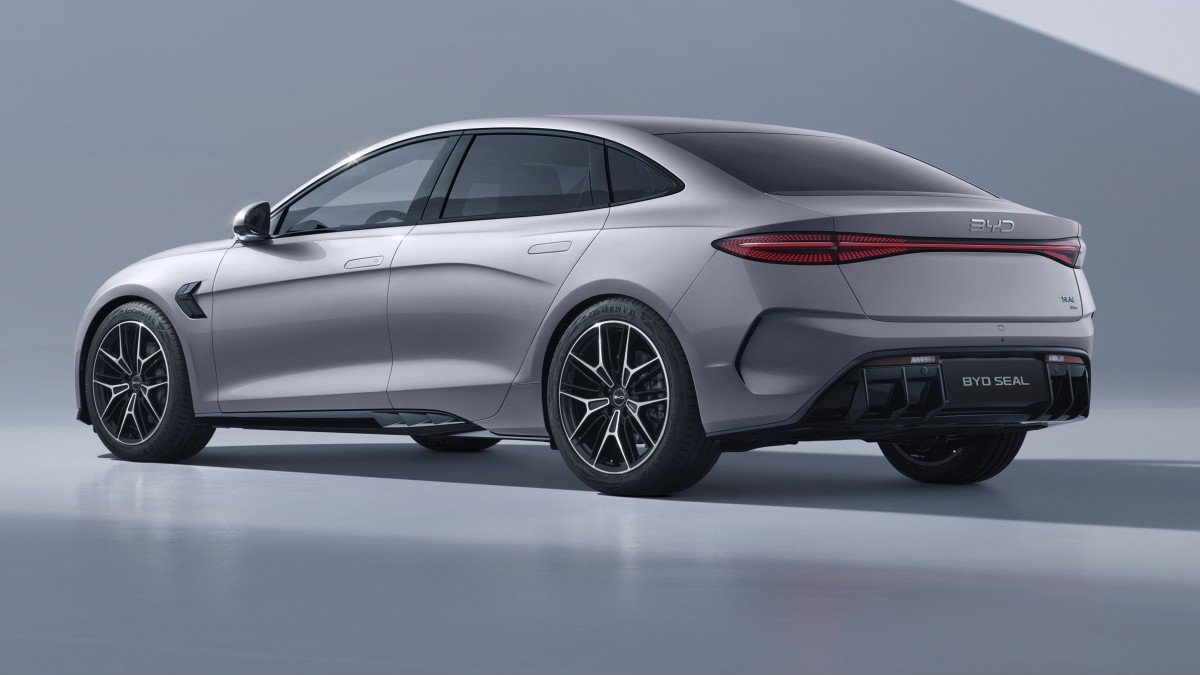
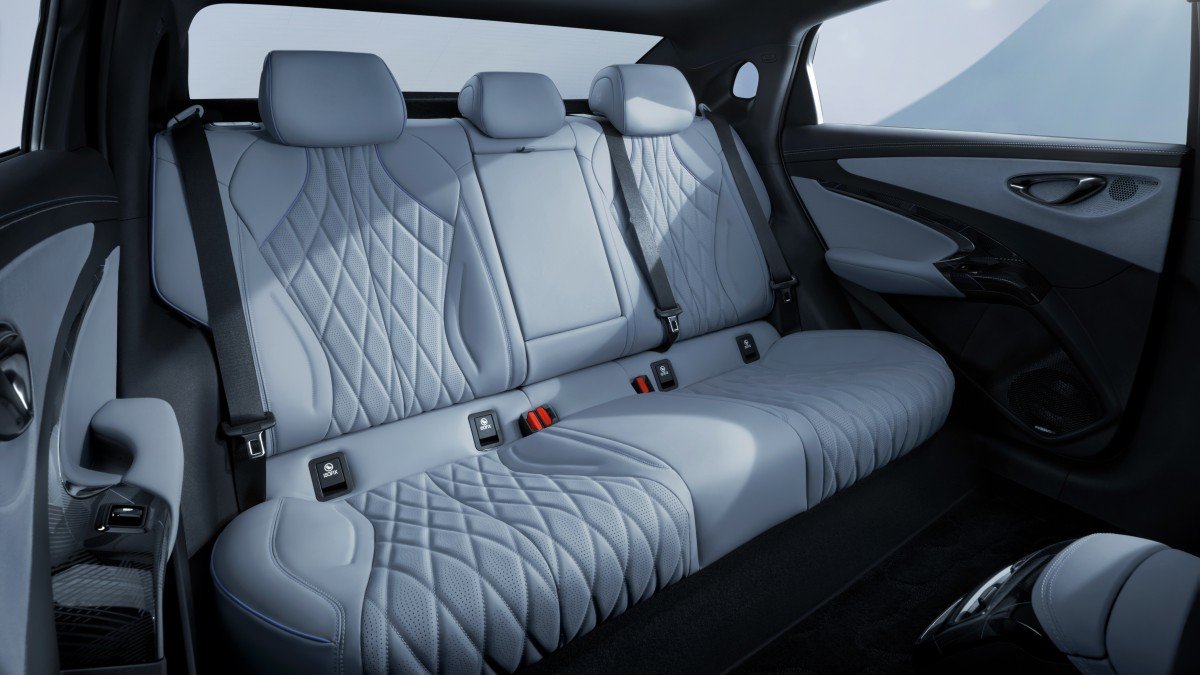
Full Vehicle Specifications
MODEL
| Full Name | BYD Seal Design |
| Segment | D-segment |
| Class A collection of items, goods, or services grouped together by common attributes | Mid-size electric sedan |
| Warranty | 6 yr / 93,750 mi; battery 8 yr / 155,350 mi |
PRICE & AVAILABILITY
| Base Price | £45,730 |
| Availability Status | On sale (2026 model year) |
POWER
| Fuel Type A fuel type is the specific source of energy or chemical substance used to power a vehicle, machinery, or heating system | Battery electric (BEV) |
| Engine An engine is a machine that converts energy (such as heat, fuel, or steam) into mechanical force, power, and motion | None |
| Generator generator is a device, machine, or person that produces or creates something, most commonly a machine that converts mechanical energy into electrical energy. | None |
| Battery Capacity | 82.5 kWh BYD Blade (LFP) |
| Range | 354 mi WLTP |
| DC Charging | 150 kW |
| Charging Time | 10–80% in about 37 min |
| AC Charging | 11 kW (about 8.6 h full) |
| Energy Consumption | About 13 kWh/100 km (CLTC) |
| Regen Braking | Adjustable levels |
PERFORMANCE
| Power Output | 308 bhp |
| 0–100 km/h The acceleration numbers are an easy way to compare car performance. We list either time from 0 to 100 km/h or time from 0 to 60mph, depending on which number(s) the manufacturers provide. The lower the acceleration time, the higher performance the car is. | 5.9 s |
| Motor Configuration | Single, rear-wheel drive |
| Torque | 360 Nm |
| Top Speed | 180 km/h (112 mph) |
BODY & DIMENSIONS
| Dimensions | 4,800 × 1,875 × 1,460 mm, wheelbase 2,920 mm |
| Platform | e-Platform 3.0 |
| Suspensions | Double wishbone front, 5-link rear |
| Boot Capacity | 485 L / 72 L |
| Kerb Weight | About 2,055 kg |
| Ground Clearance | About 145 mm |
| Bonnet Capacity | Not confirmed |
| Sunroof | Panoramic glass roof |
| Wheels | 19" |
| Towing | Not confirmed |
SAFETY & DRIVER ASSISTANCE
| Airbags | Not confirmed |
| ADAS Features | Adaptive cruise, emergency braking, lane keep assist, blind-spot monitoring, rear cross-traffic alert, 360° camera |
| Autonomous Driving Level | Level 2 |
| Crash Test Ratings | 5-star Euro NCAP (2023) |
| Over-the-Air Updates | Not confirmed |
COMFORT & SEATING
| Seating Capacity | 5 |
| Seat Material | Synthetic leather |
DISPLAYS & CONNECTIVITY
| Centre Screen | 15.6" rotating touchscreen |
| Mirror Link | Apple CarPlay / Android Auto |
| Driver's Display | 10.25" digital |
| Head-Up Display | No |
TECHNOLOGY
| Vehicle-to-Load | Yes |
| Vehicle-to-Grid | No |
ADDITIONAL SPECS
| Headlight Type | LED |
| Navigation System | Not confirmed |
| Remote Parking | Not confirmed |
Note
User Reviews
Disclaimer Note
Specifications sourced from manufacturer data and may reflect WLTP, CLTC, or EPA test conditions. Import prices in your local are estimates based on grey-market landing costs and exclude duties, clearing fees, and local taxes. Figures are subject to change without notice. Always verify with your local importer before purchase. We can not guarantee that the information on this page is 100% correct
More BYD Electric Vehicles


New Arrivals
-
 BYD Seal Premium
$58,000.00
-
 BYD Seal Dynamic
$46,000.00
-
BYD Seal Excellence
$49,000.00
-
BYD Dolphin Design
$36,000.00
-
BYD Dolphin Comfort
$35,000.00
-
BYD Dolphin Boost
$30,000.00
-
BYD Dolphin Active
$28,000.00
-
BYD Dolphin Extended Range
$35,000.00
-
BYD Dolphin Standard Range
$30,000.00
-
BYD Dolphin G DM-i
$25,000.00
-
 BYD Seagull (Philippines)
$19,000.00
-
 BYD Seagull EV400
$23,999.00
Popular Post