Are Electric Keke NAPEP Tricycles Coming to Nigeria in 2026?
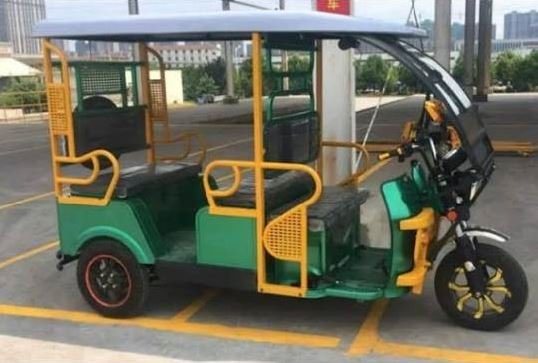
They’re already here. Electric Keke NAPEP is no longer a promise — it is on Lagos roads right now, and Borno State just distributed 500 units to riders in Maiduguri. Bolt launched an e-tricycle pilot with SGX Mobility in May 2025, SWAP has been converting petrol Kekes to electric since 2024, and the federal government inaugurated Borno’s fleet in December 2025. The short answer: electric tricycles are not “coming” to Nigeria — they arrived quietly, without much fanfare, and the rollout is accelerating in 2026.
Below you’ll find who is selling them, what they cost, how far they go on a charge, and whether it makes financial sense for a Keke rider to make the switch today.
Quick Summary: What You Need to Know
| Key Point | Detail |
|---|---|
| Already deployed | Bolt + SGX Mobility: 25 units in Lagos (May 2025); target 1,000 units |
| Government rollout | Borno State: 500 electric Kekes distributed, April 2026 |
| Price range | ₦2.85M–₦3.2M (commercial units); subsidised units lower |
| Range per charge | 65–80 km (commercial models) |
| Daily energy cost | ≈₦6,500 for battery swap vs ≈₦13,000+ for petrol |
| Ownership model | Lease-to-own available; 18–24 months; ₦208,000 down payment |
Why Electric Keke NAPEP Makes Sense Right Now
Nigeria’s petrol subsidy removal in 2023 didn’t just raise pump prices — it directly cut into Keke riders’ take-home. A driver running a petrol Keke in Lagos was spending between ₦12,000 and ₦15,000 daily on fuel by late 2024. That number ate a large chunk of gross earnings before the rider paid their “agba” (owner’s levy) or saved anything.
CNG conversions became a popular workaround, but access to refuelling infrastructure is inconsistent outside of Lagos and Abuja, and conversion costs are not small.
Electric changes the maths. SWAP, which runs a battery-as-a-service model, says riders using its conversion save up to ₦100,000 per month. That figure sounds dramatic, but the daily arithmetic supports it: a battery swap costs roughly ₦6,500, which is about half what the same rider would spend on petrol. Over a full month, that gap adds up to real money.
Who Is Selling Electric Keke in Nigeria Right Now?
Bolt + SGX Mobility (Lagos)
Bolt’s e-tricycle pilot is the most commercially structured programme currently running in Nigeria. The tricycles are designed and assembled by SGX Mobility, a Lagos-based company, and are fully integrated into the Bolt app.
How it works:
- Riders make a ₦208,000 down payment
- The full vehicle costs ₦3.2 million
- Repayment runs over 18–24 months at ₦32,000/week or ₦156,000/month
- After full repayment, the rider owns the vehicle outright
The battery swap model is central to this. Instead of waiting hours for a charge, drivers exchange their battery at a swap station in Surulere, Lagos. The swap costs ₦6,500 per day. Bolt plans to add more stations across Lagos as it scales toward 1,000 units.
Top speed is 80 km/h. Run time on a full charge is up to 12 hours — enough for a full commercial day.
SWAP (Battery-as-a-Service)
SWAP takes a different approach: it converts existing petrol Kekes to electric rather than replacing them entirely. There’s no upfront cost for the conversion itself. Riders pay per battery swap, which is structured to be cheaper than the equivalent petrol spend. SWAP plans to expand its network of swap stations across Nigeria using a franchise model, and it has also partnered with fintechs to handle payments.
For riders who already own a Keke, this is the most accessible entry point into electric — no purchase needed.
Borno State Government Programme
In December 2025, President Tinubu formally inaugurated a fleet of 500 electric Keke NAPEP units for Borno State, distributed formally to riders in April 2026 under Governor Zulum’s ₦1 billion transport empowerment programme.
Each tricycle covers up to 65 km per charge. The government subsidises 30% of the cost, with the balance spread across flexible payment terms managed by the implementing company. Beneficiaries were identified and selected by their own Keke associations, not by government officials.
This model — government procurement, subsidised distribution, rider associations managing allocation — could become the template for other states.
Grey-Market and Independent Sellers
On Jiji.ng and other platforms, electric tricycles appear from various importers. The Tula Motto (8-seater, full electric, 3,000W motor, lithium battery) is one of the more frequently listed units. These range from ₦2.85 million for cargo variants to slightly more for passenger configurations. Warranty and after-sales support are inconsistent across these channels — buyer caution applies.
Specs Comparison Table: Electric vs Petrol Keke NAPEP (2026)
| Spec | Bolt/SGX Electric Keke | Borno State E-Keke | Standard Petrol Keke (TVS King Deluxe) |
|---|---|---|---|
| Powertrain | Electric motor | Electric motor | 200cc petrol engine |
| Top Speed | 80 km/h | Not disclosed | 60–70 km/h |
| Range/Tank | 12 hrs on full charge | 65 km per charge | ~200 km per tank |
| Fuel/Energy Cost | ₦6,500/day (swap) | Subsidised | ₦12,000–₦15,000/day |
| Purchase Price | ₦3.2 million | Subsidised (30% off) | ₦2.5–₦3.5 million |
| Ownership Model | Lease-to-own (18–24 mo) | Instalment (flexible) | Outright or hire-purchase |
| Maintenance | Low (fewer moving parts) | Low | Moderate–high |
| Infrastructure needed | Battery swap station | Battery/charging point | Petrol station |
| Available in Lagos | Yes (Bolt app) | No | Yes (everywhere) |
| Available in Maiduguri | No | Yes (ongoing rollout) | Yes |
The Real Barrier: Infrastructure, Not Price
The price of an electric Keke is not radically higher than a petrol equivalent. A TVS King Deluxe runs between ₦2.5 million and ₦3.5 million. The SGX/Bolt unit costs ₦3.2 million. That gap is not the problem.
The bottleneck is swap stations. Right now, Bolt’s only active swap point in Lagos is in Surulere. If you operate on Lagos Island, Ikeja, or anywhere more than a reasonable distance from that point, the daily swap is inconvenient. Until the station network expands, the electric Keke is effectively a Surulere product.
Outside Lagos, the picture is even thinner. The Borno programme is government-driven and localised. SWAP is expanding via franchise but has not yet achieved the density that makes its model frictionless for everyday riders.
For a rider in Onitsha, Aba, Kano, or Port Harcourt, the honest answer in mid-2026 is: the vehicles exist, the economics work on paper, but the infrastructure to support daily commercial operation is not there yet.
Who Should Consider Switching Right Now?
Makes sense today:
- Riders operating near existing swap stations in Lagos (Surulere corridor)
- Riders in Borno who are eligible for the government subsidy programme
- Owner-operators willing to try SWAP’s conversion model in Lagos and Abuja
Better to wait:
- Riders in cities without swap station coverage
- Riders operating long routes (65–80 km range means range anxiety on high-mileage days)
- Anyone whose city doesn’t yet have a fleet partner or government programme running
What’s Coming Later in 2026?
Bolt has publicly committed to scaling its Lagos fleet to 1,000 electric tricycles, which requires building out more swap stations. If that target is met, the usability problem shrinks significantly.
Other states watching Borno’s programme will likely push for similar arrangements — the combination of federal support (Tinubu’s December 2025 inauguration) and state subsidy (30% cost reduction) is a replicable model.
Chinese manufacturers are already shipping electric tricycles to Nigerian importers via direct-to-market channels. Motors range from 500W to 3,000W, and grey-market prices are dropping as import volumes increase. That will put further downward pressure on prices in the second half of 2026.
Bottom Line
Electric Keke NAPEP works financially — the daily running cost is roughly half that of petrol, and lease-to-own models make the purchase price manageable. The real problem in 2026 is not the vehicles, it’s the swap station network: until coverage extends beyond Surulere in Lagos and the government-backed programmes in Borno, most riders outside those areas will find the switch impractical for daily commercial use. Riders near existing infrastructure should seriously consider it now; everyone else should watch the Bolt and SWAP expansions over the next 12 months and plan accordingly.