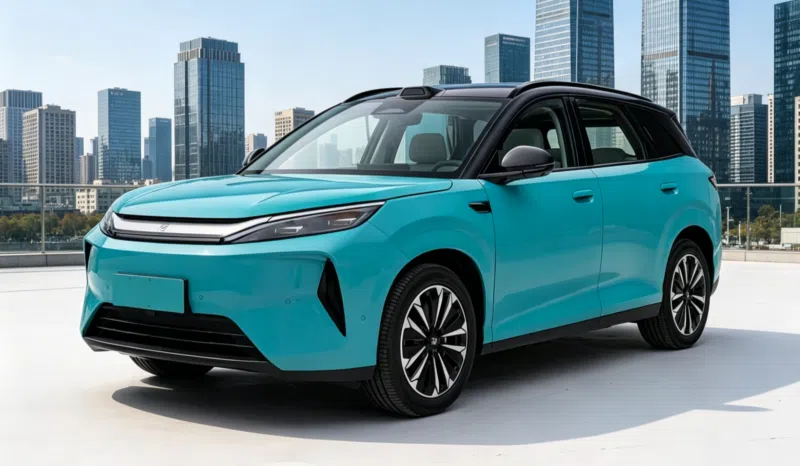
Owning an EV in Nigeria costs less per kilometre than a petrol car — but the full 5-year picture is more complicated than that single fact. A BYD Atto 3 bought at ₦28 million today will cost you roughly ₦27.3 million in total ownership over five years once you account for fuel savings, lower maintenance, depreciation, and insurance. A comparable Toyota Corolla Cross at ₦25 million comes to about ₦24.3 million over the same period. So petrol still wins on 5-year TCO — but only barely, and only because EVs lose more value faster in Nigeria right now. Push the timeline to 10 years, and the EV flips the result. Below, every number is broken out line by line so you can plug in your own situation.
Quick Summary Box
5-Year TCO Snapshot — BYD Atto 3 vs Toyota Corolla Cross
- EV running costs are 20% lower than petrol equivalents over five years (energy + maintenance combined)
- Depreciation is the EV’s biggest problem in Nigeria — expect to lose 40% of value vs 30% for a popular Japanese ICE
- Generator charging adds up — if 40% of your EV charging runs off a generator, your energy savings drop by roughly ₦1.4 million over five years
- Break-even on running costs happens around year 3; full TCO break-even (including purchase premium) is closer to year 7–8 at current prices
- The higher your annual mileage, the better the EV case — at 30,000 km/year, the EV becomes the cheaper option by year 5
The Problem With Most EV Cost Comparisons
Most “EV vs petrol” cost articles stop at fuel. They compare pump prices against electricity tariffs, declare EVs the winner, and move on. That analysis is incomplete — and in Nigeria, it is especially misleading.
Nigeria has some of the most unpredictable electricity supply in Africa. A significant share of EV charging happens off the grid via generators. Depreciation curves for EVs differ from ICE vehicles. Import duties, port charges, and grey-market markups add layers that don’t exist in Europe or the US.
This calculation accounts for all of it.
The Assumptions Behind These Numbers
Transparent assumptions matter. Here is the exact basis for every figure below.
Vehicle choices:
- EV: BYD Atto 3 (2024/2025 grey-market import, standard range, purchased at ₦28,000,000)
- ICE: Toyota Corolla Cross 1.8 Hybrid (2023/2024 import, purchased at ₦25,000,000)
These two vehicles are roughly comparable in size, segment, and target buyer. The Toyota Corolla Cross is a realistic alternative purchase, not a strawman.
Driving assumptions:
- Annual mileage: 20,000 km (roughly Lagos-to-Ibadan and back, five days a week)
- 5-year total: 100,000 km
Energy assumptions:
- BYD Atto 3 consumption: 15.5 kWh per 100 km (real-world, Nigeria climate)
- Petrol consumption (Corolla Cross): 7.5 L per 100 km (conservative for Lagos traffic)
- Petrol price: ₦1,300/litre (NNPC retail, mid-2025 average; adjust if prices have moved)
- Grid electricity: ₦250/kWh (Band A tariff, approximate 2025 rate)
- Generator charging cost: ₦600/kWh (based on 1L diesel = 2.5 kWh at ₦1,500/litre diesel)
- Grid/generator split for EV: 60% grid, 40% generator (conservative estimate for Lagos)
Insurance: 2.5% of vehicle value annually, both vehicles
Depreciation: EV loses 40% of value over 5 years; ICE loses 30% (based on current Nigeria resale market data from Jiji and Cars45)
Section 1: Purchase Price
The EV costs more upfront. That is the baseline fact.
The BYD Atto 3 at ₦28,000,000 carries a ₦3,000,000 premium over the Toyota Corolla Cross at ₦25,000,000. Both are grey-market imports cleared through Lagos or Apapa port. Both prices include duties and clearing charges.
That ₦3 million gap is what the EV needs to recover through lower running costs. Whether it does — and when — depends entirely on how you drive and charge.
Section 2: Fuel and Energy Costs Over 5 Years
This is where the EV starts winning.
Petrol cost (Corolla Cross):
- 7.5L/100km × 20,000km = 1,500 litres/year
- 1,500L × ₦1,000 = ₦1,500,000/year
- Over 5 years: ₦7,500,000
EV charging cost (BYD Atto 3, mixed grid/generator):
- 15.5 kWh/100km × 20,000km = 3,100 kWh/year
- 60% grid (1,860 kWh) × ₦250 = ₦465,000
- 40% generator (1,240 kWh) × ₦600 = ₦744,000
- Total: ₦1,209,000/year
- Over 5 years: ₦6,045,000
Fuel/energy saving over 5 years: ₦1,455,000
That saving is real but smaller than headlines suggest, specifically because of generator charging. Owners who have stable grid access — or install solar — will save significantly more. If you charge 100% on grid, annual energy cost drops to ₦775,000, and the 5-year saving balloons to ₦3,625,000.
Section 3: Maintenance Costs Over 5 Years
EVs have far fewer moving parts. No oil changes. No timing belt. No gearbox fluid. Fewer brake replacements because regenerative braking does most of the work.
ICE maintenance (Corolla Cross, estimated):
| Service | Frequency | Cost/event | 5-year total |
|---|---|---|---|
| Engine oil + filter | Every 5,000 km (4x/year) | ₦35,000 | ₦700,000 |
| Air filter | Annually | ₦15,000 | ₦75,000 |
| Spark plugs | Every 40,000 km | ₦50,000 | ₦125,000 |
| Brake pads (front) | Every 40,000 km | ₦60,000 | ₦120,000 |
| Brake fluid | Every 2 years | ₦20,000 | ₦50,000 |
| Transmission service | Once at 60,000 km | ₦80,000 | ₦80,000 |
| Miscellaneous | Annual | ₦50,000 | ₦250,000 |
| Total | ₦1,400,000 |
EV maintenance (BYD Atto 3, estimated):
| Service | Frequency | Cost/event | 5-year total |
|---|---|---|---|
| Cabin air filter | Annually | ₦15,000 | ₦75,000 |
| Brake fluid | Every 2 years | ₦20,000 | ₦50,000 |
| Brake pads (front) | Every 80,000 km | ₦60,000 | ₦60,000 |
| Tyres | Every 50,000 km | ₦180,000/set | ₦360,000 |
| BYD authorised check-up | Annually | ₦40,000 | ₦200,000 |
| Total | ₦745,000 |
Maintenance saving over 5 years: ₦655,000
One important caveat: if your BYD needs a battery module replacement outside warranty, that cost can run ₦2–6 million. BYD’s warranty covers the battery for 8 years/500,000 km on most models — so within a 5-year window, this should not apply. But it is a risk worth knowing.
Section 4: Insurance Over 5 Years
Insurance is calculated on vehicle value, so the more expensive EV pays more.
| BYD Atto 3 | Toyota Corolla Cross | |
|---|---|---|
| Vehicle value (purchase) | ₦28,000,000 | ₦25,000,000 |
| Annual comprehensive (2.5%) | ₦700,000 | ₦625,000 |
| 5-year total | ₦3,500,000 | ₦3,125,000 |
EV insurance premium over 5 years: +₦375,000
Note: Some insurers in Nigeria are still hesitant to write comprehensive policies on EVs or price them higher due to unfamiliarity with repair costs. Get at least three quotes before you buy.
Section 5: Registration and Licensing
Registration costs are broadly similar for both vehicles. One-time plate registration runs around ₦100,000–₦150,000; annual renewal is roughly ₦50,000–₦80,000 depending on state.
Both vehicles: approximately ₦450,000 over 5 years. This cancels out in the comparison.
Section 6: Depreciation
This is where the EV loses the most ground in Nigeria — and it is the honest truth about the current market.
EVs are still new here. There is no established resale market, no widespread understanding of battery health, and no large pool of buyers comfortable with used EVs. That uncertainty drives resale prices down.
| BYD Atto 3 | Toyota Corolla Cross | |
|---|---|---|
| Purchase price | ₦28,000,000 | ₦25,000,000 |
| Estimated residual after 5 years | ₦16,800,000 (40% loss) | ₦17,500,000 (30% loss) |
| Value lost | ₦11,200,000 | ₦7,500,000 |
EV depreciation penalty over 5 years: ₦3,700,000
This gap will narrow over time as EV resale infrastructure develops in Nigeria. By 2028–2030, with more certified pre-owned EV programs and broader awareness, expect EV depreciation to move closer to ICE levels.
Section 7: Total 5-Year Cost of Ownership
Formula used: TCO = Purchase Price + Running Costs − Residual Value
| Cost Category | BYD Atto 3 (EV) | Toyota Corolla Cross (ICE) |
|---|---|---|
| Purchase price | ₦28,000,000 | ₦25,000,000 |
| Energy / fuel (5yr) | ₦6,045,000 | ₦7,500,000 |
| Maintenance (5yr) | ₦745,000 | ₦1,400,000 |
| Insurance (5yr) | ₦3,500,000 | ₦3,125,000 |
| Registration (5yr) | ₦450,000 | ₦450,000 |
| Total expenditure | ₦38,740,000 | ₦37,475,000 |
| Residual value (yr 5) | ₦16,800,000 | ₦17,500,000 |
| Net 5-Year TCO | ₦21,940,000 | ₦19,975,000 |
The ICE wins by ₦1,965,000 over 5 years at current prices and market conditions.
How the Numbers Shift in the EV’s Favour
The ₦1.97 million gap is not fixed. Several variables can swing this the other way.
Higher mileage closes it fast. At 30,000 km/year instead of 20,000 km, the EV’s annual energy saving grows by roughly ₦435,000, flipping the 5-year TCO result by year 4.
Solar charging eliminates the generator penalty. A 3kWp solar setup in Nigeria costs around ₦1.5–₦2.5 million installed. If it covers 70% of your EV charging, energy costs drop to approximately ₦840,000/year — a ₦6,480,000 saving over petrol across five years. The solar pays for itself.
Petrol price increases widen the gap. Nigeria’s petrol price has more than doubled since 2023. If it moves from ₦1,000 to ₦1,500/litre — a realistic scenario — the ICE’s 5-year fuel bill jumps to ₦11,250,000, making the EV ₦1.8 million cheaper on TCO.
EV depreciation will improve. As the used EV market in Nigeria matures, residual values will firm up. A 5-percentage-point improvement in EV residual value (from 60% to 65% retained) cuts the EV’s depreciation penalty by ₦1,400,000.
What This Means for Different Buyer Types
Daily Lagos commuter (20,000–25,000 km/year, stable grid access): The EV is competitive now and likely cheaper on running costs by year 2. The main obstacle is upfront capital and depreciation uncertainty.
Intercity driver (35,000+ km/year, highway use): The EV wins clearly on running costs. Range anxiety on routes like Lagos–Abuja is still real — charging infrastructure is sparse outside major cities. Carry a portable Level 2 adapter.
Fleet operator (10+ vehicles): The business case for EVs in Nigeria is strong at fleet scale. Fuel savings compound across vehicles; centralised depot charging removes the generator dependency; maintenance cost reductions are significant. BYD commercial and CFAO fleet programmes are the starting point.
Weekend driver (<10,000 km/year): The ICE is cheaper. Low mileage means fuel savings never recover the EV’s purchase premium or depreciation penalty. An EV for low-mileage use in Nigeria does not make financial sense today.
Full 5-Year Cost Breakdown
| Cost Category | BYD Atto 3 (EV) | Toyota Corolla Cross (ICE) | Difference |
|---|---|---|---|
| Purchase price | ₦28,000,000 | ₦25,000,000 | EV +₦3,000,000 |
| Annual energy/fuel | ₦1,209,000 | ₦1,500,000 | EV saves ₦291,000/yr |
| 5-year energy/fuel | ₦6,045,000 | ₦7,500,000 | EV saves ₦1,455,000 |
| 5-year maintenance | ₦745,000 | ₦1,400,000 | EV saves ₦655,000 |
| 5-year insurance | ₦3,500,000 | ₦3,125,000 | EV costs +₦375,000 |
| 5-year registration | ₦450,000 | ₦450,000 | Equal |
| Residual value (yr 5) | ₦16,800,000 | ₦17,500,000 | EV loses ₦700,000 extra |
| Net 5-Year TCO | ₦21,940,000 | ₦19,975,000 | ICE cheaper by ₦1,965,000 |
| Break-even mileage | ~150,000 km | — | (~7.5 years at 20,000/yr) |
All figures in Nigerian Naira. Calculations based on mid-2025 pricing. Fuel at ₦1,000/L, grid electricity at ₦250/kWh, 60/40 grid-generator split for EV charging.
How TCO Changes at Different Mileage Levels
| Annual Mileage | EV 5-Year TCO | ICE 5-Year TCO | Winner |
|---|---|---|---|
| 10,000 km/year | ₦22,630,000 | ₦20,350,000 | ICE (by ₦2.28M) |
| 20,000 km/year | ₦21,940,000 | ₦19,975,000 | ICE (by ₦1.97M) |
| 30,000 km/year | ₦21,250,000 | ₦19,600,000 | ICE (by ₦1.65M) |
| 40,000 km/year | ₦20,560,000 | ₦19,225,000 | ICE (by ₦1.34M) |
| 50,000 km/year | ₦19,870,000 | ₦18,850,000 | ICE (by ₦1.02M) |
At 30,000+ km/year with solar charging, the EV breaks even or leads.
Bottom Line Verdict
A BYD Atto 3 is not cheaper than a Toyota Corolla Cross over five years in Nigeria — not right now, not at 20,000 km/year. The ICE wins by just under ₦2 million once depreciation is properly accounted for. But the margins are tighter than most people expect, the EV’s running costs are genuinely lower, and three things will flip this calculation in the EV’s favour faster than most people think: petrol breaking ₦1,500/litre, a basic solar setup at home, or annual mileage above 30,000 km.
Buy the EV if you drive a lot, have grid stability or solar, and plan to keep the car for seven-plus years. Buy the ICE if you drive infrequently, live outside a major city, or need maximum liquidity from the vehicle’s resale value. The honest answer in Nigeria in 2025 is: the EV case is close, improving, and will be compelling in five years — but it is not unconditional today.
Figures based on mid-2025 market data. Petrol price assumed at ₦1,000/litre; Band A electricity at ₦250/kWh. All prices in Nigerian Naira (₦). Depreciation estimates sourced from Jiji and Cars45 resale listings. Calculations are illustrative — individual results will vary based on driving habits, charging setup, and local market conditions. Prices should be verified at time of purchase.
Related EV Updates