- Electric Vehicles
- MERCEDES
- Mercedes-Benz Vision EQXX
Mercedes-Benz Vision EQXX



- Drive Type: RWD
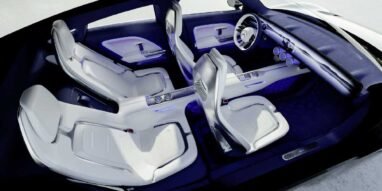
- Type: 4-door coupe, 4 seats
- Self Driving: Level 2 (concept stage)
- Airbags: Yes
PROS
- Exceptional 747-mile real-world range
- Extremely low energy consumption (record-breaking efficiency)
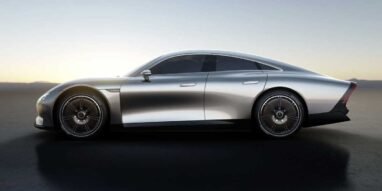
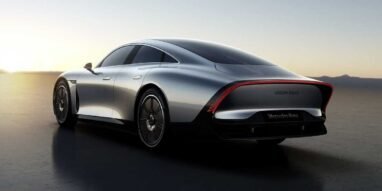
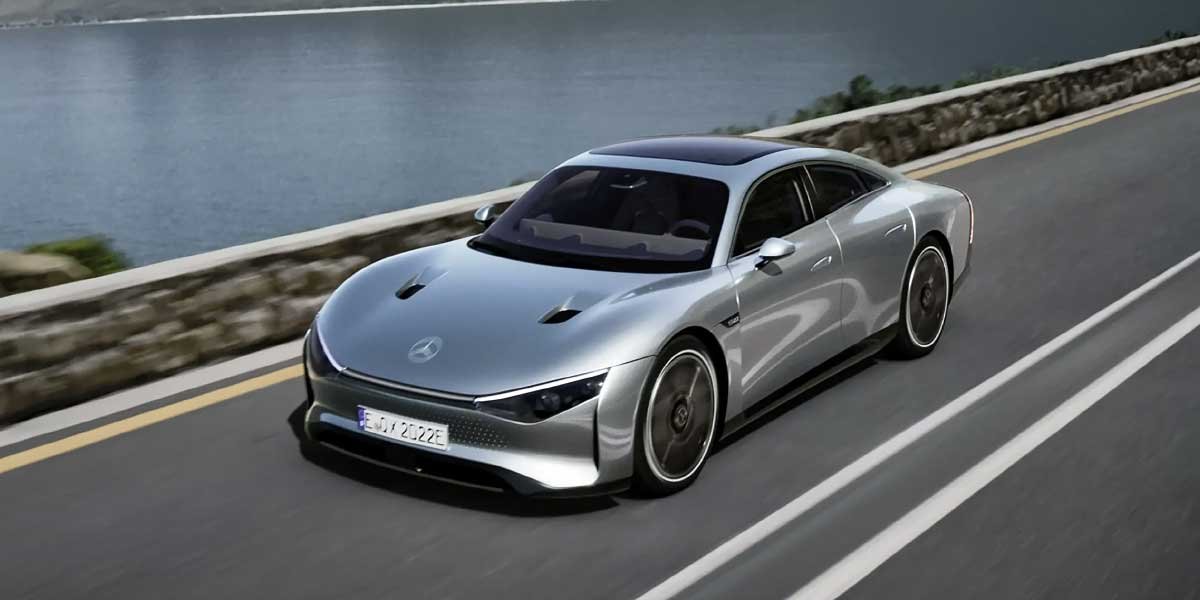
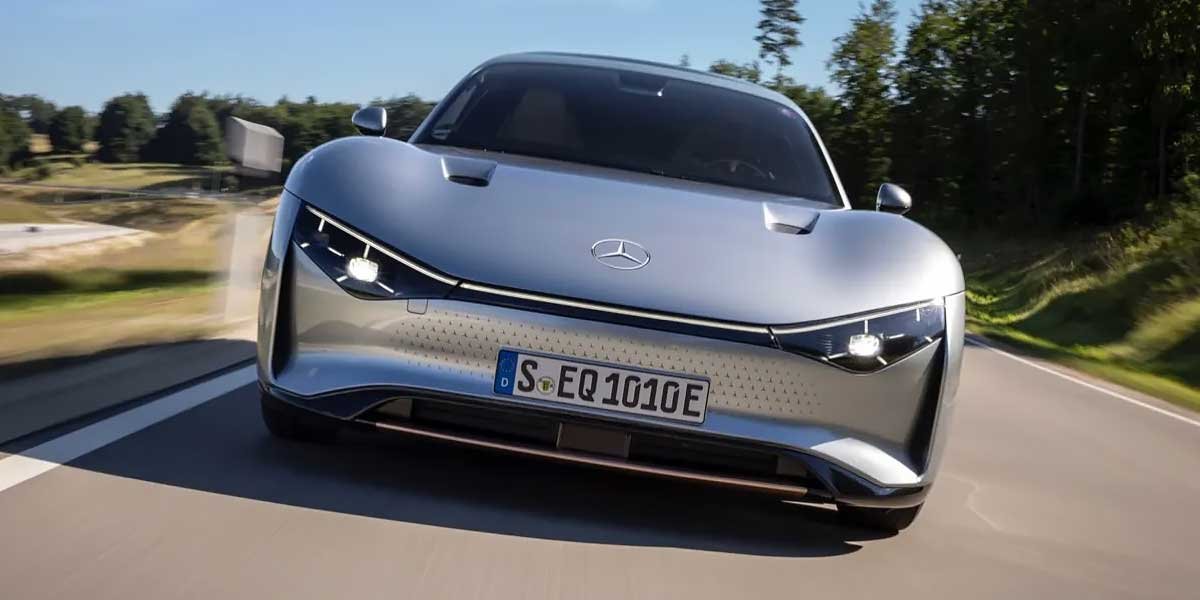
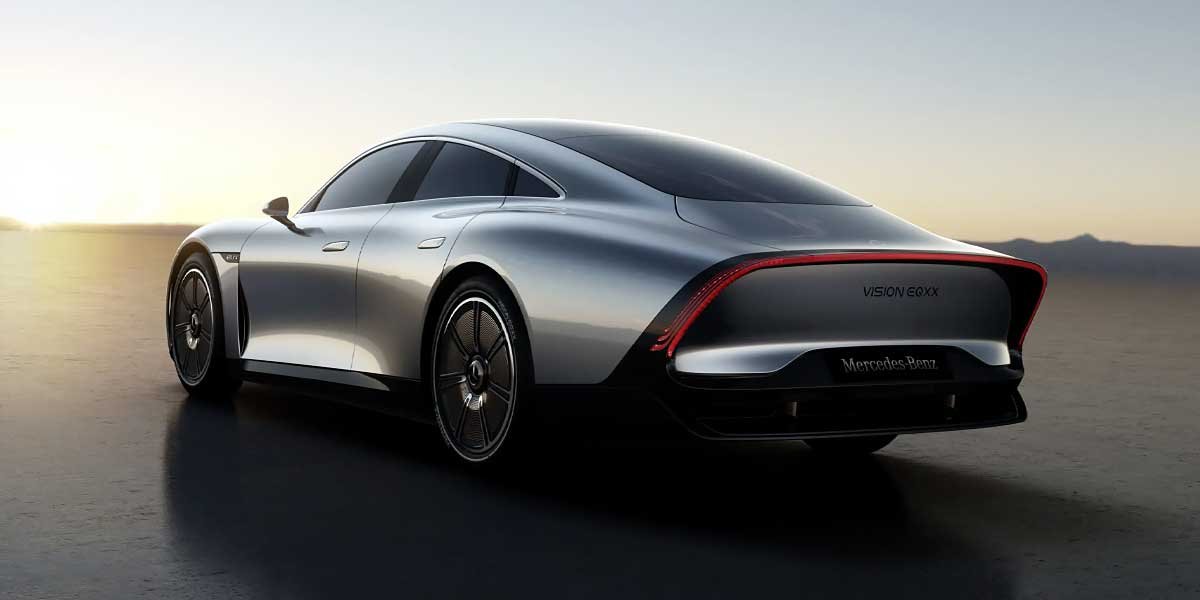
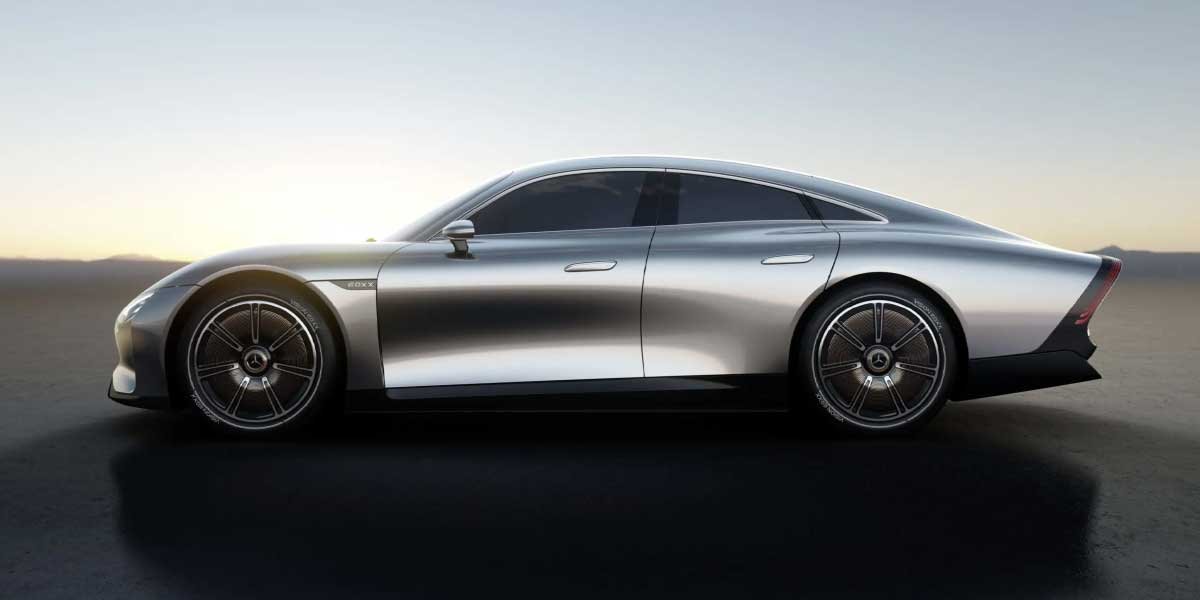
- Futuristic, aerodynamic design
- Solar roof adds real energy gains
- Ultra-lightweight yet high structural integrity
CONS
- Concept only — not available for purchase
- Performance tuned for efficiency, not sportiness
- Limited practicality and cargo space
- Charging network performance not tested in production use
The Mercedes-Benz Vision EQXX is a fully electric research prototype built by Mercedes-Benz AG. It is not a production car you can buy — instead, it sits above the flagship segment as a rolling technology lab designed to prove what’s physically possible with EV efficiency.
In terms of layout, the EQXX is a four-door fastback coupe with a rear-wheel-drive (RWD) electric powertrain. It rides on a completely new electric architecture that has not yet reached any series-production Mercedes model.
So what makes it genuinely notable? In real-world testing — not just lab conditions — the EQXX covered over 1,200 kilometers (747 miles) on public roads using a battery pack roughly half the size of what you’d find in a Tesla Model S or Porsche Taycan. That’s a factual milestone, not marketing hype.
Battery, Range, and Charging (What’s Confirmed vs. Rumored)
The Vision EQXX carries a usable battery capacity of approximately 100 kWh — similar to a Mercedes EQS, but with dramatically better efficiency. Mercedes claims a WLTP-equivalent range of over 1,200 km (747 miles) based on its own on-road validation drives. For reference, an EQS 450+ manages about 780 km (485 miles) on the same WLTP cycle.
Charging is where things get fuzzy — and that’s intentional. The EQXX uses a 900-volt architecture, similar to the Porsche Taycan’s system. That means it could theoretically accept DC fast charging at up to 200–250 kW. However, Mercedes has not released official numbers for AC onboard charging, peak DC rate, or a standard 10–80% time benchmark like you’d expect on a production EV.
Why? Because the EQXX was never designed for daily charging. It was built to prove efficiency first. So take any charging specs from early previews as unconfirmed until Mercedes says otherwise.
Price, Buyer Profile, and Real-World Comparisons
Here’s the short version: the Vision EQXX has no price. It’s not for sale anywhere — not in Germany, not in the US, not as a limited edition.
So who is this car actually for? Realistically, it suits engineers, EV analysts, and technology investors — people who care about thermal management, aerodynamics (Cd 0.17), and battery chemistry more than cupholders or cargo space. If you’re a regular commuter or a family driver, you’re not the audience. But you will eventually drive a car that borrows from this one.
Where does it sit inside Mercedes’ own lineup? It sits conceptually between the EQS (the current electric flagship sedan) and a rumored future production vehicle that doesn’t have a name yet. Think of it as a halo for the engineers, not the showroom.
External rivals? Two direct competitors in spirit are:
Tesla Roadster (prototype) – also claims extreme range but remains unverified and delayed.
Lightyear 0 – a production solar-assisted EV that aimed for efficiency but was discontinued.
Closest direct comparison model (for SEO relevance): If you absolutely need a spec and price match, look at the Volkswagen ID. Space Vizzion concept. Both are electric prototypes with slippery aerodynamics. But the EQXX destroys it on range — 1,200 km vs. roughly 600 km — with a much lower drag coefficient.
You cannot buy the Mercedes-Benz Vision EQXX. But you should care about it — because every long-range EV you’ll drive in five years will owe something to this prototype. It’s not a product. It’s a proof of what’s actually possible.
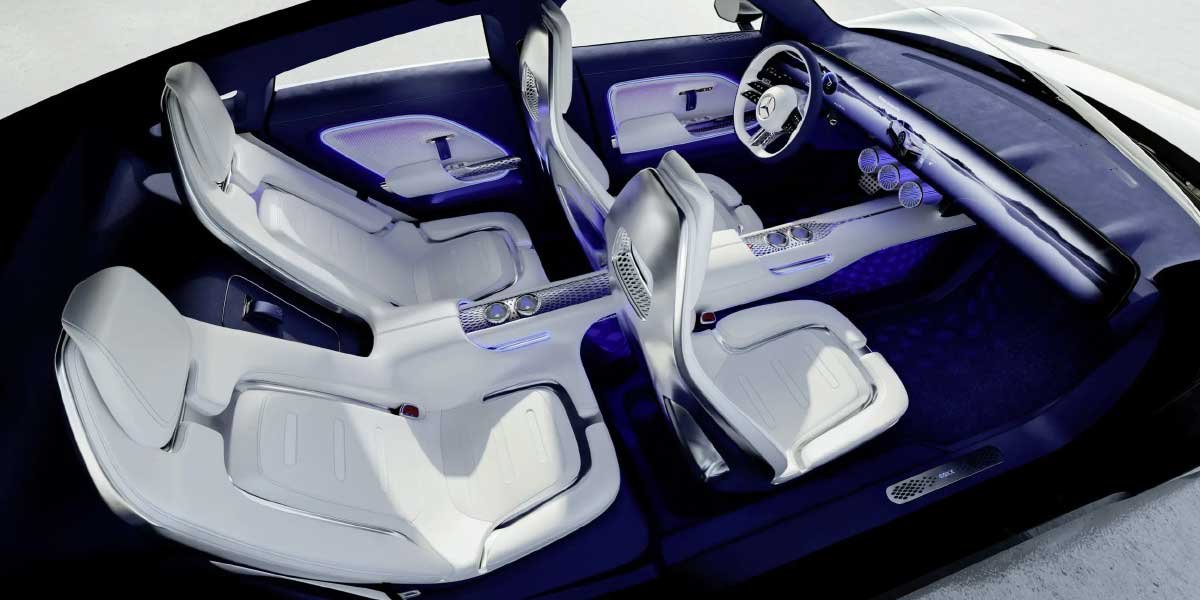
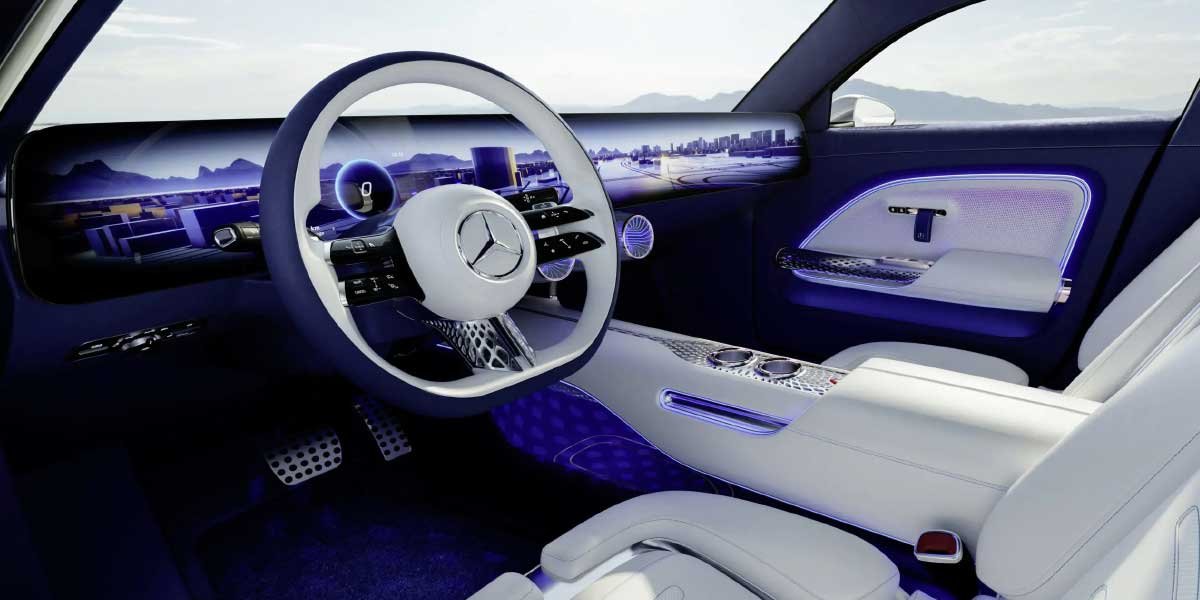
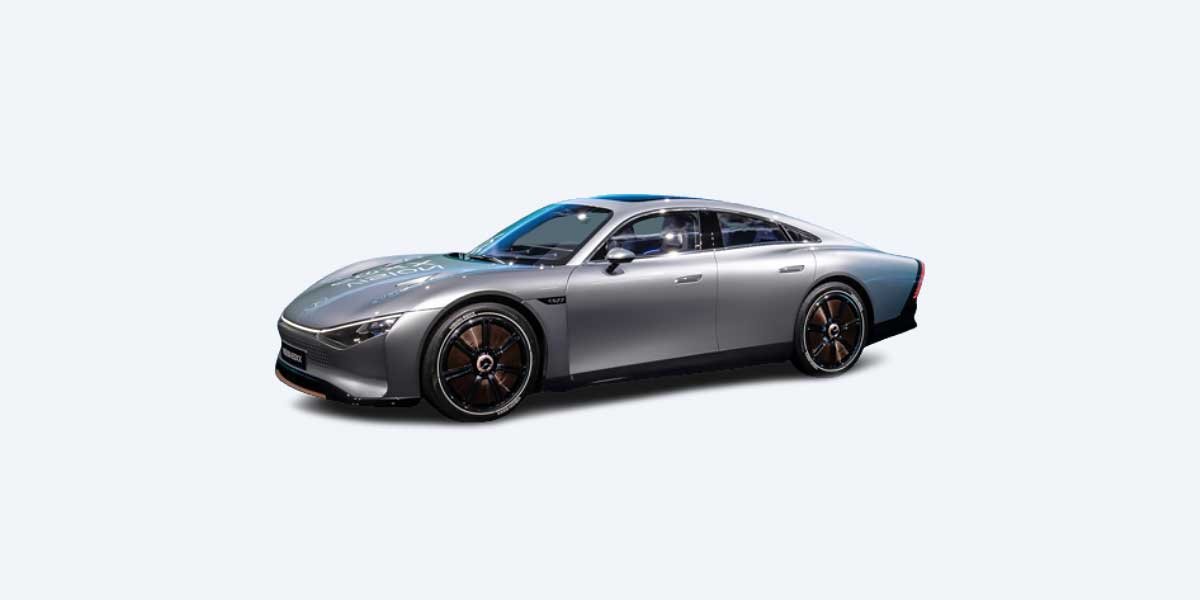
Mercedes-Benz Vision EQXX Images
Full Electric Vehicle Specifications
MODEL
| Available Trims / Variants | Mercedes-Benz Vision EQXX (Concept EV) |
LAUNCH
| Reveal Date | January 2022 |
| Availability Status | Concept / Prototype (Not for sale) |
| Country of origin | Germany |
| Base Price (USD) | N/A (Concept vehicle) |
BATTERY
| Battery Capacity | 100 kWh |
| Battery Chemistry | High-silicon anode lithium-ion battery, developed with Mercedes-AMG F1 |
| Range (WLTP/CLTC/EPA) | (mi WLTP): 747 miles (1,200 km) |
| Energy Consumption | 7.5 mi/kWh (8.3 kWh/100 km) |
| Regen Braking (Max kW) | Advanced regenerative braking system |
| Heat Pump | |
| AC Charging (Max kW) | Up to 11 kW (≈10 hours full charge) |
| DC Charging (Max kW) | Up to 140 kW (≈30 minutes for 10–80%) |
| Additional Notes | Battery is 50% smaller and 30% lighter than EQS pack |
PERFORMANCE
| Power Output (kW / hp) | 241 hp (180 kW), rear-wheel drive |
| Torque (Nm) | 400 Nm |
| 0–100 km/h / 0-60 mph (seconds) The acceleration numbers are an easy way to compare car performance. We list either time from 0 to 100 km/h or time from 0 to 60mph, depending on which number(s) the manufacturers provide. The lower the acceleration time, the higher performance the car is. | 6.5 seconds (0–100 km/h |
| Top Speed (km/h / mph) | 150 mph (241 km/h, limited) |
BODY
| Body Style | 4-door coupe, 4 seats |
| Platform / Architecture | Custom lightweight EV prototype architecture |
| Dimensions (L×W×H mm) | L 4,975 mm / W 1,870 mm / H 1,348 mm |
| Drag Coefficient (Cd) | 0.17 Cd |
| Wheelbase (mm) | 2,800 mm |
| Ground Clearance (mm) | Low, aerodynamically optimized |
| Kerb Weight (kg) | 1,750 kg |
| Suspension (Front / Rear) | Lightweight double-wishbone (front), multi-link (rear) |
| Wheel Size (inches) | 20-inch magnesium alloy, low-resistance tires |
| Trunk/Boot Capacity (L) | Moderate, ~400 L (estimated) |
| Frunk/Bonnet Capacity (L) | Small storage space for tools/cables |
| Additional Notes | Active cooling shutters, solar roof with 117 cells for auxiliary systems |
SAFETY
| Airbags (count) | Yes (prototype safety system) |
| Driver Assistance (ADAS) | Adaptive cruise, lane assist, emergency braking |
| Autonomous Driving Level | Level 2 (concept stage) |
COMFORT
| Seating Capacity | 4 sustainable-material seats (vegan leather, bamboo fiber) |
| Roof Type | Fixed solar panel roof (extends range up to 15 miles/day) |
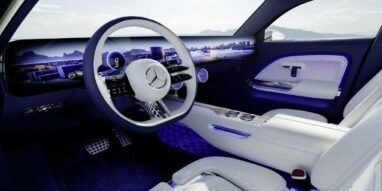
| Bluetooth / Wi-Fi | MBUX Hyperscreen software, AI energy management |
| Parking Aids | Full 360° camera, sensors, and autonomous parking |
| Additional Notes | Advanced ambient lighting, intelligent climate zones |
DISPLAYS
| Centre Screen (inches) | 47.5-inch 8K mini-LED one-piece display |
| Driver's Display (inches) | Integrated digital instrument cluster |
| Head-Up Display (HUD) | Yes, augmented reality projection |
| Additional Notes | Real-time 3D navigation powered by game engine tech |
LIGHTING
INFOTAINMENT & AUDIO
TECHNOLOGY
OWNERSHIP
Note
| Additional Notes |
Built primarily as a technology demonstrator to explore ultra-efficiency, aerodynamics, and lightweight engineering. Sets real-world benchmark for EV range and energy optimization. |
User Reviews
Disclaimer Note
Specifications sourced from manufacturer data and may reflect WLTP, CLTC, or EPA test conditions. Import prices in your local are estimates based on grey-market landing costs and exclude duties, clearing fees, and local taxes. Figures are subject to change without notice. Always verify with your local importer before purchase. We can not guarantee that the information on this page is 100% correct