- Electric Vehicles
- GAC
- GAC Hyptec SSR
GAC Hyptec SSR

- Drive Type: AWD
- Type: 2-door electric supercar (2 seats)
- Self Driving:
- Airbags: Yes
PROS
- Insane performance (0–100 km/h in 1.9 s)
- High power and torque output
- Carbon-fiber build and premium design
- Advanced 900 V architecture
- Good range for a supercar
CONS
- Extremely expensive
- Heavy (>2 tons)
- Only 2 seats and minimal storage
- Limited charging data and infrastructure
- Not yet widely available outside China
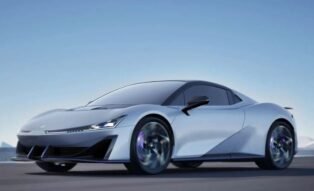
The GAC Group Hyptec SSR is a flagship electric supercar built by Hyptec, the premium performance division of GAC Aion. Positioned at the top of the brand’s EV lineup, the SSR enters the high-performance electric sports car segment with a two-door coupe design, carbon-fiber body structure, and all-wheel-drive tri-motor setup.
The model stands out as one of the first Chinese-developed electric supercars to reach limited production with more than 1,200 horsepower. Unlike mainstream EVs focused on efficiency or family use, the Hyptec SSR targets the ultra-performance market currently led by European and American brands.
The GAC Hyptec SSR uses a lithium-ion battery pack with an estimated usable capacity of around 74.7 kWh, although GAC has not fully standardized every specification across all variants. In China, official CLTC driving range figures vary between 506 km and 650 km depending on the trim level and wheel configuration. WLTP and EPA-certified figures have not been released yet.
The flagship tri-motor version produces about 900 kW, equivalent to roughly 1,225 hp, and delivers a claimed 0 to 100 km/h sprint in around 1.9 seconds. Charging support includes up to 11 kW AC charging and ultra-fast DC charging speeds of up to 480 kW under ideal conditions. GAC estimates a 10% to 80% fast-charging session takes about 15 minutes with compatible infrastructure. Some battery and charging figures remain based on early production data and Chinese-market documentation.
Pricing for the GAC Hyptec SSR starts at approximately CNY 1.29 million in China, while higher trims exceed CNY 1.68 million. That places the electric supercar between roughly USD 178,000 and USD 232,000 depending on exchange rates and selected specification. The SSR fits buyers looking for a limited-production EV focused on acceleration, exclusivity, and advanced performance engineering rather than practicality or long-distance touring. Within the Hyptec and GAC ecosystem, the SSR sits above the GAC Aion Hyper GT and GAC Aion LX Plus in pricing and performance.
Key rivals include the Tesla Roadster and the Rimac Nevera, both of which compete in the high-end electric hypercar category. The closest comparison for SEO and market positioning is the Lotus Evija, since both models combine extreme power output, carbon-heavy construction, and low-volume production aimed at collectors and performance-focused EV buyers.
From a technology standpoint, the Hyptec SSR also highlights how Chinese automakers are moving beyond affordable EVs into premium performance segments. Earlier Chinese electric vehicles mainly competed on pricing and battery range, but the SSR shifts focus toward speed, engineering, and brand image.
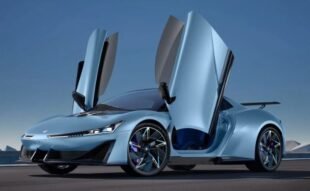
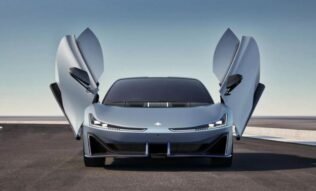
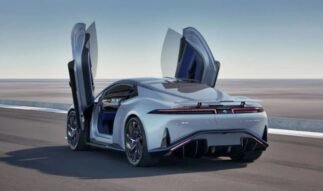
The car uses active aerodynamics, butterfly-style doors, and a lightweight chassis to improve stability at high speeds. Its tri-motor setup distributes power across all four wheels for better traction during rapid acceleration. Although the SSR remains a niche product with limited availability outside China, it reflects how quickly China’s EV industry is expanding into categories once dominated by brands from Europe and North America.
Compared with the Lotus Evija, the GAC Hyptec SSR offers a lower entry price while still delivering hypercar-level acceleration figures. The Tesla Roadster focuses more on long-range capability and mainstream brand recognition, while the Rimac Nevera remains positioned as a higher-priced ultra-exclusive electric hypercar with more advanced track-oriented engineering. The Hyptec SSR sits between these approaches by combining high power output with a relatively lower production cost structure. For buyers tracking the rise of Chinese electric performance vehicles, the SSR has become one of the most closely watched EV supercars currently in production.
GAC Hyptec SSR Images


Full Electric Vehicle Specifications
MODEL
LAUNCH
| Reveal Date | 2023 |
| Availability Status | In production |
| Country of origin | China |
| Base Price (USD) | $176,400 (¥1.29 million, China) |
BATTERY
| Battery Capacity | 74.69 kWh ternary lithium |
| Battery Chemistry | 900 V high-voltage platform (NMC battery) |
| Range (WLTP/CLTC/EPA) | 506 km CLTC (≈ 314 mi WLTP est.) |
| Energy Consumption | 16.7 kWh/100 km |
| Heat Pump | |
| DC Charging (Max kW) | 140 km (87 mi) in 10 minutes |
| Additional Notes | Battery pre-heating, bidirectional charging |
PERFORMANCE
| Power Output (kW / hp) | 1,224 hp (900 kW), tri-motor AWD (top trim) |
| Torque (Nm) | 1,230 Nm |
| 0–100 km/h / 0-60 mph (seconds) The acceleration numbers are an easy way to compare car performance. We list either time from 0 to 100 km/h or time from 0 to 60mph, depending on which number(s) the manufacturers provide. The lower the acceleration time, the higher performance the car is. | 0–100 km/h in 1.9 s (Sprint/Ultimate) |
| Top Speed (km/h / mph) | 250 km/h (155 mph) |
BODY
| Body Style | 2-door electric supercar (2 seats) |
| Platform / Architecture | AEP 3.0 EV architecture |
| Dimensions (L×W×H mm) | (L × W × H): 4556 × 1988 × 1230 mm |
| Wheelbase (mm) | 2650 mm |
| Kerb Weight (kg) | 2180 kg |
| Suspension (Front / Rear) | Double wishbone (front & rear) |
| Wheel Size (inches) | 245/35 R20 (front), 305/30 R20 (rear) |
| Additional Notes | Carbon-fiber body, butterfly doors |
SAFETY
| Driver Assistance (ADAS) | Adaptive cruise control (ACC) |
COMFORT
| Seating Capacity | 2, heated & ventilated sports seats |
| Roof Type | Fixed roof |
| Bluetooth / Wi-Fi | Smart infotainment system |
| Additional Notes | Leather and suede finish |
DISPLAYS
| Centre Screen (inches) | 14.6″ touchscreen |
| Driver's Display (inches) | 8.8″ digital cluster |
LIGHTING
INFOTAINMENT & AUDIO
TECHNOLOGY
OWNERSHIP
Note
| Additional Notes |
Marketed as China’s first mass-produced electric supercar Limited global availability |
User Reviews
Disclaimer Note
Specifications sourced from manufacturer data and may reflect WLTP, CLTC, or EPA test conditions. Import prices in your local are estimates based on grey-market landing costs and exclude duties, clearing fees, and local taxes. Figures are subject to change without notice. Always verify with your local importer before purchase. We can not guarantee that the information on this page is 100% correct