- Home
- Electric Vehicles
- KIA
- Kia Niro EV
Kia Niro EV
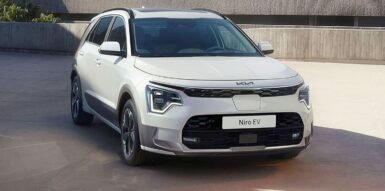
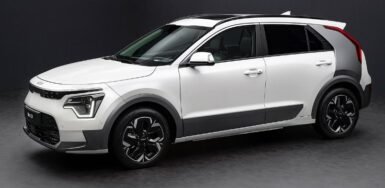
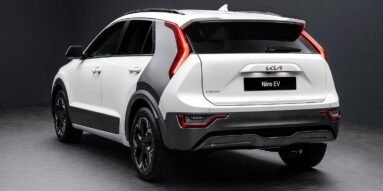
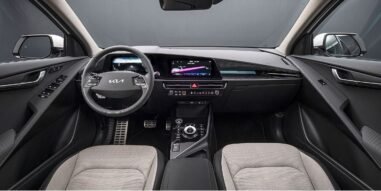
- Drive Type: FWD
- Type: 5 door SUV, 5 seats
- Self Driving: No
- Airbags: 7 Airbags
PROS
- Efficient Range & Economy
- Comfortable, Practical Cabin
- Strong Safety & Warranty
- Feature-Rich Standard Equipment
- City-Friendly Design
CONS
- Slow Charging Speed
- Performance Is Functional, Not Thrilling
- Price and Value Considerations
- Interior Material Limitations
- Safety Recall
The Kia Niro EV is a five-door, front-wheel-drive compact crossover produced by Kia, part of the Hyundai Motor Group. It sits in the compact crossover segment (C-CUV) and occupies an entry-level position in Kia’s dedicated EV lineup — below the EV6 and EV9 in price, platform, and charging capability.
This is the second generation of the nameplate, previously sold as the e-Niro. The current generation launched in 2022 with a redesigned body and revised motor tuning, though the platform and battery capacity carried over from the outgoing model. No AWD option is available; all trims are front-wheel drive only.
In the UK, the Niro EV was sold from July 2022 until December 2025 and has since been discontinued for that market. In the United States, the model continues as the 2026 Niro EV.
Kia Niro EV Battery and Range
The Niro EV uses a 68.0 kWh gross / 64.8 kWh usable lithium-ion battery on a 358-volt (400V-class) architecture, sourced from CATL.
- WLTP range: 285 miles / 463 km (WLTP cycle — European and UK market figure)
- EPA range: 253 miles (EPA cycle — US market figure)
Real-world range in mixed UK driving conditions typically falls between 230–250 miles, based on independent testing. Cold weather can reduce this further, with some UK sources reporting figures as low as 180–210 miles in winter conditions.
The single front-mounted permanent magnet motor produces 150 kW (201 hp) and 255 Nm of torque. The Niro EV covers 0–100 km/h in 7.8 seconds and tops out at 167 km/h (104 mph).
Kia Niro EV Charging: AC, DC, and Times
| Charging Type | Power | Time |
|---|---|---|
| AC (onboard, 3-phase) | 11 kW | ~7 hours (0–100%) |
| AC (single-phase, 7.4 kW) | 7.4 kW | ~10.5 hours (0–100%) |
| DC fast charge | 82–94 kW peak* | ~43–45 min (10–80%) |
*DC peak rates vary by source and region. Kia’s official US spec lists 43 minutes at an 85 kW charger. Independent UK testing logged a peak of 82 kW; EVKX data indicates up to 94 kW. The 43–45 minute 10–80% benchmark is the most consistent figure across sources.
The Niro EV does not support 800-volt ultra-rapid charging. Its DC capability sits within the standard 400-volt tier, which limits its road-trip charging speed compared to platform-mates like the Kia EV6 (up to 233 kW DC) that use Hyundai’s E-GMP 800-volt architecture.
Vehicle-to-Load (V2L) functionality is available on mid and top trims (3 and 4 in the UK; Wave in the US), allowing the battery to power external devices via a three-pin socket.
The 2026 US model adds NACS (Tesla Supercharger) compatibility via an adapter, providing access to over 25,000 Tesla Supercharger stations.
Kia Niro EV Price and Trim Levels
| Market | Trim | Price |
|---|---|---|
| United Kingdom | ‘2’ (base) | £36,545 RRP (discontinued Dec 2025) |
| United Kingdom | ‘3’ | £37,745 (discontinued) |
| United Kingdom | ‘4’ (top) | £40,495 (discontinued) |
| United States | Wind | $41,195 (2026 MY) |
| United States | Wave | $46,195 (2026 MY) |
| Nigeria / Kenya / South Africa | — | Not confirmed (grey-market import only) |
All trims share the same 64.8 kWh battery and 150 kW motor. Trim differences are equipment-based: the base Wind/2 includes an 11 kW onboard charger, forward collision avoidance, and smart cruise control. The top Wave/4 adds a premium audio system, heated and ventilated seats, a head-up display, power tailgate, and Highway Driver Assist 2.
African buyers sourcing via grey-market import channels should account for applicable import duties and port clearing costs on top of European or US RRPs, where the model has active distribution.
Who Is the Kia Niro EV For?
The Niro EV is most suited to urban and suburban commuters and small families who prioritise daily-range adequacy, interior practicality, and running costs over DC charging speed or AWD capability.
The 475-litre boot and 20-litre front trunk offer useful storage for a compact crossover. Rear passenger space is adequate for a C-CUV, though not comparable to larger EVs at higher price points. The front-wheel-drive-only configuration makes it a poor match for buyers in regions with heavy snow or those requiring genuine AWD traction.
Fleet buyers and first-time EV owners in urban environments represent the most consistent audience, which reflects its long-running positioning in the UK market — the e-Niro and Niro EV together ranked among the UK’s top ten best-selling EVs every year from 2019 through 2024.
Kia Niro EV vs. Competitors
| Model | WLTP Range | DC Charging | Starting Price |
|---|---|---|---|
| Kia Niro EV | 285 miles | ~85–94 kW | £36,545 UK / $41,195 US |
| Hyundai Kona Electric | 261 miles | 100 kW | ~£35,000 UK |
| Volkswagen ID.3 Pro | 347 miles | 120 kW | ~£35,000 UK |
| Renault Scenic E-Tech | 379 miles | 130 kW | ~£37,000 UK |
| Nissan Leaf e+ | 212 miles | 50–100 kW | ~£33,000 UK |
Closest comparison model: The Hyundai Kona Electric is the most direct spec-and-price match. Both share Hyundai Motor Group parentage, similar battery sizes, comparable WLTP figures, and a front-wheel-drive-only configuration at overlapping UK price points. The Kona Electric offers slightly faster DC charging (100 kW peak) and a lower entry price; the Niro EV has historically offered more boot space and a longer WLTP range figure.
Within the Kia range, the Niro EV sits between the Niro Hybrid (same body, no charging port, lower cost) and the EV6 (larger, 800-volt platform, up to 233 kW DC charging, higher price).
Kia Niro EV Images
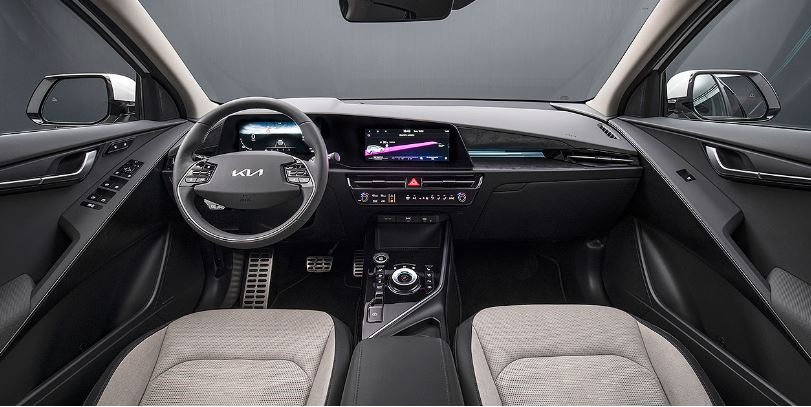
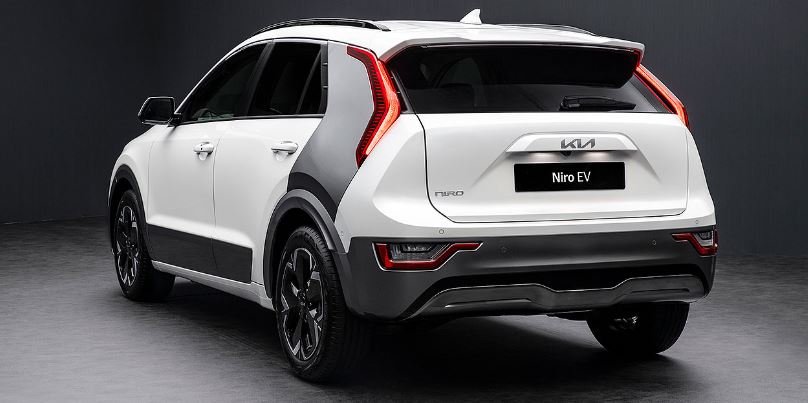
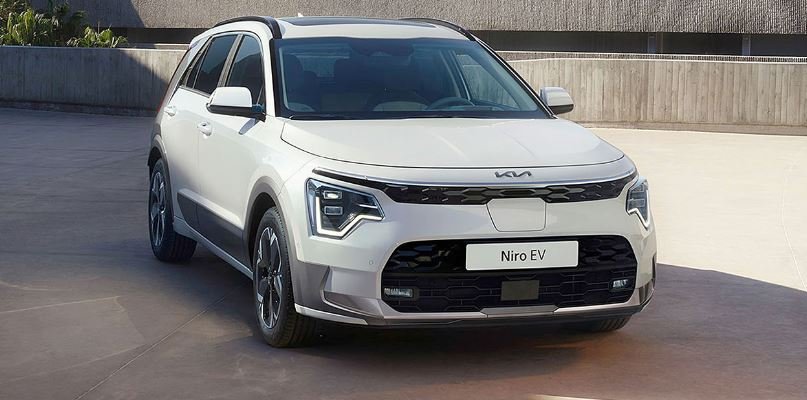
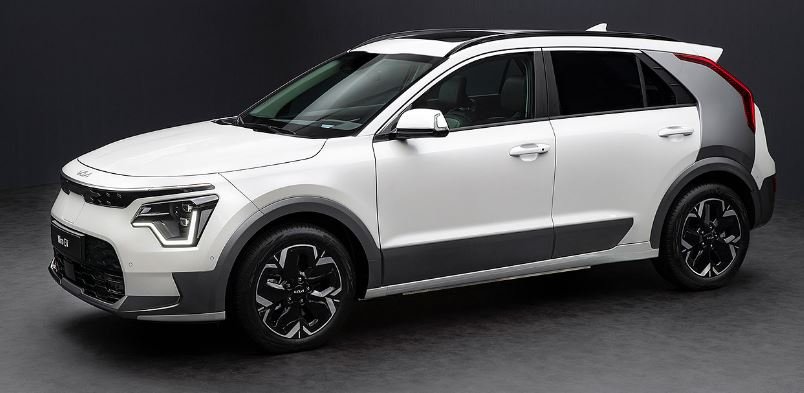
Full Electric Vehicle Specifications
MODEL
| Available Trims / Variants | Kia Niro EV |
PRICE & AVAILABILITY
| Base Price (USD) | $ 40,750 € 47,600 £ 35,000 |
| Availability Status | Available to order. Released 2022, August |
BATTERY & CHARGING
| Battery Capacity | 64.8 kWh usable |
| Range (WLTP/CLTC/EPA) | 288 mi WLTP (253 mi EPA) |
| DC Charging (Max kW) |
CCS 100 kW max, 10-80% in 43 min Vehicle to load (V2L) |
| AC Charging (Max kW) |
Type 2 7 kW, 0-100% in 9 hours 25 min Type 2 11 kW, 0-100% in 6 hours 20 min |
| Energy Consumption | 261 Wh/mi WLTP |
PERFORMANCE
| Power Output (kW / hp) | FWD 204 hp (150 kW) |
| 0–100 km/h / 0-60 mph (seconds) The acceleration numbers are an easy way to compare car performance. We list either time from 0 to 100 km/h or time from 0 to 60mph, depending on which number(s) the manufacturers provide. The lower the acceleration time, the higher performance the car is. | 7.8 sec 0-62 mph |
| Torque (Nm) | 255 Nm (188 lb-ft) |
| Top Speed (km/h / mph) | 104 mph (167 km/h) |
BODY & DIMENSIONS
| Dimensions (L×W×H mm) | 4420 x 1825 x 1570 mm (174.0 x 71.9 x 61.8 in) |
| Trunk/Boot Capacity (L) | EU: 475 l, 1392 l max |
| Body Style | 5 door SUV, 5 seats |
| Kerb Weight (kg) | EU: 1739 kg unladen, 2415 kg gross |
| Ground Clearance (mm) | 150 mm (5.9 in) |
| Frunk/Bonnet Capacity (L) | 20 l |
SAFETY & DRIVER ASSISTANCE
COMFORT & SEATING
| Seating Capacity | Heated and cooled front seats, heated outer rear seats |
DISPLAYS & CONNECTIVITY
| Centre Screen (inches) | 10.25" touchscreen |
| Driver's Display (inches) | 10.25" |
| Head-Up Display (HUD) | 10", projector type |
TECHNOLOGY
ADDITIONAL SPECS
Note
User Reviews
Disclaimer Note
Specifications sourced from manufacturer data and may reflect WLTP, CLTC, or EPA test conditions. Import prices in your local are estimates based on grey-market landing costs and exclude duties, clearing fees, and local taxes. Figures are subject to change without notice. Always verify with your local importer before purchase. We can not guarantee that the information on this page is 100% correct