- Electric Vehicles
- Wuling
- Wuling Aishang A100C
Wuling Aishang A100C
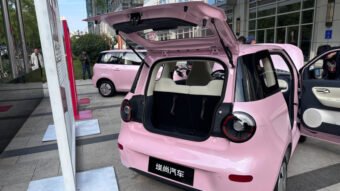
- Drive Type: RWD
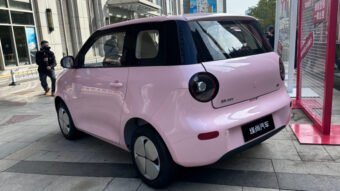
- Body Type: Micro electric car; 3-door, 4-seat layout
- Self Driving:
- Airbags: Yes
PROS
- Very affordable entry-price for a full EV.
- Extremely compact size – great for city driving and tight parking.
- Battery size and range sufficient for daily urban commuting (~137 miles CLTC).
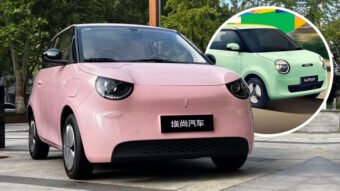
- Fun/friendly design, aimed at young first-time EV buyers.
- Known brand backing (Wuling / Aishang) in China.
CONS
- Very modest performance (just ~51 hp) – not suited for high speed or highways.
- Many key specs missing (charging times, ADAS, detailed safety ratings) – less transparency.
- Limited range compared to larger EVs – more for city use than long trips.
- Starting price slightly higher than direct micro EV competitors in the segment.
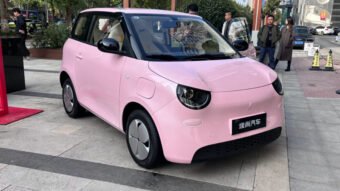
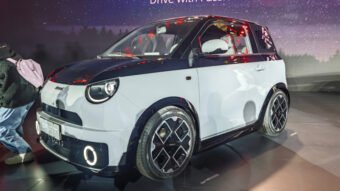
The A100C is an entry‑level battery‑electric city car built by Wuling but sold under the separate Aishang name – a brand created specifically for the company’s next wave of tiny EVs. It’s an A‑segment micro‑car with a three‑door hatchback body and a rear‑motor, rear‑wheel‑drive layout, which is still uncommon in this class. Most budget city EVs send power to the front wheels; the A100C’s rear‑drive setup gives it a tighter turning circle and a slightly different handling feel.
Under the skin, the car rides on Wuling’s Lingqiao Architecture platform. That’s the same foundation used by the Changan Lumin, making the two models mechanical cousins. This platform‑sharing strategy helps keep costs low while delivering an unusually grown‑up rear‑drive experience for a car this small. The A100C is also the very first model to wear the Aishang badge, marking a quiet milestone for Wuling’s expanding electric portfolio.
How Far Can It Go? Battery, Range & Charging
The A100C’s 17.65 kWh LFP battery feeds a single rear‑axle motor producing 35 kW and 83 N·m of torque. On China’s CLTC test cycle, the official range is 220 km (about 137 miles). In real‑world city driving – lots of stop‑start traffic, speeds rarely above 60 km/h – you can expect to get reasonably close to that number, though cold weather or sustained highway running will knock it down noticeably.
For charging at home, the onboard AC charger draws roughly 3.5 kW, which translates to a full charge in around five hours when plugged into a standard wall box. Need a quicker top‑up? The car supports DC fast‑charging, with a claimed 30 % to 80 % charge time of 30 minutes. That implies a peak DC rate of approximately 30 kW. A few early spec databases have floated figures like a 6‑8 hour AC window or a 24‑minute DC sprint, but Wuling hasn’t confirmed those – they most likely reflect pre‑production estimates, so treat them with a pinch of salt until you see the final homologation data.
Price, Positioning & Who Should Buy It
In China, the Aishang A100C ranges from ¥39 800 to ¥52 800, depending on trim. When it travels to South‑East Asia, local equivalents land around Rp 92–120 million in Indonesia and under ₫150 million in Vietnam. At those prices, it’s firmly in impulse‑buy territory for many urban households.
Who it really suits: City commuters, first‑time car buyers, and families who need a compact second car for school runs, grocery trips, and short‑distance daily errands. It’s not a highway cruiser, and you wouldn’t pick it for a cross‑country road trip, but for the 90 % of journeys that happen within a 20 km radius, it’s spot on.
Where it sits inside Wuling’s own line‑up: Think of the A100C as the middle child between the iconic Wuling Hongguang Mini EV (starting around ¥32 800 – smaller, more basic) and the slightly larger Wuling Binguo (from about ¥59 800 – more space and range). If the Mini EV feels a little too minimalist but the Binguo stretches the budget further than you’d like, the A100C slots into that sweet spot.
External rivals: The two closest competitors are the Changan Lumin and the Geely Panda Mini. The Lumin is priced almost identically at ¥44 900–¥55 900 and shares the same Lingqiao platform, making it the A100C’s direct twin in spec sheets. The Panda Mini starts at a similar ¥39 900 and throws in a slightly boxier design with its own fast‑charging option.
Closest Rival: Wuling Aishang A100C vs Changan Lumin
If you’re searching “Aishang A100C vs Changan Lumin”, the answer is refreshingly simple: under the badges, they’re virtually the same car. Both are rear‑drive three‑door hatchbacks built on the Lingqiao Architecture platform. Both use a 17.65 kWh LFP battery and a 35 kW rear motor for a CLTC range of 220 km. Their entry prices are separated by only a few hundred yuan.
So why pick one? The Aishang offers slightly sharper exterior styling and leans on Wuling’s extensive after‑sales network – a real advantage if you value service accessibility. The Lumin counters with a longer track record on the market and the brand recognition that comes with a Changan badge. For most buyers, the decision will boil down to which design you prefer and which dealership is more convenient. From a pure spec‑and‑price perspective, you aren’t making a wrong choice either way.
Wuling Aishang A100C Images


Full Electric Vehicle Specifications
MODEL
| Available Trims / Variants | A100C |
LAUNCH
| Reveal Date | Announced September 2025 (brand launch) |
| Availability Status | Available (launch set for Sept 26, 2025) |
| Country of origin | China (by Aishang, a new passenger-car brand under Liuzhou Wuling New Energy Vehicle Co., Ltd.) |
| Base Price (USD) | ~ RMB 39,800 (~ USD 5,590) for the base variant. |
BATTERY
| Battery Capacity | 17.65 kWh (Lithium iron phosphate / LFP) |
| Battery Chemistry | LFP battery pack (supplier Guoxuan High-Tech) |
| Range (WLTP/CLTC/EPA) | (mi WLTP): ~220 km CLTC (~137 miles) |
| Heat Pump | |
| Additional Notes | Designed for urban mobility / short-distance use |
PERFORMANCE
| Power Output (kW / hp) | 35 kW (~51 hp) single electric motor; Rear-wheel drive (motor on rear axle) |
| Torque (Nm) | 83 Nm |
| Top Speed (km/h / mph) | 101 km/h (~62.7 mph) |
BODY
| Body Style | Micro electric car; 3-door, 4-seat layout |
| Platform / Architecture | A-brand micro / A00-segment platform (small city EV) |
| Dimensions (L×W×H mm) | Length 3,285 mm × Width 1,708 mm × Height 1,550 mm; Wheelbase 1,980 mm |
| Kerb Weight (kg) | 890 kg (approx) according to teaser info |
| Wheel Size (inches) | Aerodynamic wheel covers |
| Trunk/Boot Capacity (L) | Standard luggage volume ~106 litres; with rear seats folded up to ~882 litres |
| Additional Notes | Compact body aimed at tight urban environments |
SAFETY
| Airbags (count) | Driver & front passenger airbags confirmed |
| Driver Assistance (ADAS) | Front & rear cameras mentioned; full ADAS features (e.g., adaptive cruise) not yet published |
COMFORT
| Seating Capacity | 4 seats, integrated headrests for rear seats; foldable rear seats for increased cargo space |
| Roof Type | Floating roof design (visually) mentioned; not clear if panoramic or special type |
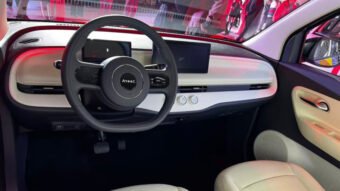
| Bluetooth / Wi-Fi | Basic; central screen, minimal physical buttons |
| Additional Notes | Many storage compartments (~17) claimed |
DISPLAYS
| Centre Screen (inches) | Floating centre touchscreen display |
| Driver's Display (inches) | LCD instrument cluster |
| Additional Notes | Minimalist cabin design, two-spoke steering wheel |
LIGHTING
INFOTAINMENT & AUDIO
TECHNOLOGY
OWNERSHIP
Note
| Additional Notes | The car is positioned for urban mobility, targeting young buyers. The price point and size make it ideal for city commuting |
User Reviews
Disclaimer Note
Specifications sourced from manufacturer data and may reflect WLTP, CLTC, or EPA test conditions. Import prices in your local are estimates based on grey-market landing costs and exclude duties, clearing fees, and local taxes. Figures are subject to change without notice. Always verify with your local importer before purchase. We can not guarantee that the information on this page is 100% correct