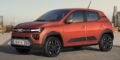
- Electric Vehicles
- DACIA
- Dacia Hipster
Dacia Hipster
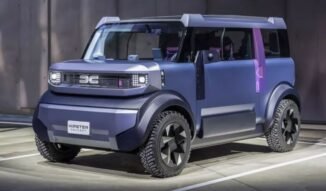



- Drive Type: FWD
- Type: 3-door micro EV, 4 seats
- Self Driving:
- Airbags: Yes
PROS
- Affordable target price under €15,000 (~$17,600)
- Lightweight body under 800 kg for better efficiency
- Simple design means low maintenance and repair costs
CONS
- Limited top speed (~90 km/h) — not ideal for highways
- Range (~150 km) may not suit long-distance travel
Meet the Dacia Hipster: Europe’s Most Affordable EV?
Let’s talk about the Dacia Hipster. No, it’s not a joke—though the name might raise an eyebrow. This is a real proposal from Dacia (the Renault Group’s budget-friendly brand) for an entry-level electric vehicle that could end up being the cheapest new car you can buy in Europe, electric or otherwise.
So where does it sit in the lineup? Below the Dacia Spring. That makes it Dacia’s new entry point for EVs—an A-segment city car (think tiny, nimble, and urban-focused). The body style leans toward a three-door hatchback, possibly even a lightweight quadricycle depending on final rules. Drivetrain is simple: front motor, front-wheel drive (FWD). Nothing fancy, and that’s the point.
What makes the Hipster genuinely notable? It’s engineered to strip away every non-essential feature—power windows? Maybe not. Touchscreen? Unlikely. The goal is pure accessibility: the lowest-priced four-wheel passenger vehicle you can buy new in Western Europe.
Battery, Range & Charging (Based on Leaks)
A quick heads-up: full specs aren’t officially out yet. What we have comes from Renault Group previews and industry leaks. Here’s the likely picture.
Battery size is expected to be around 10.4–12.8 kWh usable (LFP chemistry—cheaper and durable). Range? About 100 kilometers (62 miles) on the WLTP cycle. That’s real-world city driving, not motorway cruising. Don’t expect an EPA rating—this car isn’t coming to North America.
Charging is where it gets basic (intentionally). The standard AC onboard charger is 2.3 kW—that’s a regular household wall outlet. An optional upgrade to 3.7 kW might appear. What you won’t get: DC fast charging. The battery is simply too small to make it worthwhile.
How long to charge from empty to full? At 2.3 kW, expect about 4.5 to 5 hours. That’s an overnight job while you sleep.
⚠️ All powertrain and charging details above are unconfirmed. Dacia hasn’t published final production specs yet.
Who Is This For? Price, Rivals & Internal Positioning
Let’s start with price. Expected launch figure in Dacia’s home market of France: around €9,900 before subsidies. In Germany, roughly €10,500. The UK? About £9,000 if it arrives there.
Who actually buys this? Honest answer: an urban commuter, a student, or a household’s second car. Someone who drives 30–50 km a day max, has overnight off-street parking, and doesn’t need to touch a motorway. This is not a road trip car.
Inside Dacia’s own lineup, the Hipster slides in below the Spring (€12,000). Think of it as Dacia’s new floor. Internally, it loosely replaces the idea of the Renault Twizy—tiny, basic, and unapologetic.
External rivals? Two clear ones:
Citroën Ami – €7,690–€9,000, also a quadricycle, similar limited range.
Mobilize Duo – €9,900 est., purpose-built for car-sharing but available to buyers.
Closest direct comparison (for the SEO crowd) : Dacia Hipster vs. Citroën Ami. Both offer sub-75 km real-world range, no DC charging, and quadricycle options. The Hipster edges ahead with a higher top speed (75 km/h vs. 45 km/h for the L6e Ami). But the Ami is already here; the Hipster is still a promise.
The Bottom Line
The Dacia Hipster isn’t trying to impress anyone. No giant screens, no 0–60 times, no leather seats. It’s trying to solve a boring but real problem: moving one or two people cheaply in crowded cities. If you need that, and you can live with 62 miles of range and a wall socket for charging, it might be the most honest EV you’ll ever own. If you need more, look at the Dacia Spring—or a bus pas


Full Electric Vehicle Specifications
MODEL
| Available Trims / Variants | Dacia Hipster Concept - Single concept version |
LAUNCH
| Reveal Date | October 2025 |
| Availability Status | Concept model |
| Country of origin | Romania (Renault Group / Dacia) |
| Base Price (USD) | Target under €15,000 (~$17,600) |
BATTERY
| Battery Chemistry | Lightweight, low-cost lithium-based battery |
| Range (WLTP/CLTC/EPA) | (WLTP): ~150 km (93 miles) |
| Heat Pump | |
| Additional Notes | Designed to charge twice weekly for average drivers |
PERFORMANCE
| Power Output (kW / hp) | Fully electric, front-wheel drive expected |
| Top Speed (km/h / mph) | 90 km/h (56 mph) |
BODY
| Body Style | 3-door micro EV, 4 seats |
| Platform / Architecture | Custom Dacia/Renault lightweight EV platform |
| Dimensions (L×W×H mm) |
Length: ~3.0 m Width: ~1.55 m Height: ~1.53 m |
| Kerb Weight (kg) | Under 800 kg (1,764 lb) |
| Suspension (Front / Rear) | Simple lightweight setup |
| Wheel Size (inches) | Small efficiency-focused design |
| Trunk/Boot Capacity (L) | 70 L (rear seats up) / ~500 L (folded) |
| Additional Notes | Sliding windows, strap door handles, recycled plastic cladding |
SAFETY
| Airbags (count) | Basic dual front airbags |
| Driver Assistance (ADAS) | Minimal (basic ABS, no advanced assist) |
COMFORT
| Seating Capacity | Mesh-style, lightweight, 4-passenger layout |
| Roof Type | Partial panoramic front section |
| Bluetooth / Wi-Fi | Bluetooth and smartphone integration |
| Additional Notes | Modular interior accessories via “YouClip” system |
DISPLAYS
| Centre Screen (inches) | None; smartphone dock used instead |
| Driver's Display (inches) | Small digital unit |
| Additional Notes | Smartphone acts as key and infotainment system |
LIGHTING
INFOTAINMENT & AUDIO
TECHNOLOGY
OWNERSHIP
Note
| Additional Notes |
Philosophy: “Essential, affordable, sustainable mobility” CO₂ Goal: 50% lower lifecycle emissions vs. typical EVs Production Possibility: Depends on EU regulations for micro EVs |
User Reviews
Disclaimer Note
Specifications sourced from manufacturer data and may reflect WLTP, CLTC, or EPA test conditions. Import prices in your local are estimates based on grey-market landing costs and exclude duties, clearing fees, and local taxes. Figures are subject to change without notice. Always verify with your local importer before purchase. We can not guarantee that the information on this page is 100% correct